
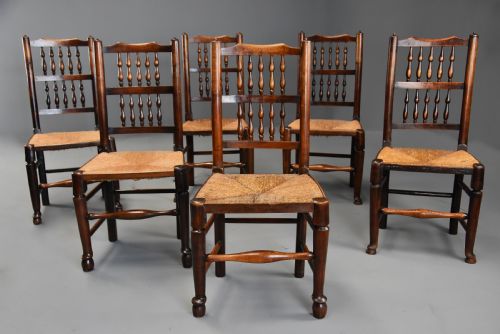
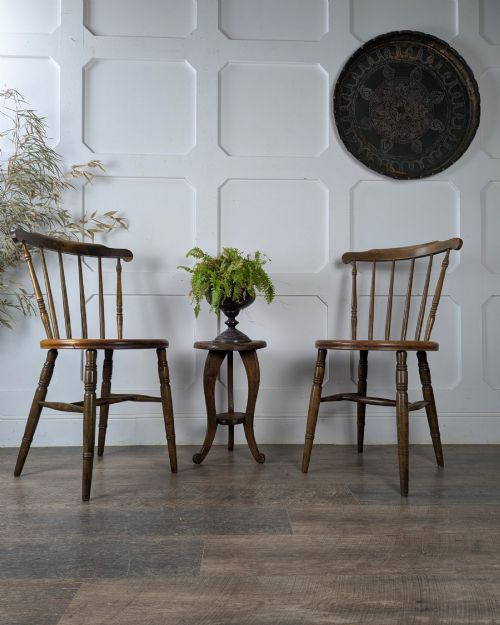
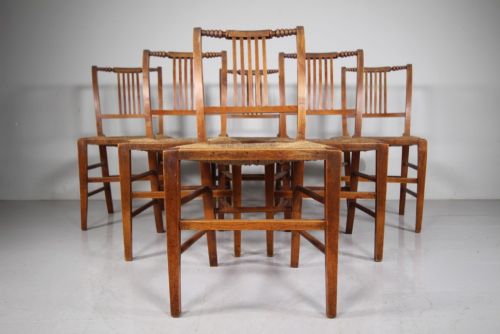
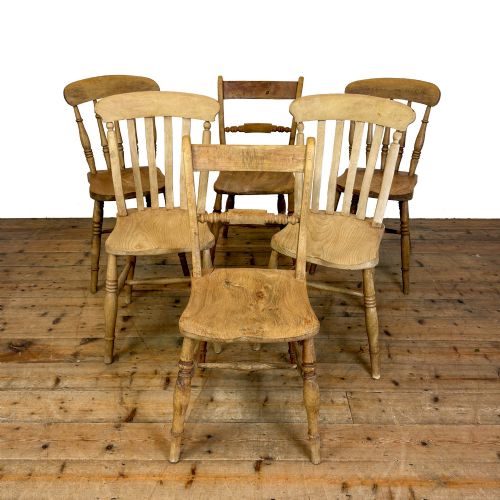
Country Kitchen Side Chairs
Country kitchen side chairs bring robust vernacular seating into daily domestic life, offering honest timber construction shaped by generations of regional use.
Country Kitchen Side Chairs
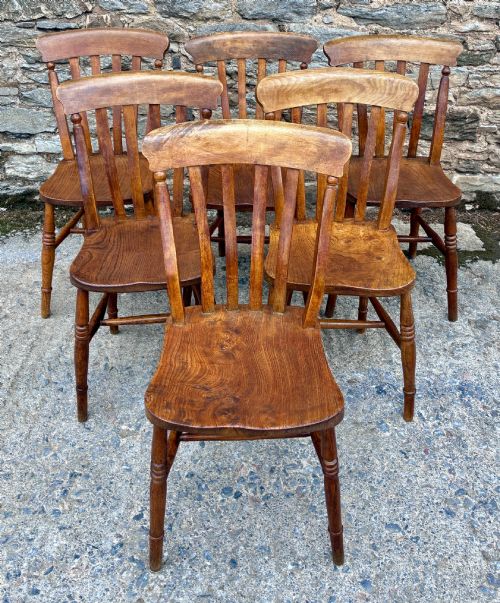
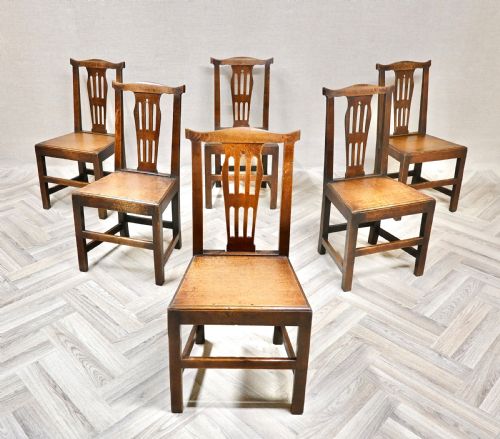
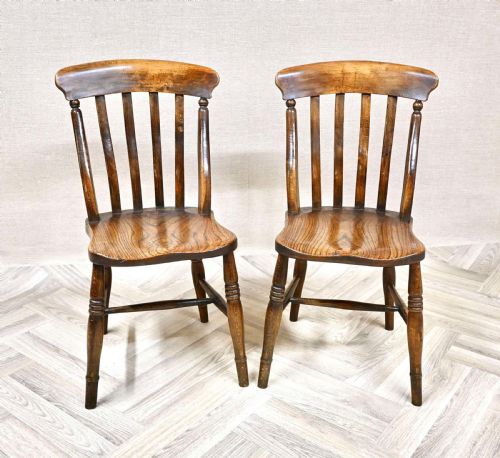
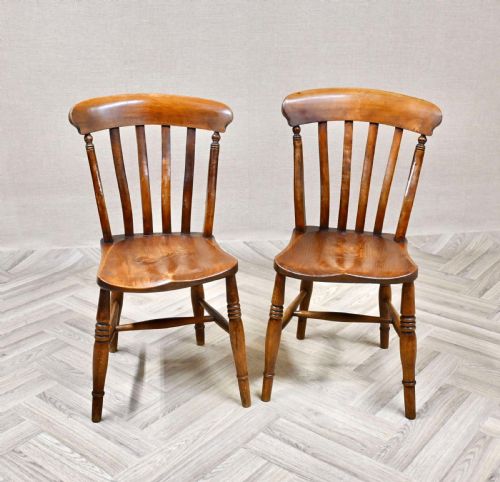
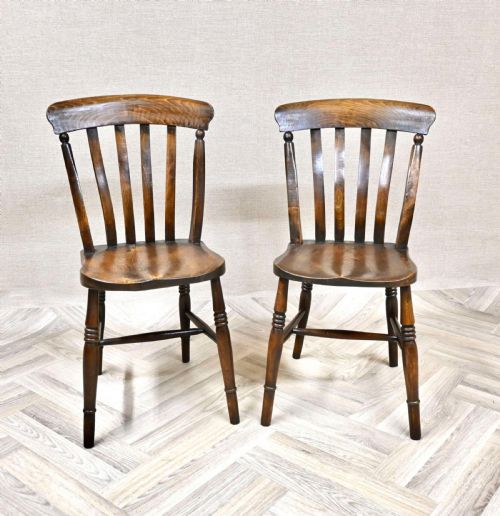
When you search for country kitchen side chairs, you are looking at sturdy domestic seating designed for utilitarian use in farmhouses and domestic kitchens. These pieces span periods from the Georgian era through the Victorian period and into the early twentieth century, encompassing styles such as English Country Vernacular, Gothic Revival, and Arts and Crafts.
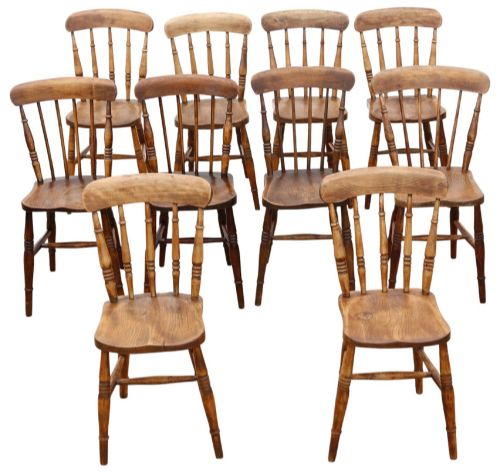
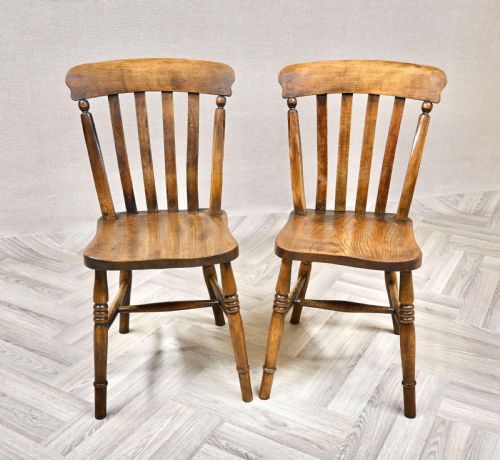
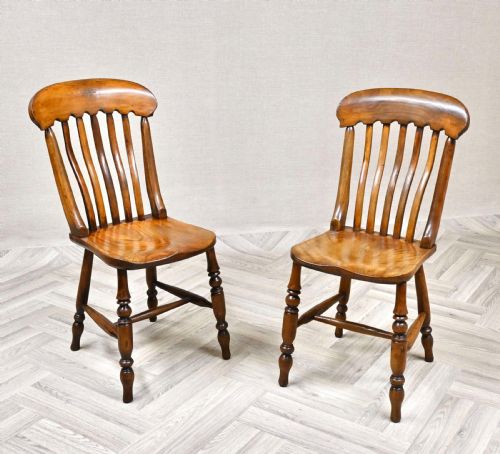
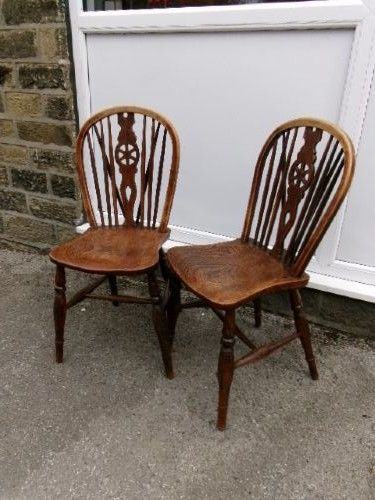
The most common variants you will meet on this page are Windsor chairs and ladderback chairs configured as dining chairs or side chairs. They appear as individual pieces, pairs, or larger matched and harlequin sets suited for regular family dining.
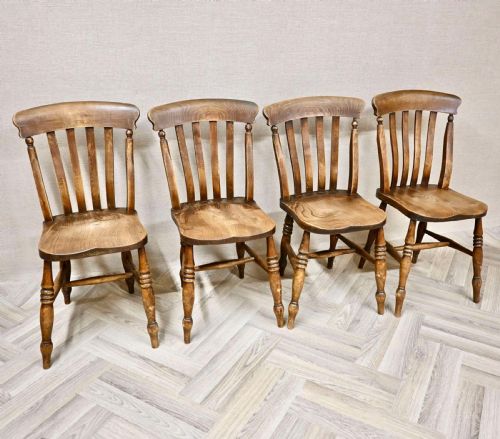
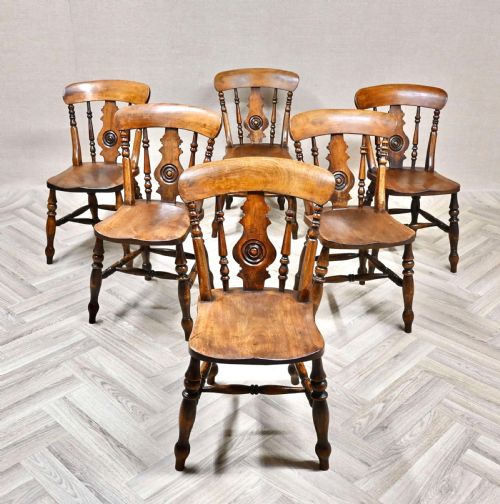
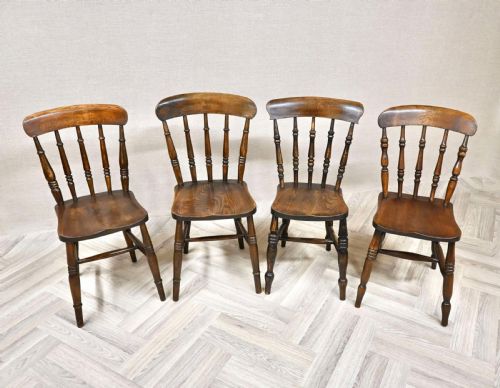
The materials and construction reflect regional English traditions, with origins rooted in local workshops utilising native timber. The forms range from simple spindle backs and lathe backs to more ornate wheelback and bullseye designs.
Materials and Construction
Makers built country kitchen side chairs using a combination of native British hardwoods and softwoods chosen for specific structural properties. Elm frequently provided strong, split-resistant timber for sculpted seats, whilst beech, ash, and oak formed sturdy legs, spindles, and bentwood bows.
Traditional construction relied on mortise and tenon joints alongside wedge-secured through-tenons for maximum rigidity under heavy daily use. Rush and wood formed the primary seating surfaces, often shaped by hand with drawknives and adzes.
Listings feature woods such as elm, beech, oak, and ash, spanning the Georgian, Victorian, and early twentieth-century periods.
Quality and Character
Quality in these chairs rests upon the integrity of the timber selection and the skill of the turning and shaping. Superior examples display deeply saddled elm seats, well-proportioned spindles, and tight joints that have survived decades of movement without excessive replacement parts.
The distinction between standard utility seating and finer workshop production lies in the refinement of the turnery and the depth of the patina developed through continuous use and waxing over generations.
Worksop
The Country Kitchen Side Chairs Glossary
- Windsor chair
- A chair built with a solid wooden seat into which the legs, back spindles, and bow are driven directly. This construction method provides exceptional structural strength.
- Harlequin set
- A collection of chairs assembled together that share a similar style, period, or material but were not originally made as a single unified set. They offer a cohesive look with subtle individual variations.
- Lathe back
- A chair back featuring flat, steam-bent wooden slats rather than round turned spindles. These slats offer comfortable support and a clean silhouette.
- Saddled seat
- A wooden seat scooped and shaped by hand to resemble a horse saddle for ergonomic comfort. This shaping indicates careful craftsmanship in vernacular seating.
- Thames Valley
- A regional style of vernacular chairmaking known for the use of elm and yew combined with graceful bow designs. These pieces often exhibit refined local turnery details.
Country Kitchen Side Chairs: Frequently Asked Questions
What is a harlequin set of chairs?
A harlequin set is a group of dining chairs that share matching or very similar stylistic traits, such as ladder backs or Windsor forms, but were gathered together rather than manufactured at the same time.
These sets allow buyers to seat larger numbers of people around a table with period consistency whilst accommodating the natural scarcity of large original matching sets.
Are these chairs suitable for daily dining?
These pieces were built specifically for heavy use in domestic kitchens and farmhouses, making them inherently durable for modern dining. Their robust construction of solid hardwood ensures they withstand regular sitting.
Careful placement away from direct heat sources helps preserve the historic joints and timber stability during everyday use.
What is the difference between a lathe back and a spindle back?
A lathe back utilises flat, horizontal or vertical wooden slats that have been shaped on a lathe or drawn by hand to support the back. A spindle back relies on multiple thin, rounded turned wooden rods arranged vertically.
Both styles emerged from regional traditions to provide sturdy and comfortable support in domestic seating.