




Country House Style Sofa
A country house style sofa brings deep-seated comfort and understated British charm to a room, built for long evenings and relaxed drawing rooms.
Country House Style Sofa
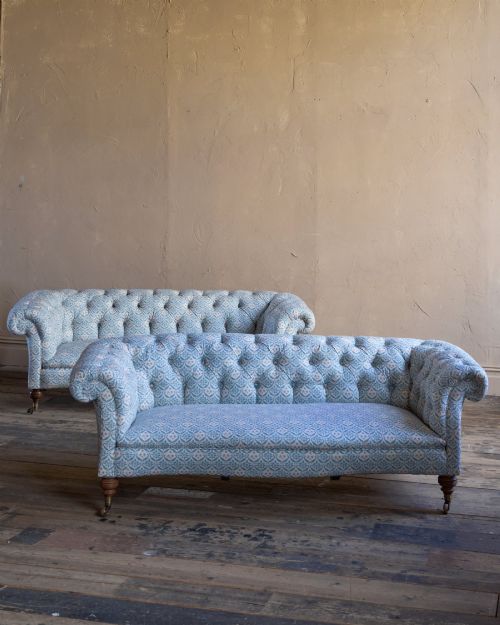
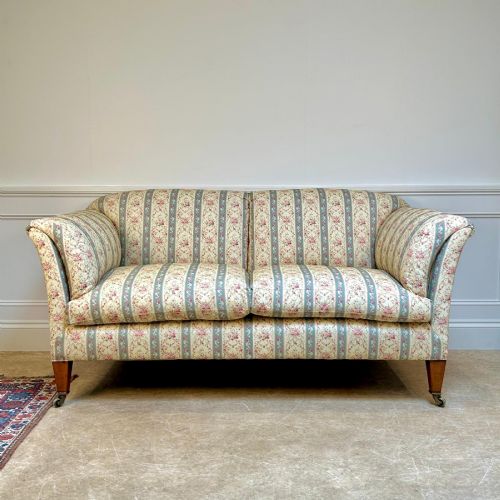
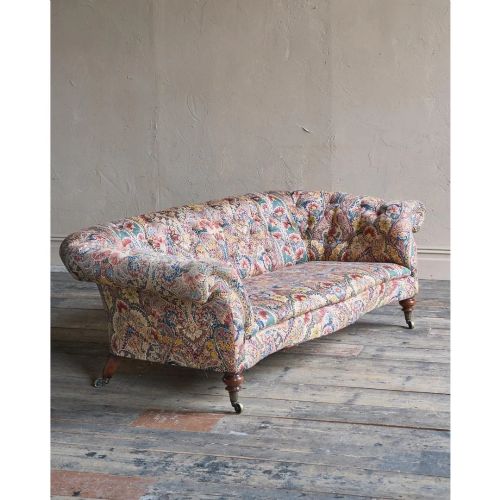
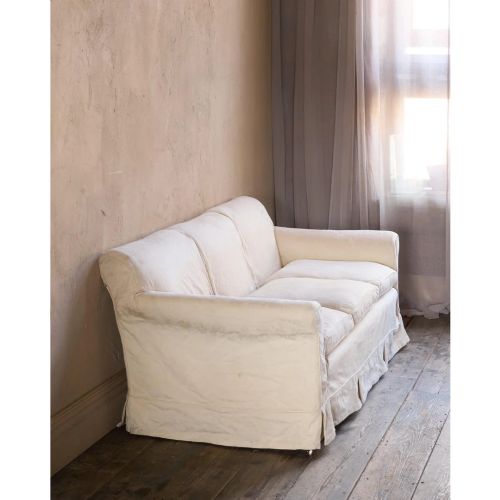
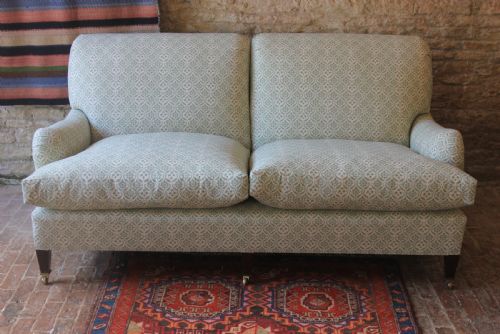
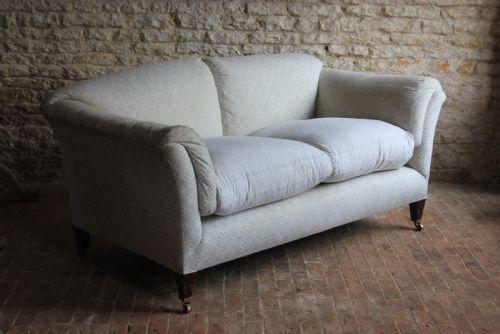
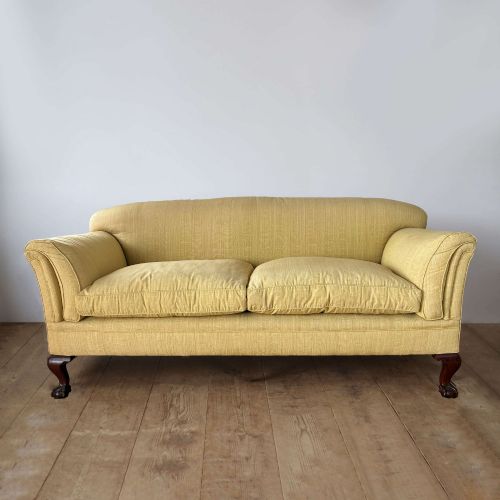
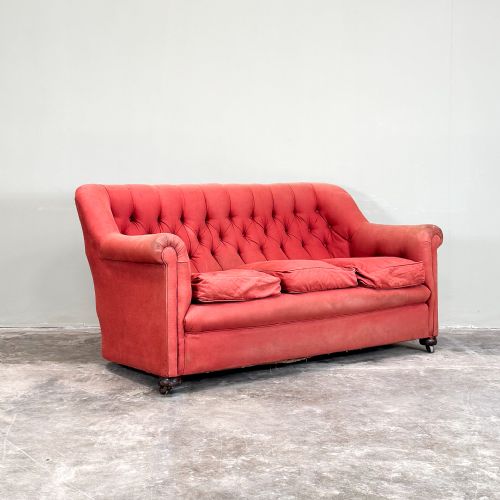
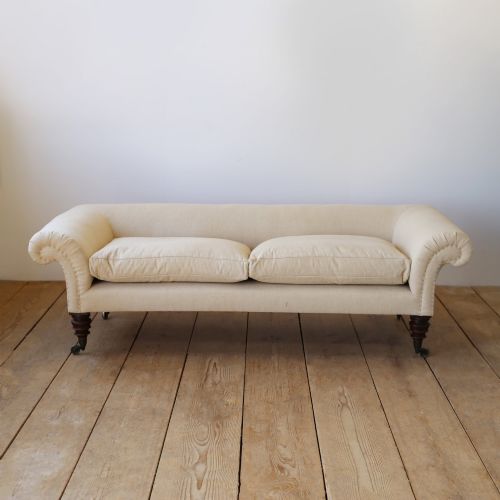
A country house style sofa is defined by generous proportions, deep seats, and a relaxed silhouette designed for comfort rather than formal display. Buyers seeking this look encounter pieces ranging from Victorian chesterfields and Edwardian frames to 1930s deep-seated models upholstered in ticking fabric, damask, or cotton.
The selections span the nineteenth century up to the 1930s, often drawing on earlier Chippendale, Regency, or Queen Anne revival styles. Alongside traditional settees, the evidence includes related seating forms such as camel back sofas, wingbacks, and settle benches.
Materials and construction methods
Frames are constructed from sturdy hardwoods such as mahogany, walnut, pine, and timber, providing a robust structural skeleton capable of supporting deep upholstery. Brass castors and details frequently finish the legs on nineteenth-century and Edwardian examples.
Upholstery relies on traditional textiles including cotton, fabric, leather, and damask, often finished in original ticking or signature maker fabrics. Wood components are hand-carved or turned in styles reflecting Victorian, Regency, and Georgian revival movements.
Listings feature periods spanning from the 18th century through to the 1930s, using materials including mahogany, walnut, brass, leather, and cotton.
Factors influencing quality and craftsmanship
Quality rests in the integrity of the underlying timber frame and the depth of the seating proportions, which determine both longevity and the characteristic slouch of the style. Maker attribution plays a significant role, with pieces bearing workshop stamps or historical provenance commanding distinct recognition.
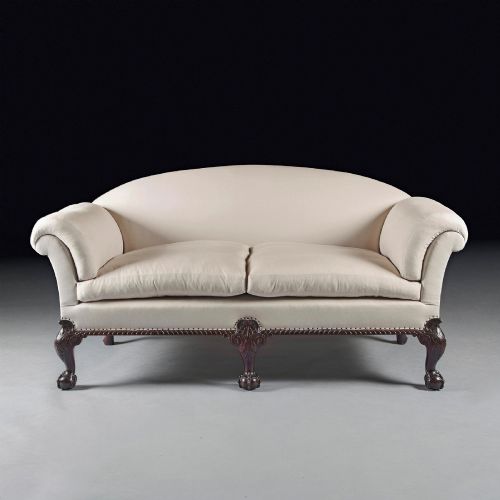
The preservation of original upholstery materials, such as historic ticking or specific patterned cottons, adds to the authenticity of an individual piece. Carving detail on exposed mahogany or walnut wooden elements separates standard production frames from finer revival pieces.
Howard and Sons·Whytock and Reid·Gregory and Co
The Country House Style Sofa Glossary
- Chesterfield
- A large upholstered sofa traditionally featuring deep buttoning and arms of the same height as the back. These form a cornerstone of nineteenth-century seating design.
- Ticking
- A tightly woven, durable cotton fabric historically used to cover mattress springs and feather cushions. It frequently appears as original upholstery on nineteenth-century and Edwardian seating.
- Damask
- A reversible figured fabric woven on a loom, offering rich patterns in silk, wool, or cotton. It appears on formal antique seating to provide texture and sheen.
- Wingback
- An armchair or sofa featuring projecting side panels designed to shield the sitter from draughts. This traditional form appears across various revival periods.
- Ball and claw
- A furniture foot motif representing a bird's talon clutching a ball, popular in eighteenth-century design and later revival pieces.
Country House Style Sofa: Frequently Asked Questions
What defines a country house style sofa?
A country house style sofa prioritises deep seating and generous dimensions, designed to look lived-in and comfortable rather than rigid. They draw on nineteenth-century and Edwardian traditions, often upholstered in ticking or patterned cotton.
These pieces emerged from large English residences where comfort in the drawing room outweighed formal stiffness. Their relaxed proportions make them adaptable to both traditional and modern interiors.
How do I identify a Howard and Sons sofa?
Howard and Sons pieces are typically marked by maker's stamps on the castors, numbering on the frame, and exceptional upholstery comfort. They often feature low-slung profiles and quality timber frames.
Many pieces in the archive reflect this distinct aesthetic, inspiring later nineteenth-century and early twentieth-century makers to adopt similar deep-seated proportions.
Are these sofas suitable for daily use?
These sofas are built on robust hardwood frames of mahogany, walnut, or pine, making them structurally sound for everyday seating. Their deep seats are engineered for prolonged relaxation.
When fitted with durable cotton, leather, or traditional ticking, they withstand regular household use while maintaining their antique character.
How do I date an antique sofa?
Dating relies on examining the timber frame, upholstery techniques, leg style, and any maker stamps or paper labels. Nineteenth-century examples often incorporate brass castors and specific turning styles.
Stylistic cues such as Regency curves, Victorian buttoning, or Edwardian proportions help narrow the decade of manufacture alongside materials like mahogany and pine.