


Upholstered High Back Settle
An upholstered high back settle provides a commanding seat, combining solid timber framing with padded comfort for halls and rooms.
Upholstered High Back Settle
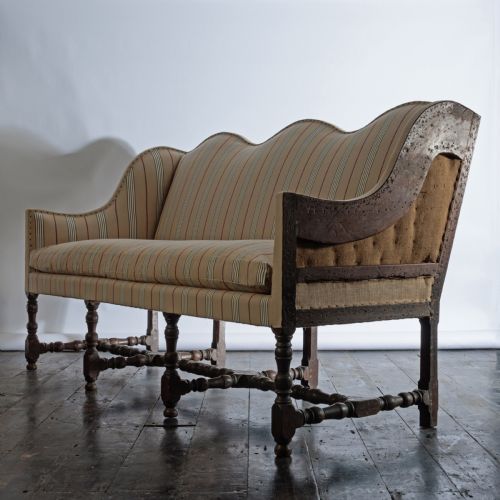
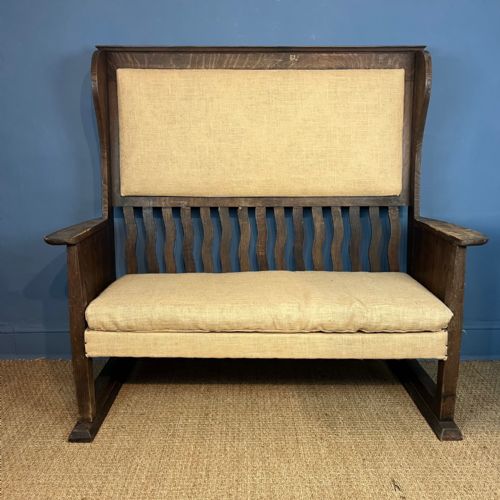
The upholstered high back settle combines traditional wooden framing with padded seating designed to offer shelter from drafts. These pieces range from substantial 17th Century wingback forms to Arts & Crafts oak examples and later country seating.
Visitors to this page encounter benches, sofas, and corner sofas fashioned from timbers such as oak and walnut. Many incorporate panelled backs, box seats, or carved details alongside various fabric coverings.
Origins stretch from English country workshops to French provincial makers and the Glasgow School. The selection bridges centuries of seating design, from early panelled forms to later Victorian and Edwardian interpretations.
Construction and materials
Construction relies on solid timbers including oak and walnut, worked into frames with panelled backs or structural supports. Joinery techniques range from traditional panelling to box seat compartments built beneath the cushion.
Upholstery incorporates materials such as cotton, damask, ticking fabric, and jute webbing. Finished pieces often feature applied textiles secured over padding to create comfortable backrests and seats.
Early box seat settles double as concealed furniture, originally hiding boots and blankets from the household draught.
Assessing quality
Quality reveals itself in the calibre of the timber framing and the integrity of the joinery. Heavier panelled construction and thoughtful carving distinguish the more ambitious pieces from simpler utility seating.
The choice and execution of the upholstery also define the tier of the piece. Traditional textile selections like damask or ticking paired with careful hand assembly elevate the finish.
Howard & Sons·Emma Grant
The Upholstered High Back Settle Glossary
- Settle
- A wooden bench with a high back and arms, often featuring a solid panelled construction to keep out draughts. These pieces frequently include box storage beneath the seat.
- Wingback
- A chair or sofa style featuring projecting side pieces designed to shield the occupant from cold air. This form appears across several centuries in the evidence.
- Damask
- A reversible figured fabric traditionally woven on a drawloom with patterns in the weave. It provides a decorative textile finish for upholstery.
- Ticking
- A tightly woven cotton or linen fabric traditionally used to cover feather beds and mattresses. In later seating, it serves as a durable upholstery cover.
- Jute
- A strong, coarse vegetable fibre utilised historically for webbing and structural support within upholstery layers. It underpins the padding of many traditional seats.
Upholstered High Back Settle: Frequently Asked Questions
What is an upholstered high back settle?
An upholstered high back settle is a traditional wooden bench featuring an extended backrest and padded seating. These items combine timber frames with textile upholstery to provide comfortable seating.
They evolved from solid wood forms into more comfortable seats designed for halls and reception rooms.
Where were settles traditionally placed?
These benches were traditionally placed in entrance halls and large rooms to guard against draughts. The high back and enclosed sides created a sheltered microclimate near the hearth or doorway.
Today they function effectively as statement seating in hallways, living rooms, and large dining spaces.
How do I identify a 17th Century settle?
Seventeenth-century pieces typically feature heavy oak construction with pegged joinery and flat panelled backs. They often display geometric carvings and lack the deep squab cushioning seen on later variants.
Later Victorian interpretations sometimes emulate these earlier stylistic traits while incorporating more extensive upholstery.
What fabrics are used on these seats?
Listings feature a variety of textiles including cotton, damask, ticking fabric, and jute. These materials cover padded elements ranging from simple squab cushions to fully upholstered wingback frames.
The choice of textile often reflects the period of manufacture or subsequent reupholstery.