




Country House Study Painting
These country house study painting works capture domestic interiors, sporting subjects and estate life across multiple centuries.
Country House Study Painting
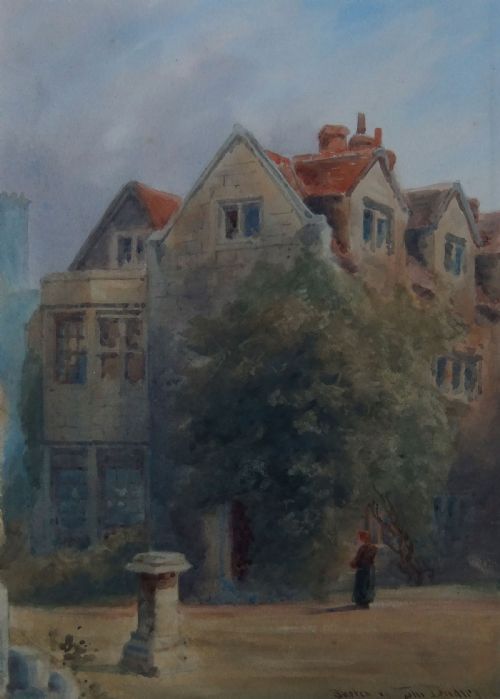
A country house study painting brings the character of historic British and European interiors, manor rooms and estate grounds into a collection. These works encompass framed watercolours, detailed oils on canvas and monochrome ink studies capturing architectural views, domestic spaces and countryside scenes.
The pieces span from the nineteenth century through the Victorian and Edwardian eras into the twentieth century. Common subjects include stately interiors, quiet corners of historic houses, equestrian scenes, game birds and pastoral views.
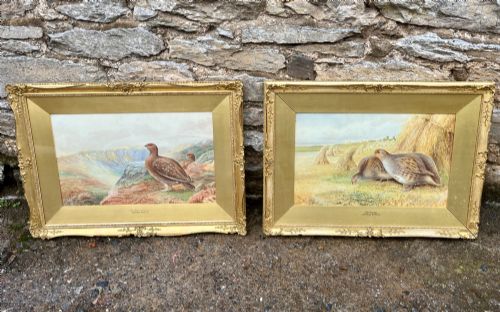
Buyers encounter both intimate watercolours executed on paper and more substantial oil paintings housed in wood or giltwood frames. Each piece reflects the aesthetic preferences of period domestic decorators and the private tastes of estate owners.
Materials and Techniques
Artists working on a country house study painting typically employed oil paint on canvas or watercolour applied to paper. Pigments were brushed onto primed canvas or heavy watercolour paper, occasionally supported by monochrome ink underdrawing.
Frames form an integral part of the physical object, utilising materials such as wood, painted surfaces and giltwood. Burr wood frames and period mouldings complete the presentation of these framed works.
Several pieces preserve the exact expressions of sharp-eyed terriers and heavy-coated estate dogs watching quietly from the corner.
Judging Quality in Domestic Studies
Quality in a country house study painting rests upon the precision of the draughtsmanship and the artist's ability to render light within an interior or landscape. Works that capture specific architectural details, textures of textiles or animal anatomy with confidence stand apart from routine decorative productions.
The preservation of the paper or canvas, together with the originality of the frame, influences the standing of the piece. Clean watercolour sheets without excessive fading and oils retaining their original pigment depth represent the stronger examples.
George Rankin·John Emms·Marion Broom·Tom Dudley·Margaret Thompson
The Country House Study Painting Glossary
- Watercolour Painting
- A work executed with water-soluble pigments on paper. This medium allows for transparent washes and delicate detail.
- Oil Paint
- Pigment suspended in a drying oil, typically applied to canvas or wood panel. It offers rich colour saturation and textured brushwork.
- Giltwood
- Wood carved and covered with a thin layer of gold leaf or metal leaf. It is commonly found on traditional picture frames.
- Monochrome Ink
- A drawing medium using a single colour of ink, often combined with light watercolour washes. It was frequently used for architectural and topographical records.
Country House Study Painting: Frequently Asked Questions
What subjects appear in these paintings?
The subjects range from stately home interiors and architectural studies to sporting dogs, game birds and farm animals.
Many pieces document specific historic properties, drawing rooms and gallery spaces.
How do I date a study painting?
Dating relies on stylistic evidence, artist signatures, framing materials and the type of paper or canvas used.
Victorian and Edwardian works often display characteristic palette choices and subject matter tied to nineteenth and early twentieth century taste.
Are these works framed?
Most pieces retain their period frames, including wood, painted and giltwood examples.
Original framing complements the age and domestic origin of the artwork.
Where were these paintings displayed?
These works typically hung in the private studies, drawing rooms and galleries of country houses.
They served as personal records of estate life, family animals and interior decoration.