


Country House Equestrian Artwork
Country house equestrian artwork brings the rich tradition of the British sporting estate straight to your walls through evocative horse portraits and hunting scenes.
Country House Equestrian Artwork
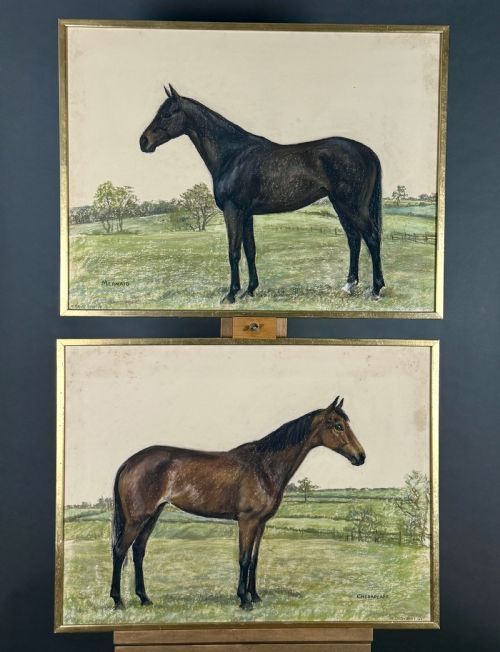
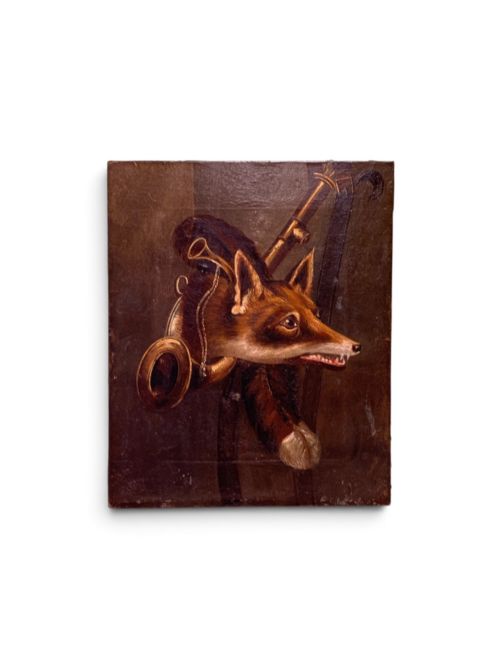
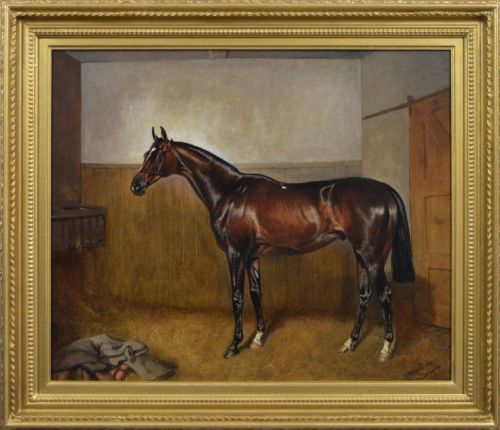
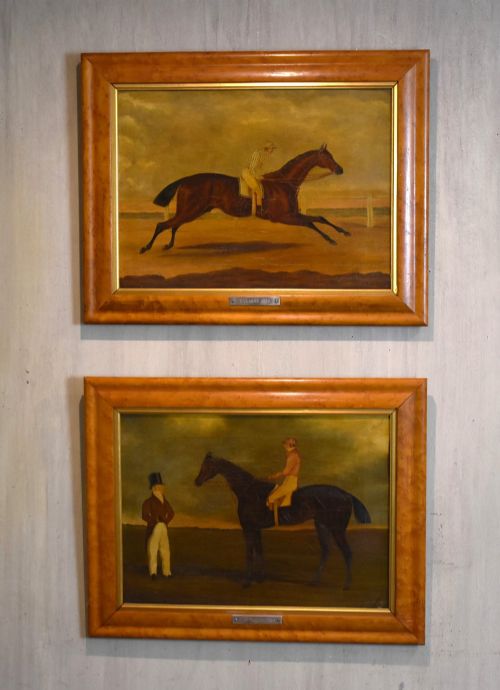
When you search for country house equestrian artwork, you encounter a specialised selection of fine art that captures horses, hounds and rural pursuits from past centuries. These pieces reflect the sporting life of the landed gentry, recording prized racehorses, hunters and hounds in oils and watercolours.
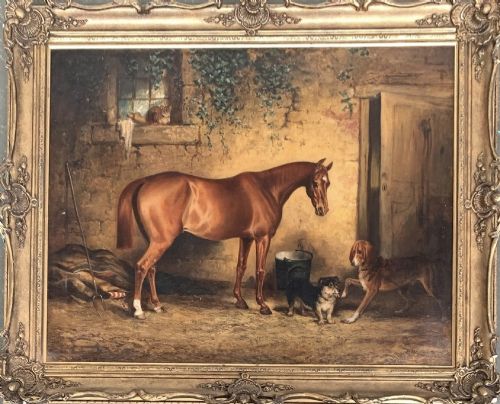
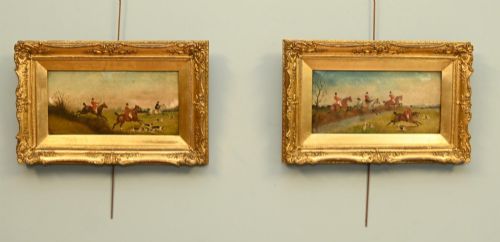
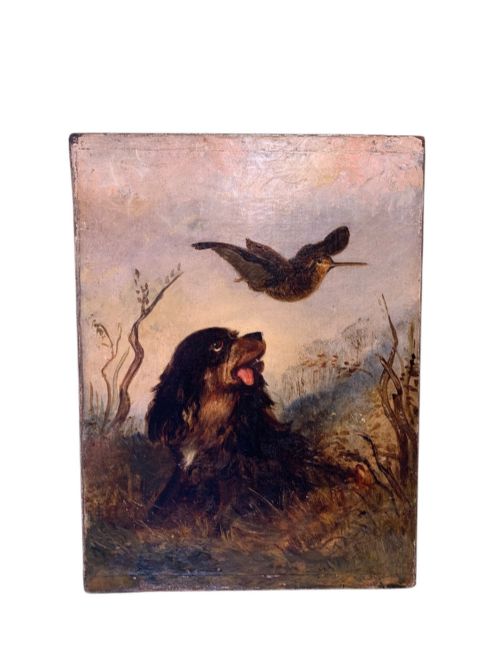
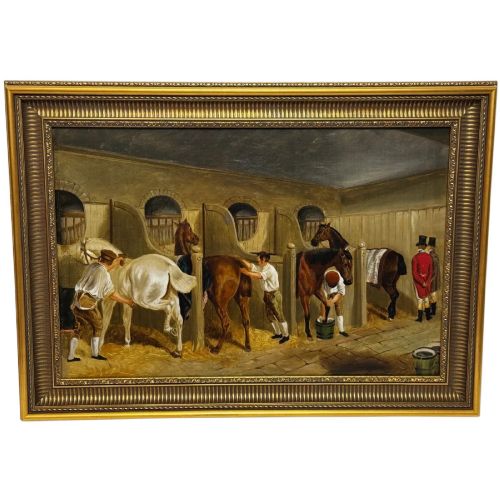
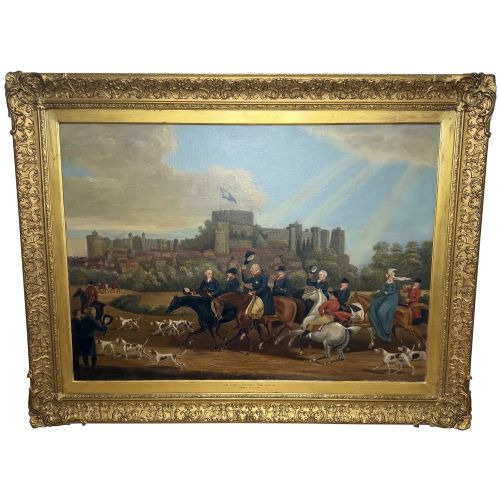
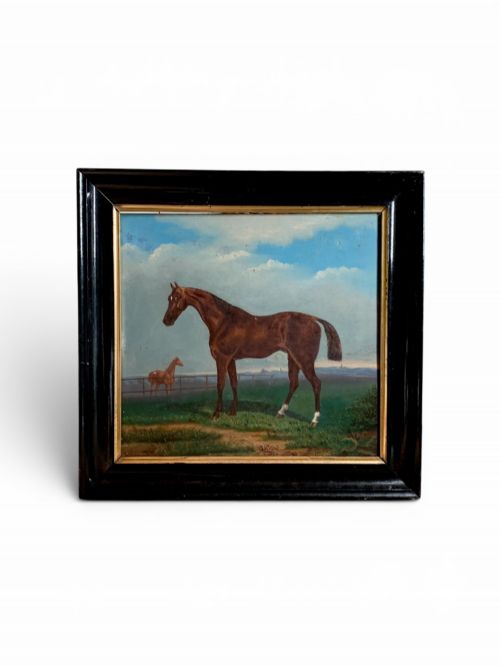
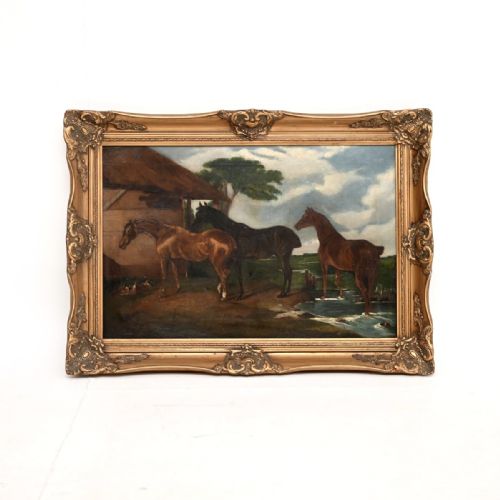
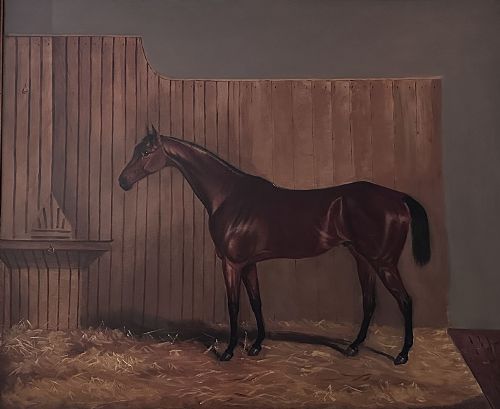
You are most likely to meet Victorian and nineteenth century examples on this page, framed in original gilt wood. The selection spans straightforward horse portraits in stables to grand hunting scenes set across rolling English landscapes.
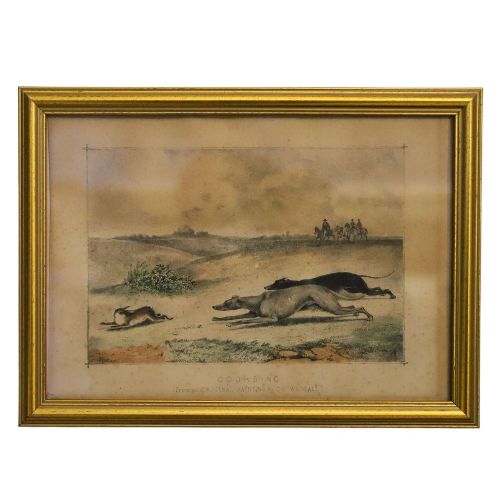
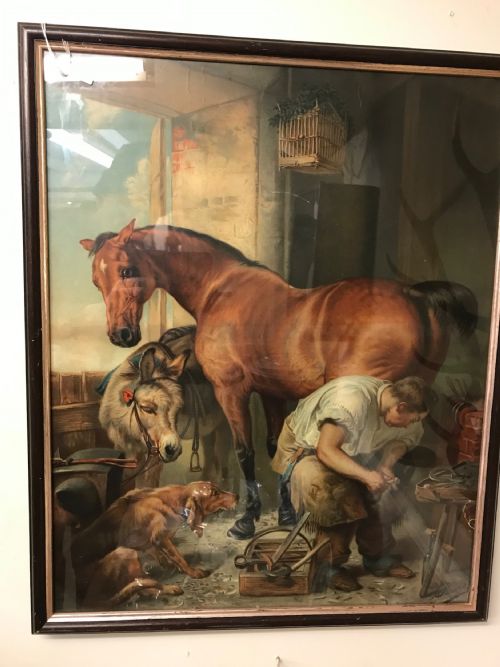
The assortment also embraces framed prints and lithographs alongside original canvases, giving you multiple ways to bring this distinct rural heritage into domestic interiors.
Materials and Technique
Painters applied oil paint to canvas or wood panels, building up rich coats of pigment to capture the sheen of a horse coat or the texture of a landscape. Watercolours on paper offer a lighter alternative, often paired with delicate hand colouring on period engravings.
Giltwood frames enclose many of these works, providing the traditional heavy border characteristic of country house collections. These frames utilise carved wood finished with gold leaf, completing the visual weight of the paintings.
Listings feature oil paintings, watercolours and paper prints spanning the Victorian and Edwardian eras.
Assessing Quality
The skill in anatomy and movement separates superior works from simpler decorative pieces. Master painters capture the exact musculature and alert posture of a thoroughbred, whereas lesser works render the animal with stiff proportions.
The depth of the background landscape and the handling of light contribute significantly to the artistic success of the canvas. Strong composition places the animal naturally within its rural setting rather than against a flat backdrop.
John Alfred Wheeler·John Frederick Herring Snr·Philip Henry Rideout·Samuel Spode·John Frederick Herring Jnr
The Country House Equestrian Artwork Glossary
- Equestrian
- Relating to horse riding and horses. In art, this refers specifically to portraits of horses and racing subjects.
- Gilt Wood
- Wood carved and coated with a thin layer of gold leaf. This material forms the traditional frame finish for nineteenth century paintings.
- Lithograph
- A print made from a design drawn on limestone or metal plate. This technique allowed popular sporting scenes to be reproduced widely in the nineteenth century.
- Sporting Art
- Artwork depicting field sports, horses, dogs and rural hunting traditions. This genre flourished across the Georgian and Victorian eras.
Country House Equestrian Artwork: Frequently Asked Questions
What periods do these artworks cover?
The selections span from the Georgian period through the Victorian and Edwardian eras into the early twentieth century.
Most pieces originate in the nineteenth century, reflecting the peak of British sporting art production.
How were these paintings originally displayed?
Landowners hung these canvases in country house reception rooms, studies and hallways to celebrate their racing studs and hunting exploits.
They served as both personal records of valued animals and markers of social standing.
Are all the artworks original oils?
The selection includes original oil paintings on canvas and wood panel alongside watercolours and hand-coloured engravings.
Print reproductions after notable artists also appear among the framed works.
How do I care for a gilt wood frame?
Keep gilt wood frames away from direct sunlight and steady temperature fluctuations to prevent the gesso and gold leaf from cracking.
Dust gently with a dry, soft brush rather than using liquid cleaners.
What subjects accompany the horses?
Foxhounds, terriers and hunting dogs frequently appear alongside the horses in stable scenes and field pursuits.
Equestrian portraits also incorporate riders in hunting pinks, grooms and expansive estate landscapes.