



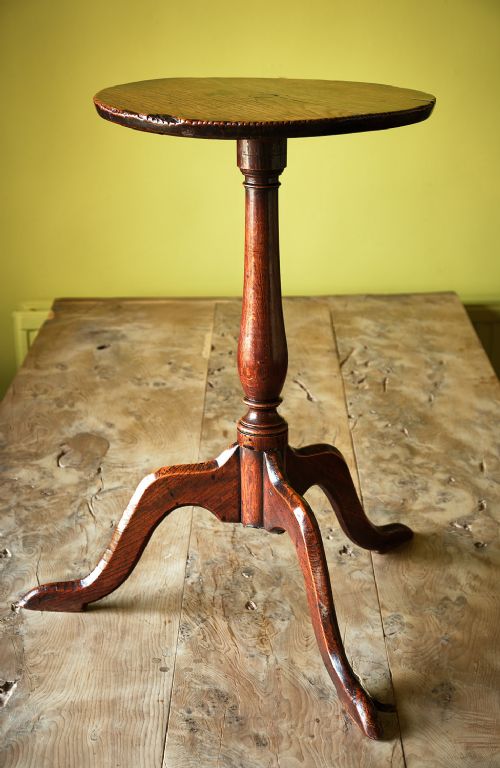


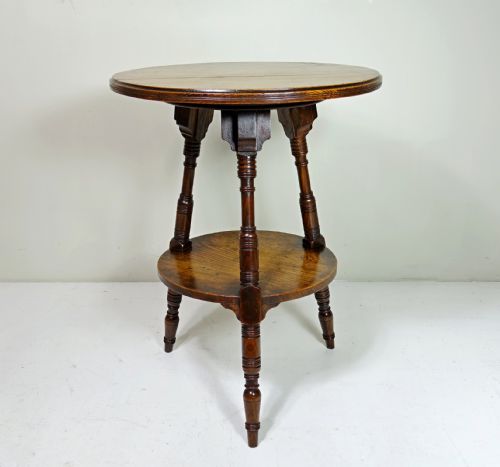

Country Elm Tripod Table
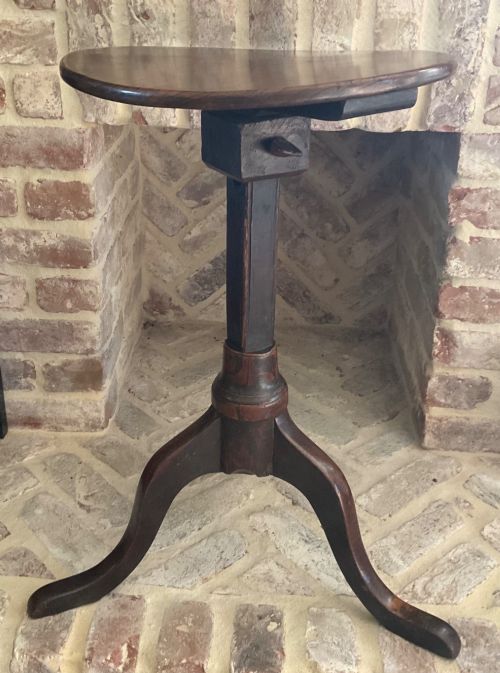
A country elm tripod table brings warmth and honest utility to any room, offering the distinct grain and sturdy build prized by collectors of vernacular furniture.
Country Elm Tripod Table
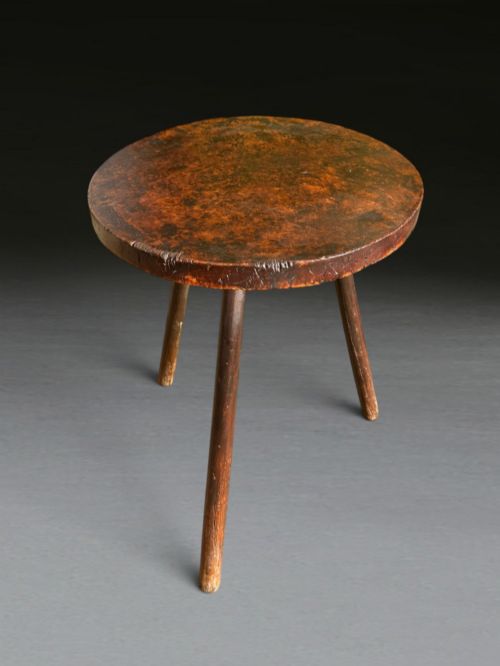
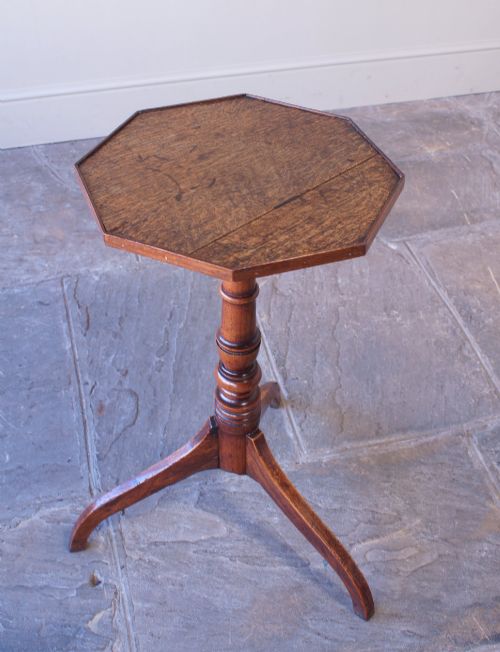
The versions most commonly met on this page belong to the Georgian and nineteenth-century periods, spanning English vernacular styles and French provincial designs. Alongside standard tables, the selection includes related forms such as cricket tables, milking stools, and kitchen chopping blocks.
Makers working within these traditions focused on everyday function rather than courtly fashion, resulting in pieces with direct lines and robust construction. The use of native woods ensures each table carries a distinct character shaped by the natural figuring of the grain.
How they were made
Construction relies heavily on solid elm, frequently paired with oak for structural strength and supported by gnarled or turned wooden legs. Timber selection prioritized local availability and durability, utilising the tough, interlocking grain of elm to resist splitting under heavy domestic use.
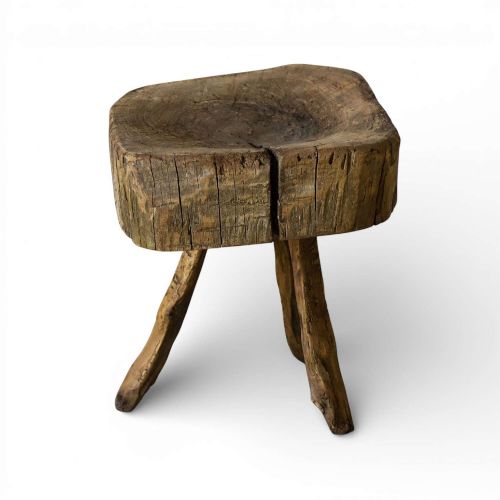
Surface treatments and forms range from smooth occasional table tops to live-edge slices and thick chopping blocks bearing the marks of active work. Joinery techniques were straightforward and effective, designed to keep three-legged frames stable on uneven flagstone floors.
Country Elm Tripod Table Retail Price Guide 2026
Typical asking prices for country elm tripod table among the pieces listed under this phrase on Sellingantiques today, from the lower quarter to the upper quarter. They describe what is for sale here now, not the wider market.
Several pieces stand firmly on gnarled legs that remind us the tree grew exactly as it pleased before entering the workshop.
What varies in quality
Quality differences rest largely in the character of the timber and the integrity of the original construction rather than elaborate ornamentation. Burr elm surfaces and pieces retaining their original gnarled legs command greater interest for their visual movement and untouched state.
Proportion and the balance between the top and the three-legged base distinguish finer examples from heavier utility items. Pieces that show honest domestic wear without losing their structural stability represent the height of this regional tradition.
The Country Elm Tripod Table Glossary
- Elm
- A tough, durable native timber known for its interlocking grain and resistance to splitting. This wood was the primary choice for table tops and seats subject to heavy wear.
- Cricket table
- A small, three-legged occasional table traditionally featuring a triangular base. The three-legged design ensured stability on uneven floors.
- Vernacular
- Furniture made by local craftsmen for everyday use rather than following high-style court fashions. These pieces emphasise regional materials and practical forms.
- Tripod base
- A support structure utilising three legs that naturally rests firmly on irregular surfaces without wobbling. This configuration is common on candle stands and occasional tables.
Country Elm Tripod Table: Frequently Asked Questions
What is a country elm tripod table used for?
These pieces served as practical, movable surfaces in historical homes for lighting, dining, or dairy work. Today they function well as bedside tables, lamp stands, or small display surfaces in living spaces.
Their compact three-legged footprint allows them to fit easily into corners or beside seating where larger furniture will not go.
How do I tell an 18th century table from a 19th century one?
Dating relies on observing the tooling marks, timber selection, and overall construction methods used by the maker. Eighteenth-century examples often display hand-sawn boards and vernacular framing specific to Georgian country workshops.
Nineteenth-century pieces may show slightly more standardised preparation while retaining traditional forms like French provincial chopping blocks or cricket tables.
How do I care for antique elm furniture?
Keep elm furniture away from direct heat sources and sudden humidity changes to prevent the solid timber from warping or splitting. Regular dusting and occasional application of appropriate wax will nourish the grain.
Allowing the wood to breathe naturally preserves the historical patina accumulated over centuries of use.