




Coromandel Wood Table
A coromandel wood table brings a rich, dark grain and exceptional lustre to a room, offering both bold presence and historic utility.
Coromandel Wood Table
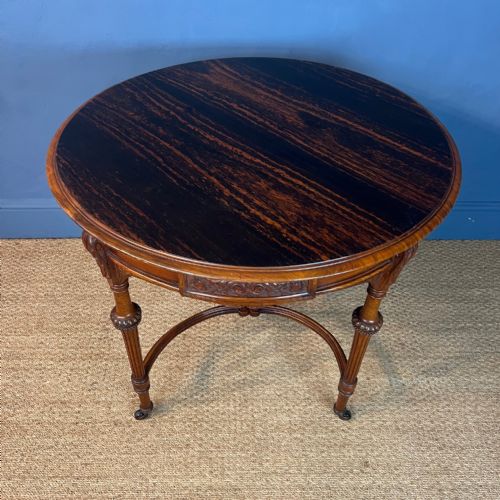
When you search for a coromandel wood table, you encounter a selection spanning several distinct periods, most notably the Victorian era and the Regency period. These items include centre tables, breakfast tables, library tables, and card tables, alongside occasional forms like bedside tables and coffee tables.
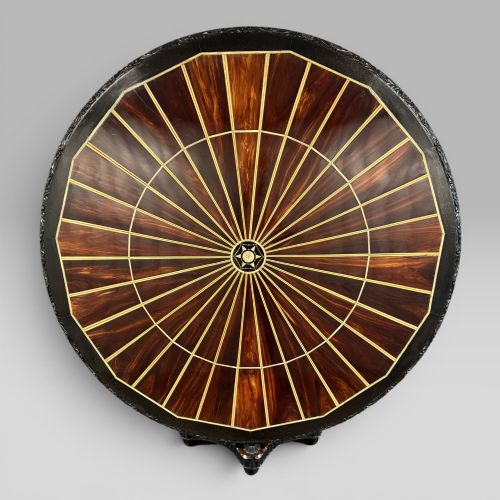
The version you are most likely to meet on this page is a nineteenth-century centre or breakfast table, often featuring circular or rectangular tops supported by substantial pedestals or legs. Pieces from the Regency and William IV periods display classical architectural influences, while later nineteenth-century examples often incorporate inlaid details or stylistic touches from the Aesthetic Movement.
What varies in quality
The distinction between standard examples and top-tier pieces lies largely in the selection of the timber and the ambition of the design. Master craftsmen chose veneers with intense contrast and dramatic grain figures, whereas lesser pieces utilised simpler, more uniform cuts of wood.
Execution of secondary details - such as precision in brass inlay, the crispness of carved pedestals, and the integration of marquetry - separates ordinary workshop production from exhibition-quality furniture. The handling of edge mouldings and the symmetry of the wood grain across table leaves indicate the level of care invested by the maker.
Several pieces combine coromandel with spaces for cologne bottles, proving that nineteenth-century travellers took their fragrance arrangements remarkably seriously.
H Mitchell·Collingson and Lock
The Coromandel Wood Table Glossary
- Coromandel wood
- A dense, heavy exotic timber known for its dark brown colour and striking black grain streaks. It was frequently used for high-end nineteenth-century furniture and decorative boxes.
- Centre table
- A freestanding table designed to be viewed from all sides and placed in the middle of a room rather than against a wall. These often served as focal points in Victorian and Regency interiors.
- Breakfast table
- A pedestal table from the nineteenth century, typically featuring a tilt-top mechanism or a sturdy pillar base. Despite the name, they functioned as general-use tables in parlours and drawing rooms.
- Aesthetic Movement
- A late nineteenth-century design style that emphasised visual beauty and artistic expression over historical revival. Furniture from this movement often featured clean lines and contrasting dark woods.
- Ormolu
- Gilt bronze mounted onto furniture as decorative embellishment. Makers used it during the Regency period to highlight corners, mounts, and structural edges.
Coromandel Wood Table: Frequently Asked Questions
What is coromandel wood?
Coromandel is a heavy, durable exotic timber prized for its deep brown colour and dramatic dark striping. It originates from Southeast Asia and was heavily utilised by nineteenth-century cabinet makers.
Because of its scarcity and striking appearance, it was typically reserved for luxury furniture, presentation boxes, and high-status tables.
How do I identify a Regency table?
Regency tables generally display classical proportions, architectural lines, and influences from ancient Greece and Rome. They often feature pillar pedestals, brass mounts, or sabre legs.
Unlike later Victorian pieces, Regency design favours restrained elegance and structural clarity over heavy ornamentation.
Where did people use centre tables?
Centre tables were placed in the middle of principal rooms such as drawing rooms and libraries. They acted as display surfaces for books, lamps, and decorative objects.
Because they stood away from walls, makers ensured the timber grain and finish looked polished from every angle.
How do I care for coromandel furniture?
Keep coromandel tables away from direct sunlight and sudden temperature shifts to prevent the wood and veneer from drying out. Dust regularly with a soft, dry cloth.
Avoid using silicone-based polishes or harsh chemical cleaners, as these can damage the historic polish and finish of the timber.