





Cornwall Coastal Landscape
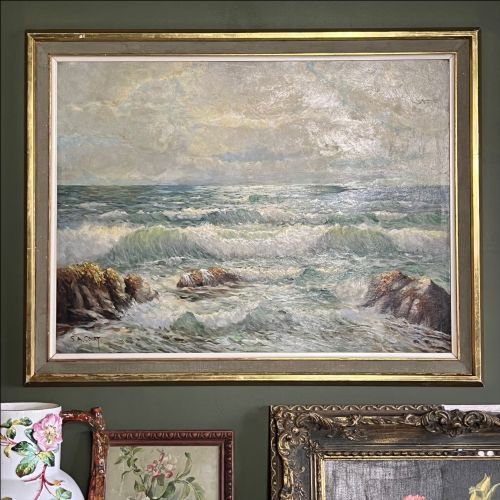
A cornwall coastal landscape captures the shifting light and maritime life of the far south-west through traditional oils and watercolours.
Cornwall Coastal Landscape
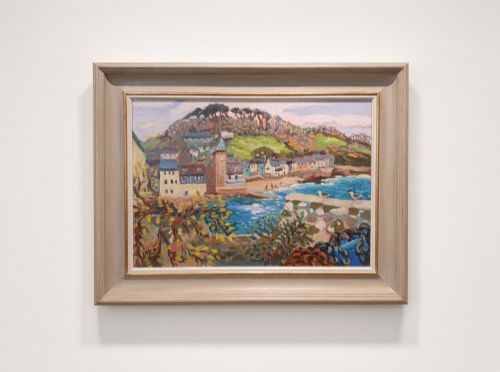
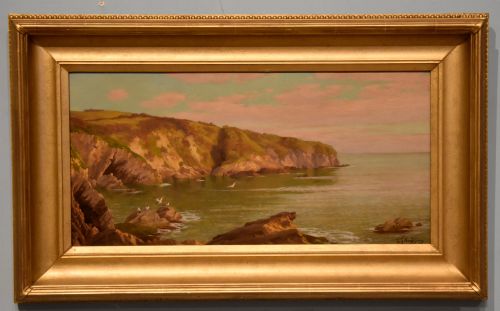
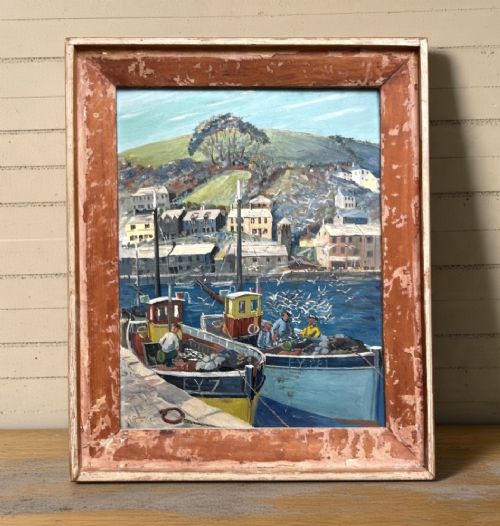
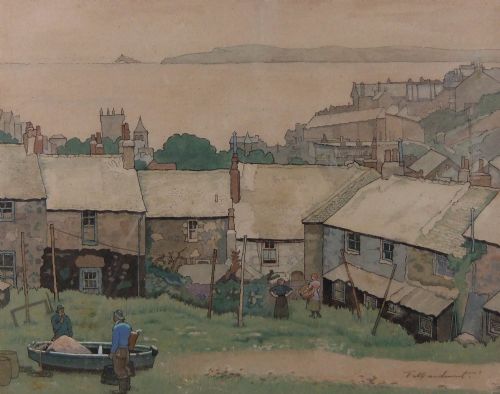
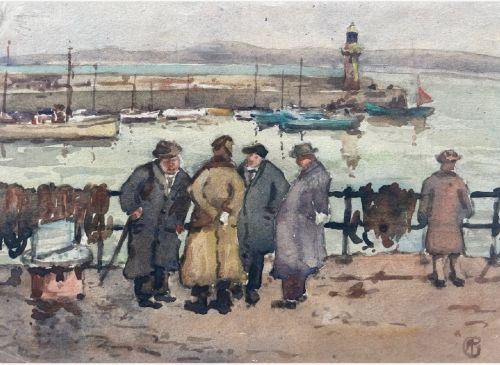
A cornwall coastal landscape brings together maritime scenes, bustling harbours and quiet coves depicted by artists working from the late nineteenth century into the mid twentieth century. Buyers encounter framed watercolours and oil paintings capturing specific locations such as St Ives, Polperro and Mevagissey.
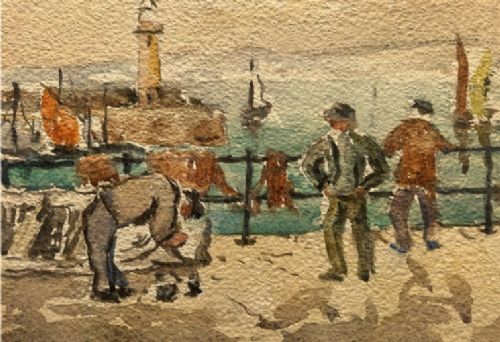
The selection ranges from Victorian fine art watercolours to mid century Modern British interpretations and St Ives School compositions. Harbour views featuring fishing boats, mending nets and coastal cliffs dominate the available subjects.
Works span movements including British Impressionism and early twentieth century impressionism, reflecting the enduring appeal of the Cornish coast for landscape painters. Pieces appear on canvas, paper, board and panel.
Materials and technique
Artists captured these coastal scenes using oil paint on canvas and board, or applied watercolours and pastels directly onto paper. Oil paintings often utilise thick brushwork and en plein air methods to record natural light.
Watercolour paintings rely on washes and fluid marks to render sea and sky, whilst pastel drawings capture softer atmospheric shifts along the shore. Canvas supports and heavy framing protect these traditional compositions.
Cornwall Coastal Landscape Retail Price Guide 2026
Typical asking prices for cornwall coastal landscape among the pieces listed under this phrase on Sellingantiques today, from the lower quarter to the upper quarter. They describe what is for sale here now, not the wider market.
Listings feature works spanning from the late nineteenth century through the 1960s, executed in oil, watercolour and pastel.
Judging quality
Quality rests in the handling of light and atmosphere, distinguishing confident brushwork from rigid application. Strong compositions capture the distinct luminosity of the Cornish coast effectively.
The depth of colour, control of medium - whether oil or watercolour - and the fidelity of the coastal atmosphere separate accomplished works from standard topographical views.
Edward J Humphries·Bob Quixley·George F Pennington·Sidney A Court·William Banks Fortescue·Thomas Maidment·Edward Matthew Elliott·Gyrth Russell·George Turland Goosey·William Pitt·Ernest F Hill·Frederick Stuart Richardson·William Lambert Bell·Jack R Mould·Walter Sweet·S J Lamorna Birch·Herbert James·Cuthbert Crossley·William Edward Webb·Arthur Joseph Meadows
The Cornwall Coastal Landscape Glossary
- En plein air
- Painting outdoors to capture direct observations of natural light and weather. This approach is common among artists recording coastal scenes.
- St Ives School
- A group of artists associated with the Cornish town of St Ives, noted for modernist and impressionist responses to the landscape. Their works often engage directly with maritime subjects.
- Watercolour
- A paint consisting of pigment suspended in a water-based solution, typically applied to paper. It allows for translucent washes and delicate effects.
- British Impressionism
- A painting style influenced by French impressionism, focusing on everyday scenes and natural light through loose brushstrokes. It characterises many nineteenth and early twentieth century works from the region.
Cornwall Coastal Landscape: Frequently Asked Questions
What is a cornwall coastal landscape?
These works are paintings and watercolours depicting the harbours, cliffs and coastal life of Cornwall by historical artists. They record locations like St Ives and Polperro across various periods.
Buyers choose them to bring authentic maritime atmosphere and regional history into domestic spaces.
How were these paintings created?
Artists used oil paints on canvas or board, alongside watercolours and pastels on paper, often working outdoors. This direct engagement with the environment shaped the texture and palette of each piece.
Traditional framing usually preserves the original presentation of these artworks.
How do I date a cornwall coastal landscape?
Dating relies on artist biographical details, stylistic shifts from Victorian realism to Modern British abstraction, and framing materials. Signatures and exhibition labels often provide additional chronological context.
Comparing brushwork techniques across periods helps place works accurately within the timeline.
Where should I hang these paintings?
These maritime scenes suit well-lit spaces away from direct sunlight to protect watercolours and canvas from fading. Pairing them with neutral walls lets the coastal tones and historical frames stand out.
They sit comfortably in both traditional and contemporary interiors.