



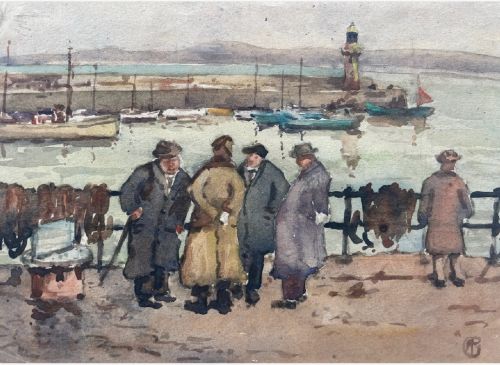


Cornish Coastal Painting
These cornish coastal painting works capture harbours, luggers and grey Atlantic light across the nineteenth and twentieth centuries.
Cornish Coastal Painting
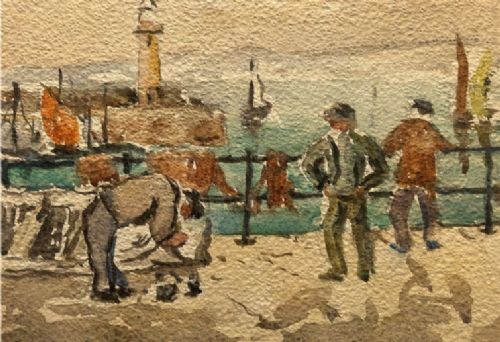
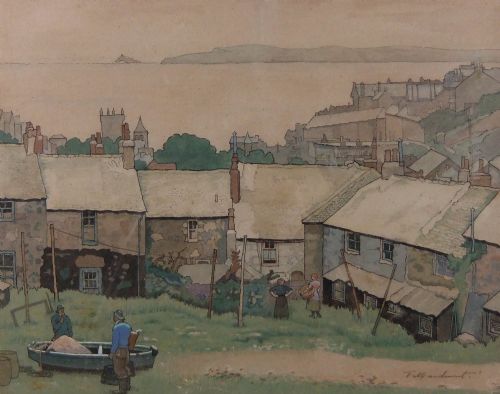
A cornish coastal painting records the harbours, fishing fleets and Atlantic shores of the south-west peninsula, produced across the nineteenth and twentieth centuries. These works emerge largely from artists drawn to locations such as St Ives, Newlyn, Polperro and Mousehole to observe maritime life directly.
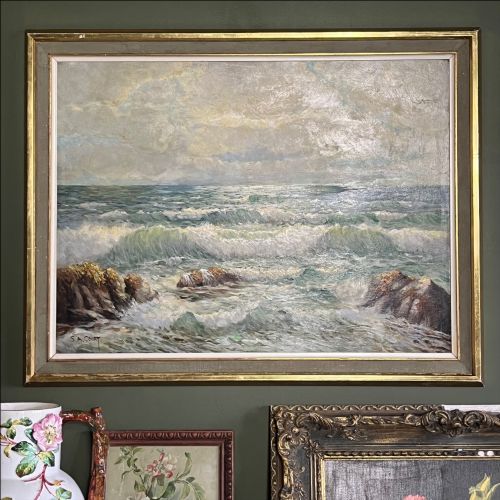
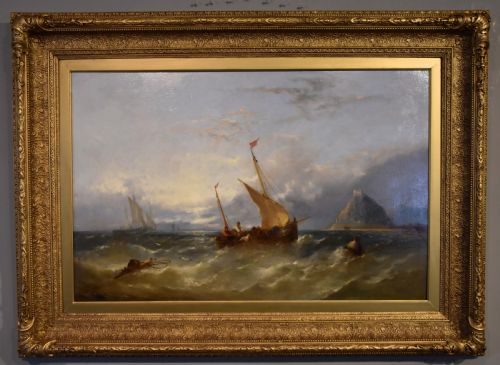
The commonest examples on this page are watercolours on paper and oil paintings on canvas or wood panels. They range from tightly rendered Victorian maritime scenes to looser compositions associated with the Newlyn and St Ives schools.
Subjects centre upon local luggers, harbour walls at low tide, fisherfolk and the changing weather of the Cornish coast. Buyers find works spanning the Edwardian era through to the middle decades of the twentieth century.
Materials and Methods
Artists worked in oil paint on canvas and wood, or applied watercolour pigments to paper, often completing pieces en plein air to catch transient atmospheric effects. Canvas grounds hold heavy impasto applied with brushes or palette knives, whilst watercolour sheets preserve transparent washes of blue and grey.
Many works retain their original gilt wood frames, sometimes protected beneath glass in the case of works on paper. Supports vary from stretchers and panels to heavier boards, reflecting the materials available to painters working along the coast.
Cornish Coastal Painting Retail Price Guide 2026
Typical asking prices for cornish coastal painting among the pieces listed under this phrase on Sellingantiques today, from the lower quarter to the upper quarter. They describe what is for sale here now, not the wider market.
Materials in these listings include watercolour on paper, oil on canvas, oil on wood, and gilt wood framing.
Evaluating Quality
Quality rests upon the artist's handling of coastal light and the sureness of their drawing when rendering vessels, stone quays and figures. Stronger works convey the particular weight of salt air and the movement of the sea without relying on formulaic formulae.
The strength of the composition and the condition of the pigment surface determine the standing of a piece. Works that preserve their original colour balance and bear the distinct touch of a known hand command greater attention from collectors.
Sidney A Court·William Banks Fortescue·Thomas Maidment·William Henry Williamson·George F Pennington·Edward Matthew Elliott·Charles Napier Hemy·Richard Harry Carter·Gyrth Russell·George Turland Goosey·Charles Sim Mottram·William Pitt·Ernest F Hill·Frederick Stuart Richardson·Ralph Todd·William Lambert Bell·Jack R Mould·William Lee Hankey·Walter Sweet·S J Lamorna Birch·Herbert James·Cuthbert Crossley·William Edward Webb
The Cornish Coastal Painting Glossary
- En plein air
- Painting outdoors to capture natural light and atmospheric conditions directly. This method defined much of the work produced by colonies along the Cornish coast.
- Lugger
- A traditional small fishing vessel with two or more masts carrying lug sails. These boats appear frequently in nineteenth and early twentieth-century maritime scenes.
- Impasto
- Paint applied thickly to a canvas or panel so that it stands proud of the surface. This technique records the physical gesture of the brush and catches real light.
- Newlyn School
- An art colony established in a Cornish fishing village during the late nineteenth century. Painters here focused on realistic depictions of local fisherfolk and harbour life.
- St Ives School
- A twentieth-century grouping of artists based in Cornwall who engaged with modernist developments alongside traditional landscape observation.
Cornish Coastal Painting: Frequently Asked Questions
What periods do these paintings cover?
The works span from the nineteenth century through the Edwardian period and into the mid-twentieth century. Most examples cluster around the years between eighteen-eighty and nineteen-fifty.
This broad span includes Victorian maritime recording, Edwardian realism and the emergence of twentieth-century schools of painting in coastal villages.
How do watercolours differ from oils here?
Watercolours on paper generally offer lighter, more translucent depictions of harbours and skies, often preserved beneath protective glass. They rely on the white of the paper to generate luminosity.
Oil paintings on canvas or wood use heavier pigments, sometimes applied with visible texture to capture the physical weight of sea and stone.
How should I frame and display them?
Many pieces retain period gilt wood frames that suit their age and character. These frames help anchor the historical context of the painting on the wall.
Works on paper require mounting behind glass away from direct sunlight to protect the pigments from fading over time.