
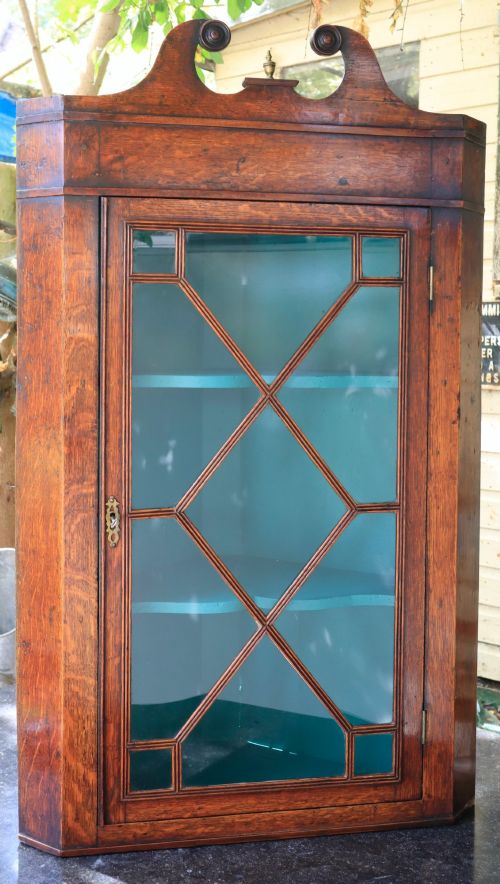


Corner Wall Display Case
A corner wall display case is a timber-framed glazed cabinet designed to fit tight against intersecting room walls and show off cherished objects.
Corner Wall Display Case
A corner wall display case takes the form of a hanging corner cabinet or corner cupboard built to utilise dead space in a room. These pieces provide practical storage alongside a glazed front panel for exhibiting small possessions.
Most examples found here date from the Georgian, Victorian, and Edwardian periods, with earlier pieces reaching back into the eighteenth century. Makers constructed them primarily to mount on walls rather than stand upon the floor.
Forms vary from simple rectilinear glazed doors to serpentine and bow front profiles. Buyers will frequently encounter mahogany and oak constructions, often detailed with inlay or fitted with brass hardware.
How they were made
Cabinet makers relied heavily on timbers such as mahogany, oak, walnut, and yew, frequently pairing solid carcases with fine wood veneers. Glass panels were fitted into wooden framing to protect the contents while keeping them visible.
Decorative touches included decorative inlay and brass fittings such as hinges and locks with keys. Interior arrangements often featured wooden shelving to support display items securely within the angled space.
Some models squeeze tight into room corners with a clever key and locking drawer combo for secrets.
What varies in quality
Quality rests in the choice of timber and the precision of the cabinet work, particularly around the complex mitres required for a tight corner fit. Finer pieces demonstrate careful selection of grain patterns in mahogany or oak.
The refinement of the glazing bars and the presence of sophisticated fronts, such as a bow or serpentine shape, elevate the standard of the piece. Subtle details like original brassware and delicate inlay separate standard utility cupboards from finer examples.
The Corner Wall Display Case Glossary
- Bow front
- A convex curved cabinet front that swells outward from the corners. This shape adds visual softness to the rigid geometry of a room corner.
- Glazed
- Fitted with transparent glass panes held by timber glazing bars. This allows objects housed inside to be seen while protected from dust.
- Serpentine
- A shaped front featuring a concave centre flanked by convex curves. It requires advanced woodworking skill to execute cleanly.
- Inlay
- Contrasting woods or materials set into the surface of the primary timber to create decorative patterns. It signals a higher grade of craftsmanship.
- Hanging cabinet
- A wall-mounted storage unit designed to be fixed securely to wall studs rather than resting on the floor. These items save valuable floor space in smaller rooms.
Corner Wall Display Case: Frequently Asked Questions
How do I hang a heavy antique corner cabinet safely?
These wall-hanging cases require secure fixing directly into solid masonry or substantial timber wall studs using appropriate heavy-duty brackets.
Because older timbers add considerable weight, professional installation ensures the wall can bear the load safely without pulling loose.
What is the difference between a corner cabinet and a cupboard?
In historical usage, terms often overlapped, though cupboards traditionally implied solid wooden doors while cabinets incorporated glass for display.
Many examples listed here feature glazed doors specifically intended to showcase contents rather than conceal them.
How do I identify a Georgian corner cabinet?
Georgian pieces typically display characteristic proportions, dark mahogany or oak timbers, and traditional joinery methods like dovetailing on internal drawers.
Finer versions often incorporate architectural cornices and delicate astragal glazing bars framing the glass panels.
Can these cabinets hold heavy items?
Internal wooden shelves are generally designed for lighter decorative objects, ceramics, or glassware rather than heavy books.
Overloading the internal shelving can strain the ancient fixings and timber joints inside the case.