



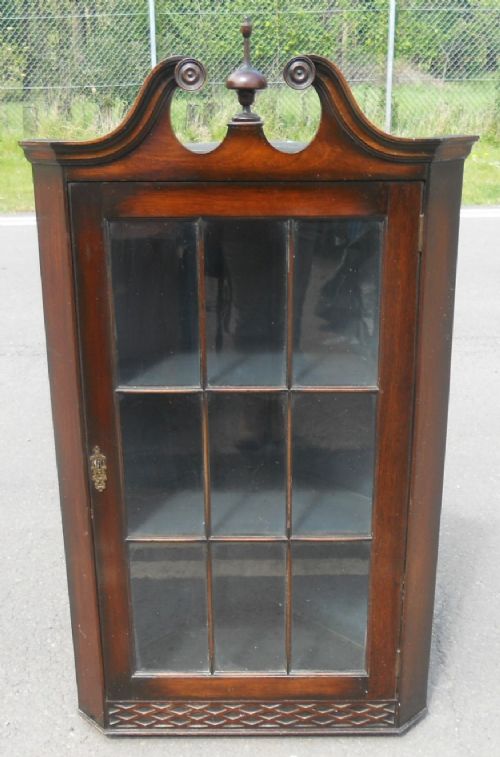

Small Mahogany Corner Cabinet
These small mahogany corner cabinets are compact storage pieces designed to fit neatly into domestic room intersections.
Small Mahogany Corner Cabinet
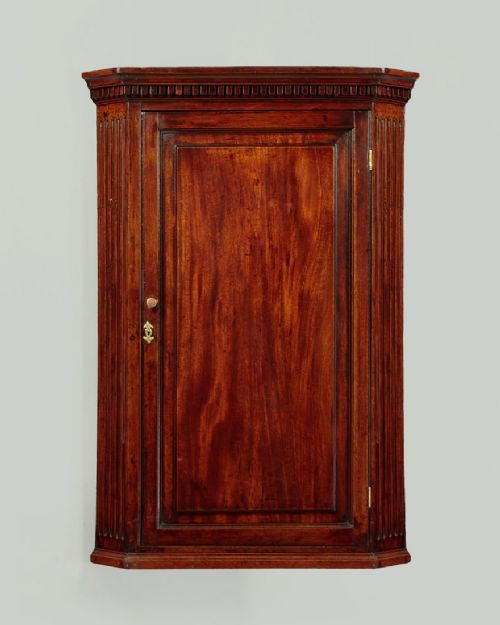
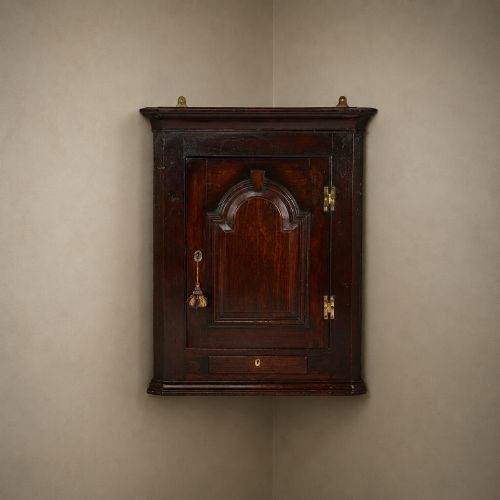
When searching for a small mahogany corner cabinet, you are looking at fitted storage forms designed to utilise unused room angles. The versions most commonly met on this page date from the Georgian and Edwardian periods, appearing frequently as hanging wall cabinets or floor-standing cupboards.
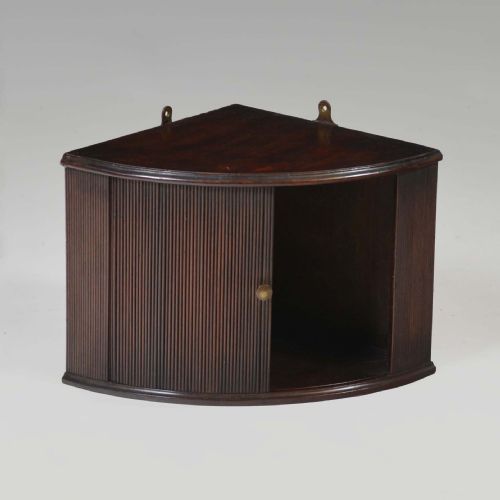
These pieces serve to display or conceal small items while occupying minimal floor space. The selection ranges from plain timber doors to glazed display fronts and tambour shutters, reflecting domestic needs across the eighteenth, nineteenth, and early twentieth centuries.
How they were made
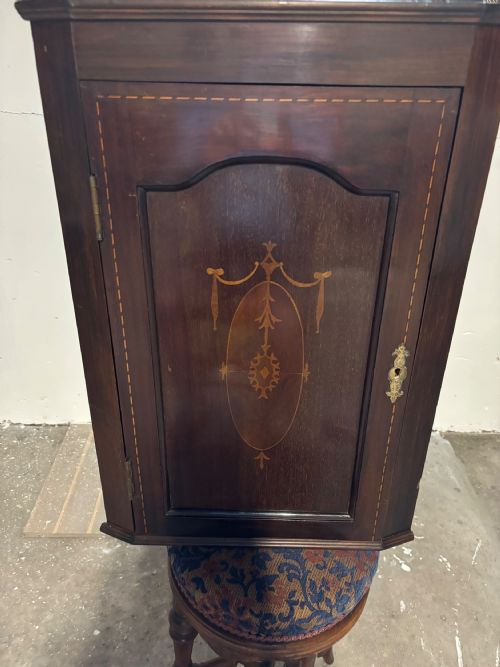
Makers constructed these cabinets primarily using mahogany, frequently embellishing surfaces with marquetry or contrasting satinwood and rosewood stringing. Hardware components such as brass escutcheons, hinges, and keys complete the construction.
Joinery methods adapted to the triangular footprint, utilising sturdy corner posts and wall-mounting brackets to secure the pieces safely. Glass panels appear in glazed display variants, while specialised interiors incorporate drawers or shelving.
Listings feature Edwardian, Georgian, and Victorian periods alongside materials such as mahogany, brass, glass, and rosewood.
What varies in quality
The standard of timber selection and inlay precision sets individual pieces apart. Finer examples display carefully matched grain patterns and delicate marquetry work rather than simple painted decoration.
Original hardware, working locks with keys, and intact glass panes distinguish higher grades of preservation. The sophistication of the overall style, moving from plain Georgian utility to elaborate Sheraton Revival or Edwardian inlay, dictates the tier of the piece.
The Small Mahogany Corner Cabinet Glossary
- Mahogany
- A durable tropical hardwood known for its rich reddish-brown colour and stable grain, frequently used in high-grade cabinet making.
- Edwardian
- A stylistic period spanning the early twentieth century, noted here for refined inlaid mahogany wall cabinets and display pieces.
- Georgian
- An eighteenth-century design era represented by architectural proportions, robust hanging cupboards, and functional drawer fittings.
- Tambour
- A flexible sliding shutter formed of narrow strips of wood glued to canvas, allowing curved access to cupboard interiors.
- Marquetry
- Decorative veneer work arranged in pictorial or geometric patterns using various woods such as satinwood and rosewood.
Small Mahogany Corner Cabinet: Frequently Asked Questions
How do I hang a wall cabinet?
These hanging corner cabinets utilise internal fixing points and sturdy brackets secured directly to wall studs.
Professional installation is recommended due to the combined weight of the mahogany timber and stored contents.
What is a tambour front?
A tambour front consists of narrow vertical wooden strips attached to a flexible backing fabric. This allows the door to slide smoothly around a curved corner.
Such mechanisms appear on specific Georgian and later examples for smooth operation in tight spaces.
Are these pieces strictly Georgian?
The selection spans multiple eras, including Georgian, Victorian, and Edwardian periods. Later revivals such as Sheraton Revival and Edwardian inlaid styles also feature prominently alongside pieces from around eighteen hundred.
Examining the construction methods and decorative inlays helps clarify the exact period of manufacture.
How were corner cupboards used?
Households utilised these corner units to store dining china, glassware, or small valuable items while saving floor space. Glazed variants served specifically for display purposes.
Their triangular footprint allowed them to utilise domestic room angles effectively.
What woods besides mahogany appear?
While mahogany forms the primary body, secondary timbers and decorative veneers include satinwood, rosewood, and various hardwoods.
Inlays and stringing often employ these contrasting materials to accentuate the cabinet design.