

Corner Cupboard on Stand
When you set out to find a corner cupboard on stand, you are hunting for clever geometry designed to turn awkward angles into handsome storage.
Corner Cupboard on Stand
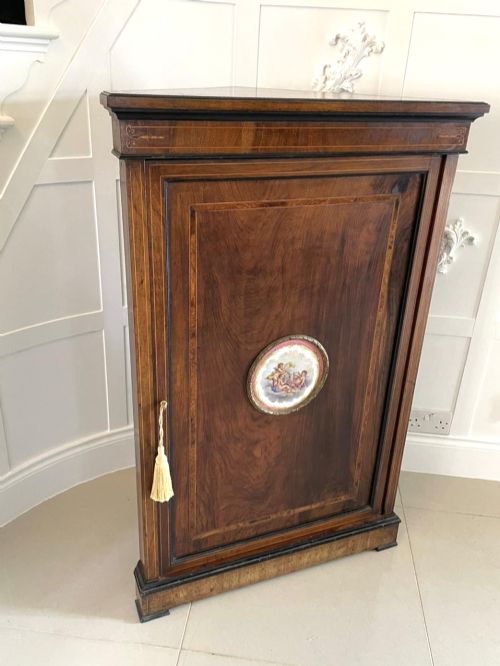
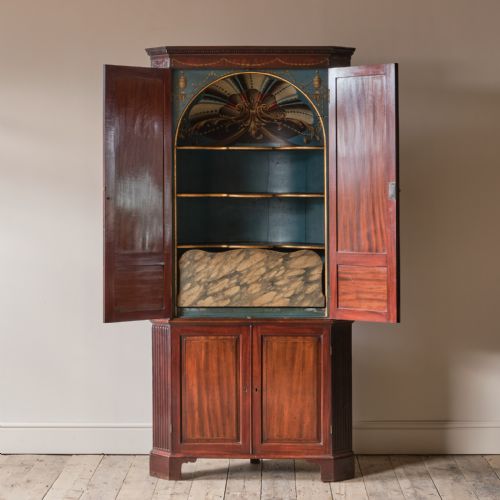
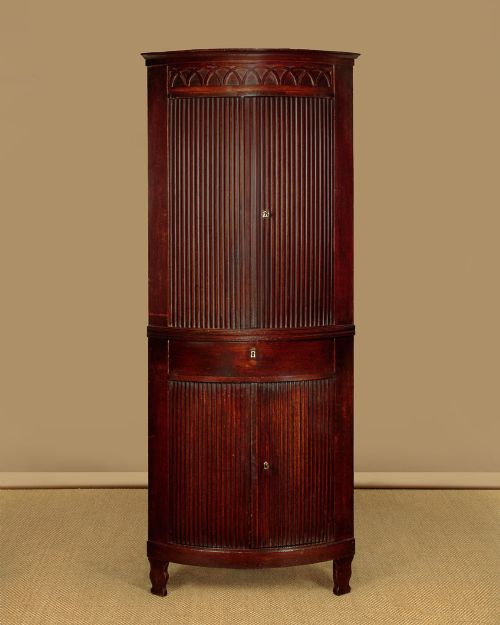
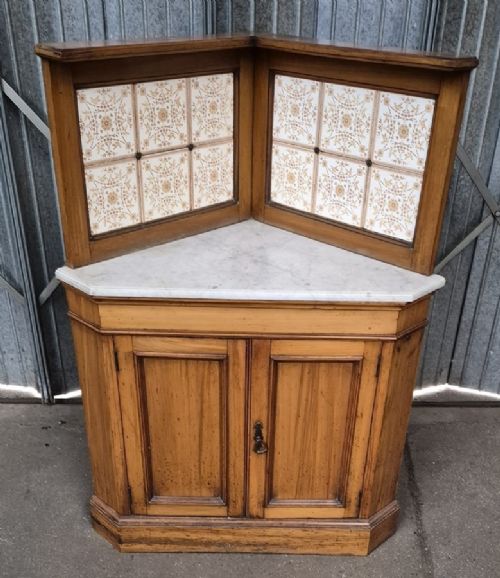
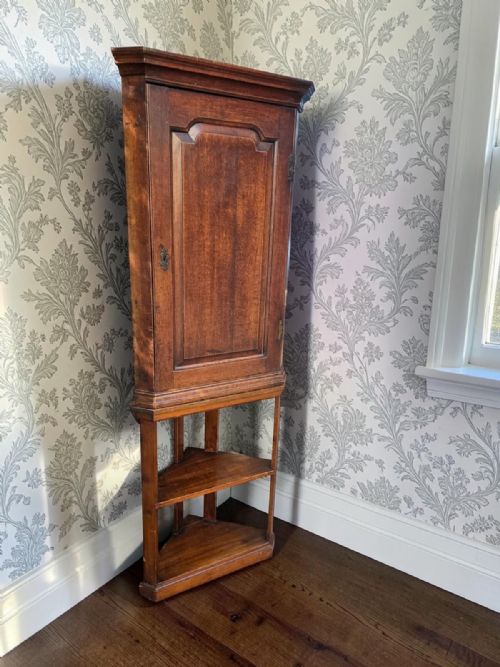
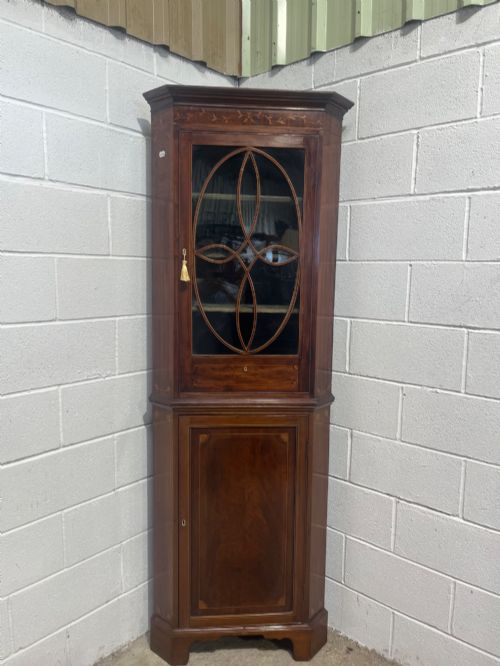
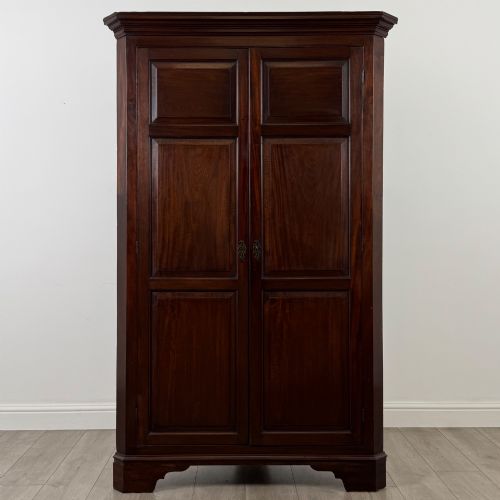
A corner cupboard on stand places a fitted storage cabinet atop an elevated frame, lifting the timber clear of the floor to utilise wasted wall junctions. The pieces found here span the Georgian, Victorian and Edwardian eras, bridging practical domestic architecture and fine furniture design.
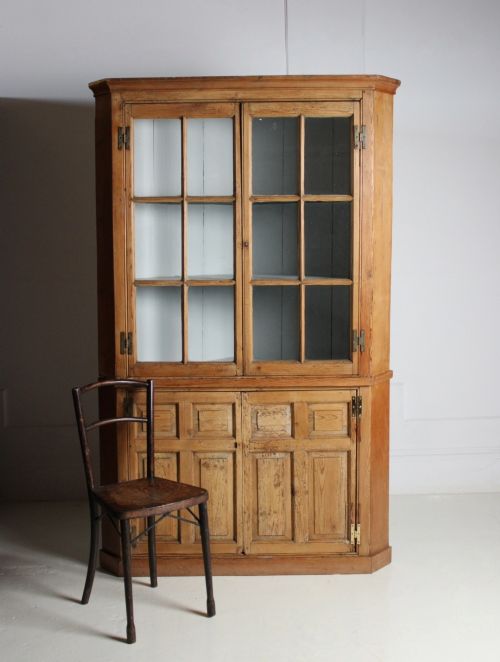
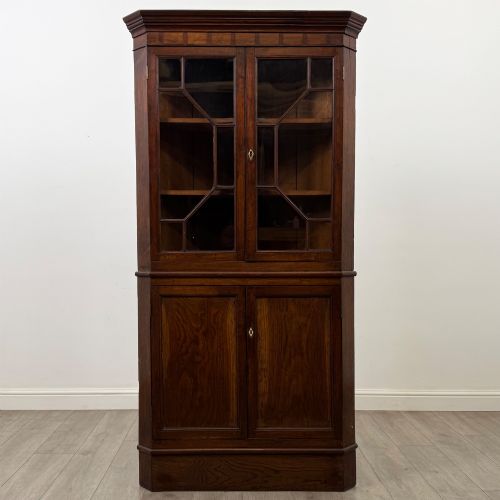
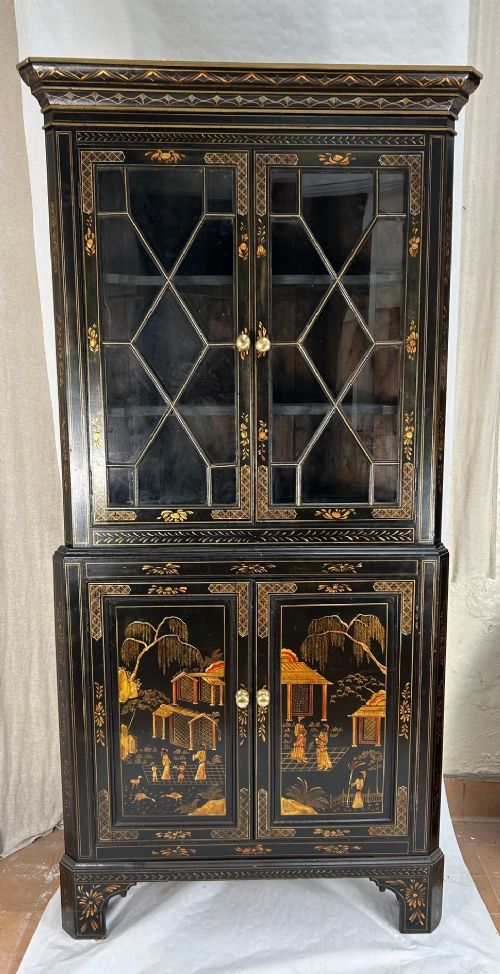
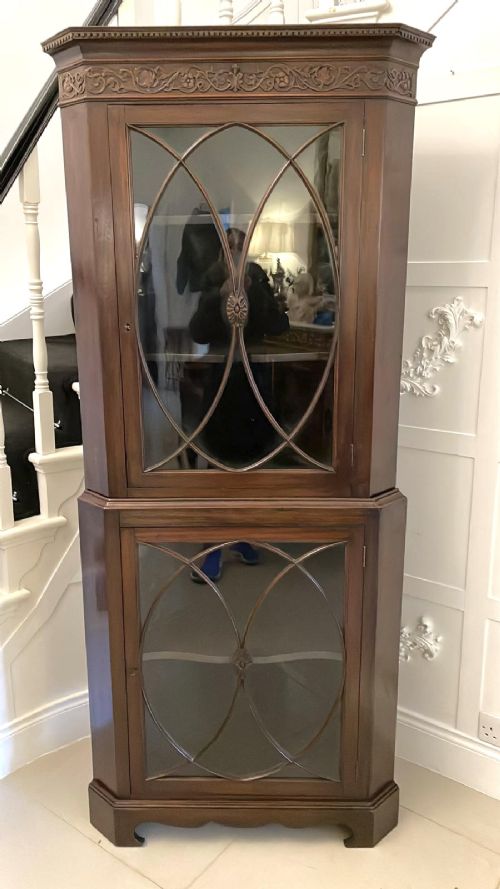
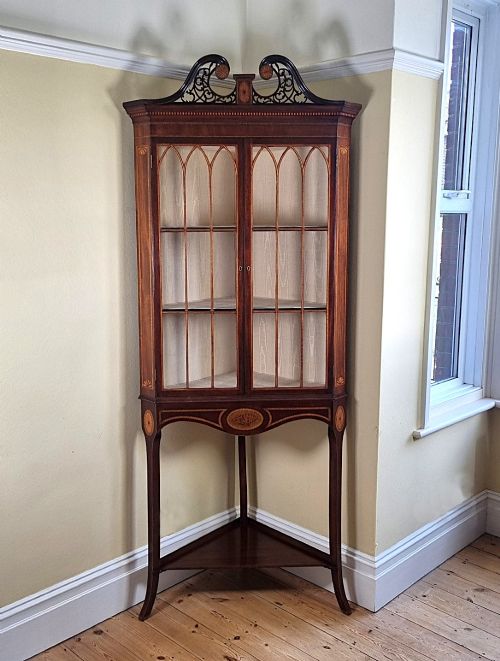
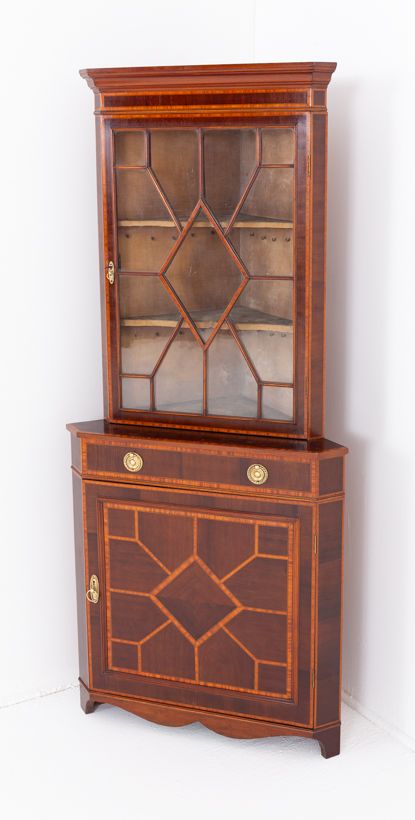
Most examples meet you in rich timbers such as mahogany and oak, often constructed in two distinct parts to ease movement between rooms. They range from simple provincial country pieces to elaborate Sheraton Revival confections fitted with glazed doors and delicate inlay.
Materials and Construction
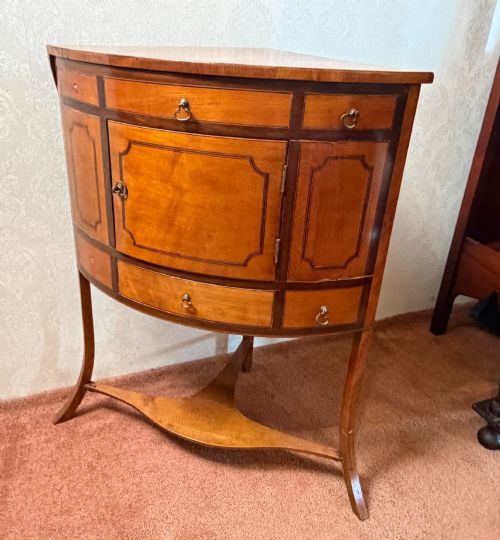
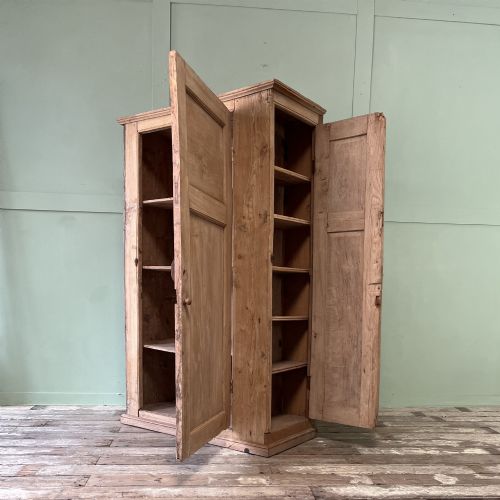
Cabinetmakers built these pieces primarily using dense hardwoods like mahogany and oak, frequently employing pine for internal carcasing and secondary woods. Surface enrichment relied on skill rather than excess, incorporating satinwood inlay, marquetry, and polished brass hardware.
Standing variants required robust joinery to support the weight of the upper cabinet upon the distinct base frame. Glazing bars were meticulously shaped to hold glass securely in astragal patterns while maintaining structural integrity across the corner angle.
Cabinet forms include two-part standing units, bow fronts, and glazed display variations.
Judging Quality and Craftsmanship
Quality rests upon the selection of timber, visible in the depth of flame mahogany or the tight grain of early oak panels. Superior examples display thoughtful proportions where the height of the stand balances the mass of the upper cupboard harmoniously.
Refinement shows in the execution of details such as hand-cut dovetails, original brass hinges, and crisp cross-banding. Lesser versions rely on heavier, plain timber without the careful grain matching or delicate stringing seen on high-status pieces.
Edwards & Roberts
The Corner Cupboard on Stand Glossary
- Astragal glazed
- Fitted with narrow wooden bars holding small panes of glass in doors. This method allows display while keeping the interior contents dust-free.
- Bow front
- A convex, curved front profile that softens the rigid ninety-degree angles of a room. It adds visual depth and fluid movement to the cabinet.
- Bracket feet
- Small, stable foot supports projecting outward at the base of the stand or cabinet. They lift the piece cleanly off floor level.
- Marquetry
- Decorative patterns formed by inlaying different coloured veneers into a primary wood surface. Craftsmen used this technique to create floral or geometric motifs.
Corner Cupboard on Stand: Frequently Asked Questions
How do I fit a corner cupboard into a modern room?
These cabinets are engineered to tuck neatly into dead wall space, making them ideal for rooms where floor area is at a premium. They draw the eye upward and anchor an awkward junction without dominating the floor plan.
Position yours away from direct heat sources to protect historic timber and veneer from drying out. They work well paired with low seating or left to stand alone as a sculptural focal point.
Were these cupboards used exclusively for dining rooms?
Georgian and Victorian households placed these cabinets wherever storage and display were needed. While dining rooms held china and glassware, sitting rooms and halls utilised them for books or daily essentials.
The clever angle made them versatile enough to serve in bedrooms or libraries. Their interiors often retained original shelving shaped specifically for bottles, books, or ceramics.
How can I tell a Georgian piece from a later revival?
Genuine Georgian pieces display the tool marks, timber shrinkage, and construction methods characteristic of eighteenth-century workshop practice. Oak linings and hand-cut dovetails point to period authenticity.
Revival pieces from the late nineteenth or early twentieth century often show machine-sawn timber and brighter, cleaner internal surfaces. Stylistic cues like Sheraton Revival satinwood inlay help date these later interpretations precisely.