


Corinthian Capital Desk Lamp
These corinthian capital desk lamp examples bring grand architectural classicism to a workspace through slender fluted columns and ornate capitals.
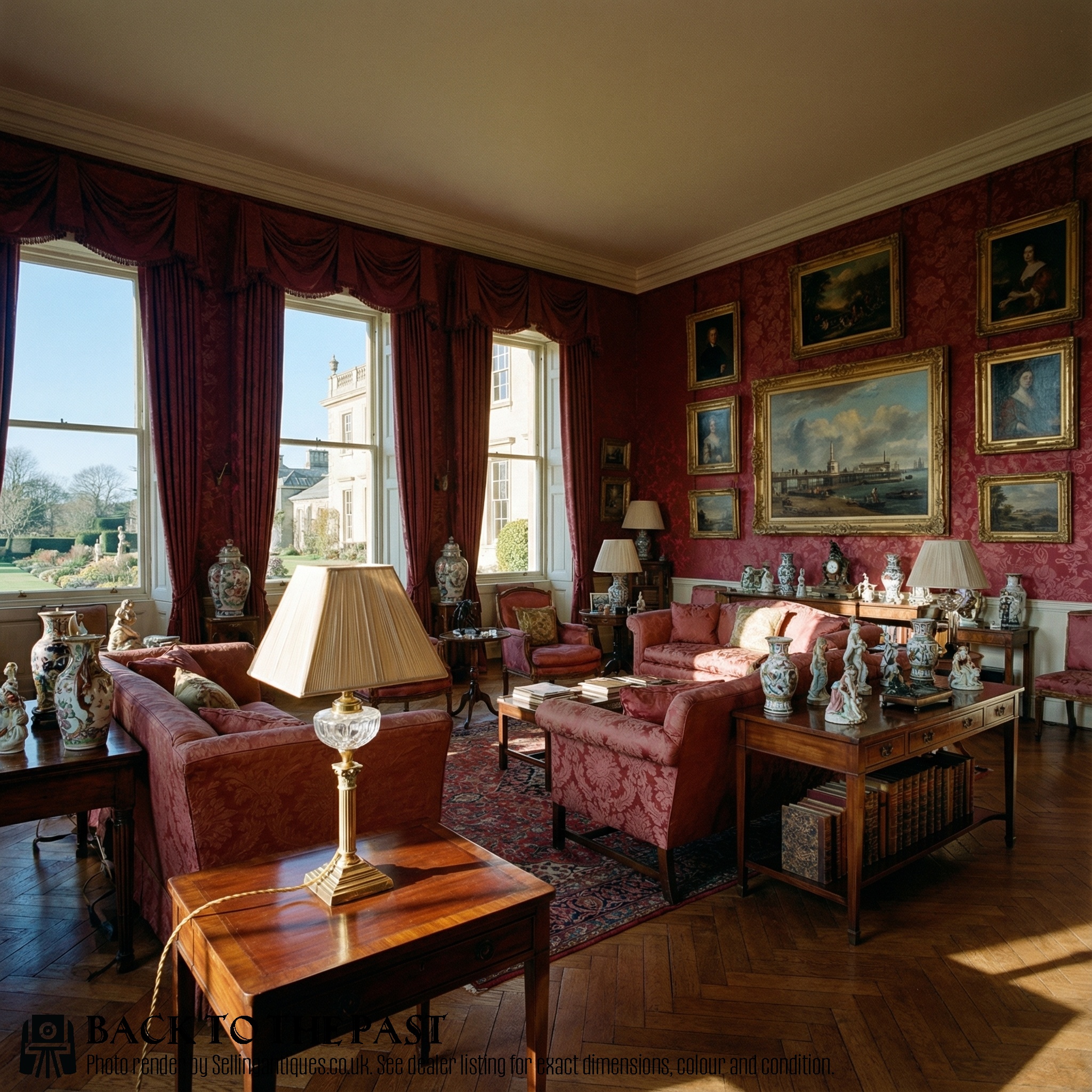
Corinthian Capital Desk Lamp
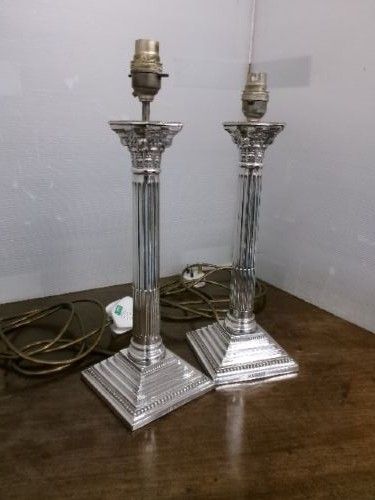
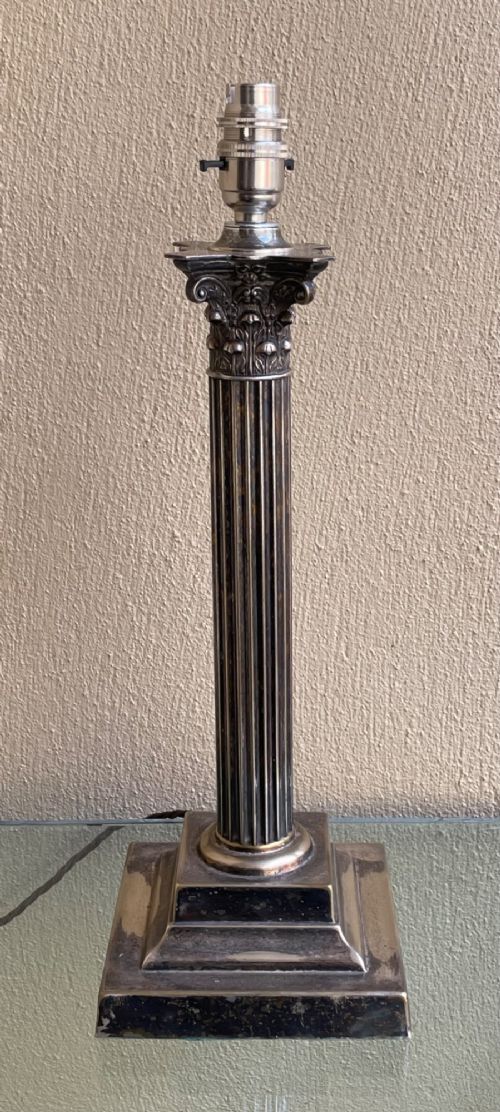
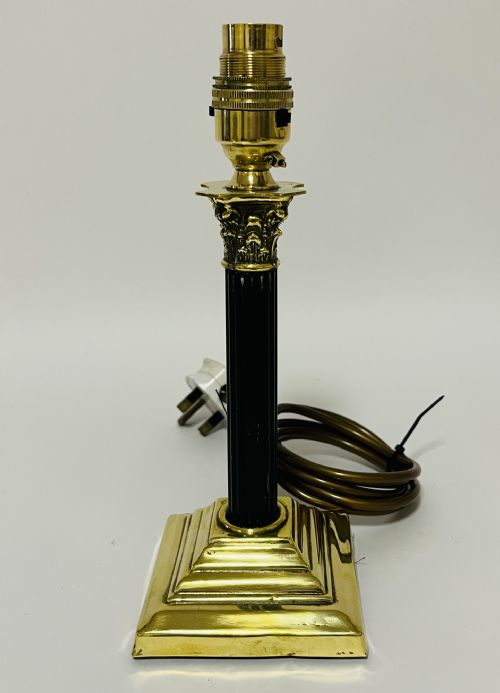
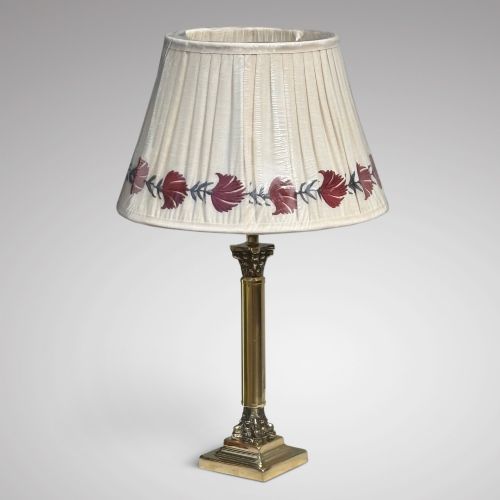
A corinthian capital desk lamp is a table lamp designed around the classical column form, featuring the characteristic acanthus leaf decoration at the top of the shaft. You will find these pieces appearing in brass, silver plate, and electroplated metal, often taking the form of paired or single column table lamps.
The selections span from the nineteenth century through the Victorian and Edwardian eras, incorporating neoclassical revival styles alongside specific variations like cut glass reservoirs and ornately mounted onyx bases.
How they were made
Makers utilised cast brass, patinated brass, and silver plate to build the substantial columns and stepped square bases that support the lighting mechanism. Detail work relies on traditional metal casting methods to form the intricate volutes and foliage of the capital.
Some examples incorporate cut glass reservoirs or polished onyx segments fitted directly beneath the burner or electrical conversion, combining heavy metalwork with reflective transparent or mineral elements.
Listings for this phrase include examples spanning the Victorian and Edwardian eras, incorporating materials from cut glass and onyx to silver plate and patinated brass.
What varies in quality
The definition and crispness of the casting in the acanthus leaves and volutes separate standard production from finer work. Sharper, deeper detailing on the capital indicates a higher grade of craftsmanship.
Heavier gauge metals and solid mounting methods provide better physical stability to the tall column structure, while quality plating or patination determines how the metal ages over time.
The Corinthian Capital Desk Lamp Glossary
- Capital
- The topmost member of a column, decorated here with carved or cast acanthus leaves characteristic of the Corinthian order. It forms the visual anchor just beneath the lamp fitting.
- Fluting
- Shallow vertical grooves carved or cast along the shaft of the column. This classical architectural detail draws the eye upward toward the capital.
- Ormolu
- Finely ground high-carat gold-bronze applied to an object, seen mounting select stone components in this selection. It provides a warm, enduring metallic lustre.
- Reservoir
- The container originally designed to hold lamp oil before conversion to electricity. In finer pieces, this component is fashioned from cut glass.
- Neoclassical
- A style reviving classical architectural elements from ancient Greece and Rome. It defines the structural proportions and decorative vocabulary of these lamps.
Corinthian Capital Desk Lamp: Frequently Asked Questions
Are these lamps originally electric?
Most of these pieces started life as oil lamps before being converted to run on electricity during subsequent decades. The original oil reservoirs and burner assemblies often remain intact as part of the conversion.
Collectors appreciate these conversions because they preserve the original nineteenth and early twentieth century metalwork while allowing safe daily use in modern spaces.
How do I date a brass column lamp?
Dating relies on examining the construction methods of the metal base, the wear of the silver plate or brass patination, and the style of the mounting hardware. Victorian and Edwardian examples often display heavier casting and distinct assembly screws.
Comparing the specific form of the stepped base and the detailing on the capital against known period pieces helps narrow down whether the piece dates from the nineteenth century or the early twentieth century.
Where should I place a column lamp?
Their tall, vertical proportions make these lamps well suited for placement on large desks, sideboards, or substantial reading tables where they can function as primary task or accent lighting. Because many examples feature detailed columns viewable from all sides, they work effectively in open room settings.
Paired arrangements look particularly balanced when placed on matching pedestals or at opposite ends of a long piece of furniture.