
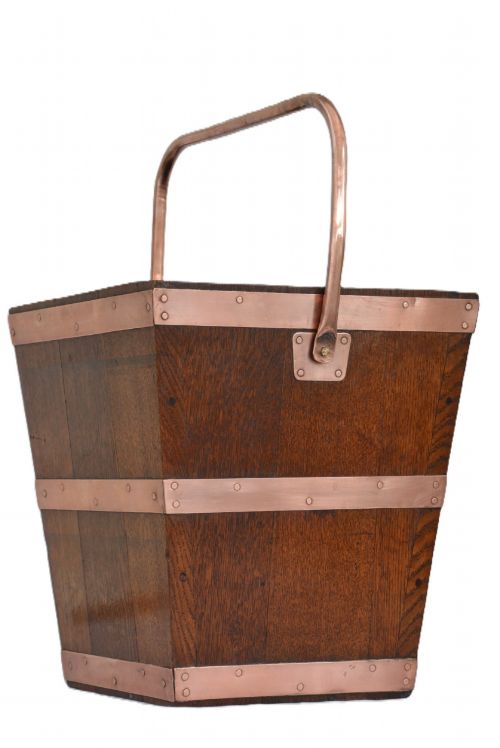


Copper Storage Bucket
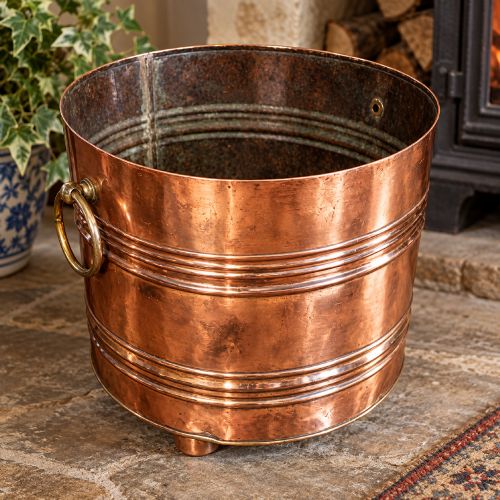
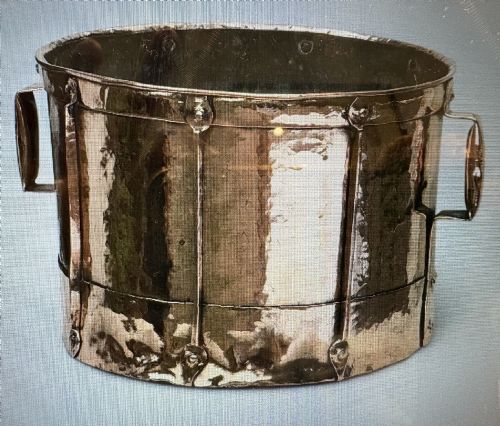
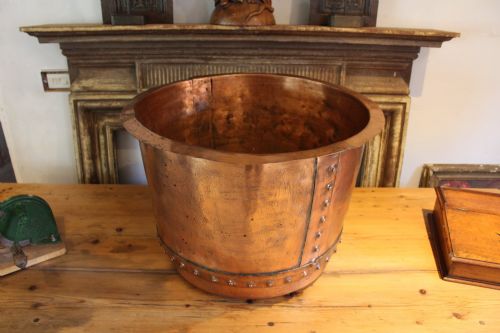
These copper storage bucket vessels bring honest warmth and utility to a room, whether holding fireside logs or standing as planters.
Copper Storage Bucket
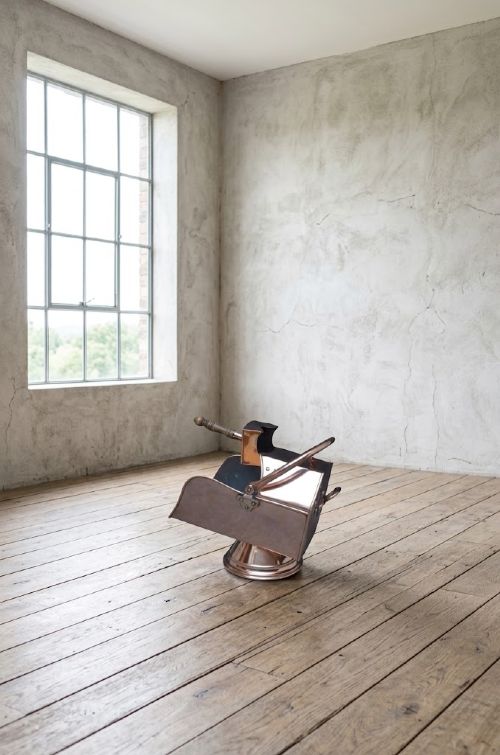
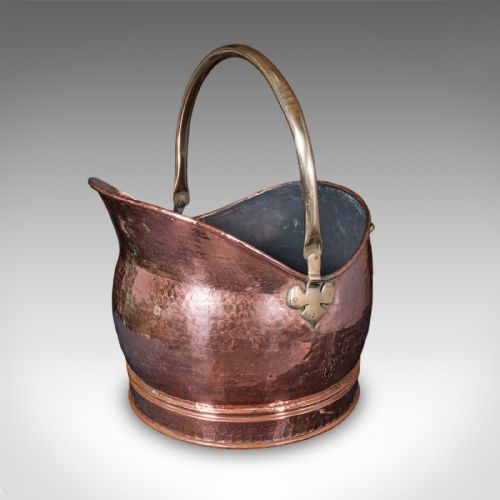
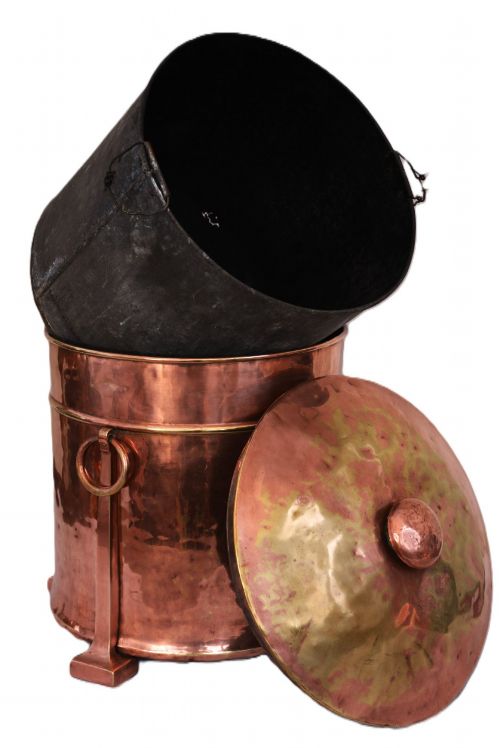
A copper storage bucket serves primarily as a robust vessel for hearth accessories like coal, peat, and logs, or as a decorative planter and jardiniere. When you search for a copper storage bucket, you encounter forms that span utilitarian coal scuttles, grain measures, and water barrels repurposed over generations.
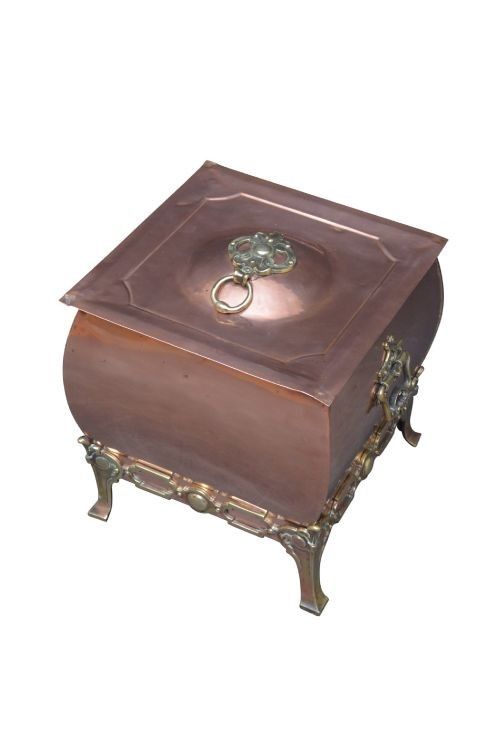
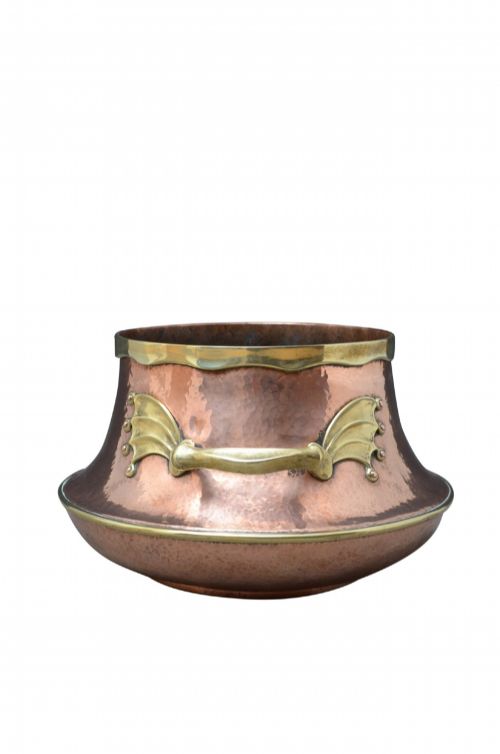
The pieces appearing on this page date predominantly from the nineteenth and early twentieth centuries, with Victorian and Arts and Crafts examples forming the core of the selection. You are most likely to meet round log bins and coal buckets featuring contrasting brass handles, iron swing bails, or wooden grips.
Geographic origins extend across English workshops, French provincial kitchens, and Scandinavian country homesteads. These vessels transition easily from functional fireside use to holding indoor plants and umbrellas in modern hallways.
How they were made
The construction relies on sheet copper shaped by hand hammering, rolling, and riveting to create durable cylindrical or helmet-shaped bodies. Makers reinforced rims and bases with iron bands and brass trim to withstand heavy daily handling.
Handles and fittings frequently combine brass and wrought iron, attached securely with heavy-duty rivets. Some pieces incorporate solid oak or other timbers for internal framing and staves, blending multiple materials for structural integrity.
A few lucky buckets retain their original iron frames and secret dents from hurried nineteenth-century coal shovelling.
What varies in quality
Quality rests in the weight of the metal gauge and the integrity of the original construction rather than decorative surface treatment alone. Thicker copper sheets resist denting and hold their circular form over centuries of use.
Subtleties in craftsmanship distinguish standard utility wares from finer studio pieces, such as hand-hammered detailing, well-fitted lids, and robust iron frames. Original unreplaced handles and authentic period mountings elevate the integrity of a piece.
The Copper Storage Bucket Glossary
- Coal scuttle
- A vessel designed specifically for holding and carrying coal to a fireplace, often featuring a shovel compartment or angled opening.
- Jardiniere
- An ornamental pot or stand for holding flowers or plants, frequently used to describe large decorative copper vessels.
- Planter
- A container used for growing and displaying plants, a common secondary use for repurposed coal buckets and log bins.
- Arts and Crafts
- A design movement emphasising handcraftsmanship, simple forms, and traditional metalworking techniques over industrial mass production.
- Purdonium
- A box or bucket designed specifically for storing coal indoors, often fitted with a sloping lid and carrying handle.
Copper Storage Bucket: Frequently Asked Questions
How were these buckets used originally?
These vessels served everyday domestic functions in nineteenth-century homes, primarily carrying coal or peat to stoke open hearths. Many also functioned as water barrels or grain measures in farmhouses.
Over time, homeowners repurposed the sturdier metal containers to hold firewood by the hearth or to display large potted plants.
Can I use a vintage bucket for plants?
These metal vessels make exceptional planters for indoor foliage and large house plants because their robust construction holds soil and moisture reliably.
It is wise to place a plastic liner inside older unsealed containers to protect the historical interior metal from continuous dampness.
How do I clean antique copper?
Most collectors prefer to leave a warm, dark natural patina on nineteenth-century copper rather than polishing it to a bright shine. Gentle dusting and occasional washing with mild soapy water keep the metal safe.
Avoid harsh abrasive chemical cleaners that strip away the aged surface character accumulated over generations.
How do I date a copper bucket?
Dating relies on observing construction methods, such as hand-beaten hammering marks versus uniform machine rolling, along with the prevailing stylistic influences. Victorian and Arts and Crafts pieces often display distinct handle mounts and specific brass reinforcement techniques.
Comparing the alloy combinations and fastener types against known period examples helps narrow down the decade of manufacture.