




Copper Preserving Pot
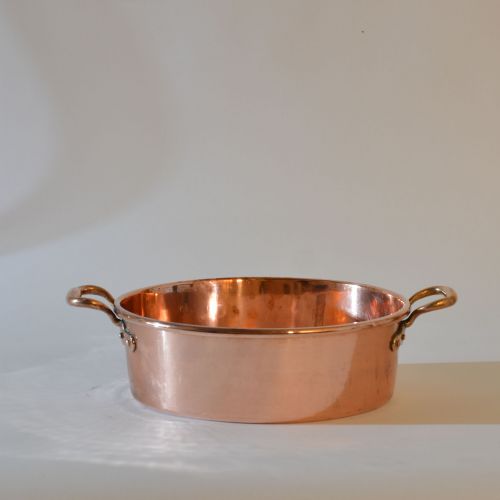
A copper preserving pot brings warmth and working history straight into a room, offering heavy metal vessels built for fruit and sugar.
Copper Preserving Pot
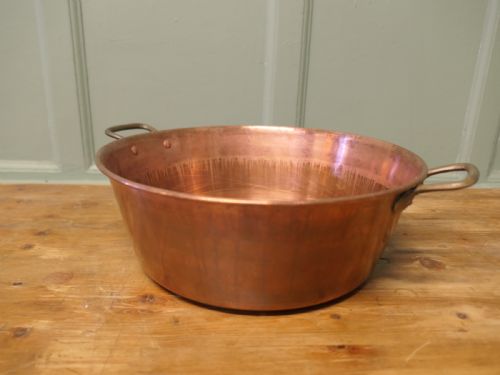
A copper preserving pot is a robust kitchen vessel designed for boiling fruit and sugar, combining deep bowls with sturdy handles for heavy kitchen work. These pieces span George III, Victorian, and wider nineteenth-century periods, taking the form of preserve pans, jam pans, bowls, and cream setting pans.
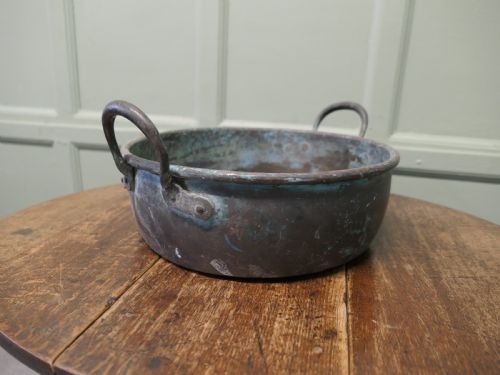
The versions most commonly met on this page belong to the nineteenth century and the Victorian era, often bearing the marks of country kitchens and utilitarian workshops. They appear as large cooking vessels and heavy pans, frequently fitted with brass handles or iron mounts for lifting high heat.
How they were made
Makers formed these vessels primarily from heavy sheet copper, hammering the metal into deep, rounded basin shapes that distributed heat evenly across the base. Rivets secured the joints and handles, joining brass or iron components firmly to the main copper body.
Surface finishes remained functional, showing the tool marks of the handbeaten process rather than high factory polish. Handles were cast in brass or forged from iron, then attached securely to withstand the immense weight of boiling contents.
Copper Preserving Pot Retail Price Guide 2026
Typical asking prices for copper preserving pot among the pieces listed under this phrase on Sellingantiques today, from the lower quarter to the upper quarter. They describe what is for sale here now, not the wider market.
Some heavy preserve pans still bear the faint, accidental thumbprint of the metalworker pressed into the warm copper two centuries ago.
What varies in quality
Substantial metal gauge and overall weight set superior examples apart from lighter vessels, as thicker copper walls retained heat better and resisted denting through decades of heavy hearth use. The heft of a pan, often exceeding several kilograms, speaks directly to the quality of the original materials.
Considered construction of the handles and the neatness of the riveted joints distinguish finer workshop output from simpler utilitarian items. Maker attribution, such as signed pieces by firms like Hodges and Sons, elevates an ordinary kitchen utensil into a collector piece.
Hodges and Sons
The Copper Preserving Pot Glossary
- Preserving pan
- A wide, deep vessel with sloped sides designed specifically for boiling down fruit and sugar to make jams and preserves. The wide brim allowed steam to escape efficiently during long simmering sessions.
- Cream setting pan
- A shallow, wide basin utilised in dairies to allow cream to rise to the top of fresh milk before skimming. These pans feature large surface areas to encourage the separation process.
- George III
- The period spanning the reign of King George the Third from seventeen sixty to eighteen twenty, noted for robust domestic metalwork. Pieces from this era often display early hand-beaten construction characteristics.
- Victorian
- The era corresponding to the reign of Queen Victoria from eighteen thirty-seven to nineteen oh one, encompassing industrial expansion and domestic kitchen refinement. Copperware from this time combined heavy utility with standardised workshop production.
- Riveted
- A method of joining metal plates together by inserting a metal pin through aligned holes and hammering the tail flat. This mechanical bond provided exceptional strength for heavy vessels lifted while full of hot liquid.
Copper Preserving Pot: Frequently Asked Questions
What is a copper preserving pot?
A copper preserving pot is a heavy-duty kitchen vessel designed for boiling fruit, sugar, and jams over an open fire or stove. These pieces utilise thick copper walls to ensure even heat distribution without scorching the contents.
Most surviving examples date from the nineteenth century and George III periods, reflecting a time when copper was the primary metal for demanding culinary tasks. Their generous proportions and sturdy handles made them essential equipment for large domestic households.
How were copper preserving pots used?
These pots served primarily for fruit preservation, jam making, and large-scale confectionery work where precise heat control prevented sugar from burning. The wide brim allowed steam to evaporate quickly during long hours of boiling.
Beyond preserves, some specialised forms like cream setting pans functioned in dairies to separate cream from milk. Their robust construction allowed them to transition easily from hearth hooks to heavy iron trivets.
How do you clean copper preserving pots?
Cleaning antique copper requires gentle polishes formulated specifically for metal to remove oxidation without wearing away the historic surface texture. Avoid harsh abrasive pads that scratch the soft copper body and diminish the character built over centuries.
Many collectors prefer to leave a mellow, aged patina intact rather than polishing the metal to a bright shine. Regular dusting and occasional wiping with a soft cloth keep the surface stable and protected.
How do you date a copper preserving pot?
Dating relies on observing construction details such as the shape of the handles, the presence of hand-beating marks, and the style of the rivets. George III pans often display distinct hand-forged iron mounts, while Victorian examples frequently incorporate cast brass drop handles.
Weights and dimensions also offer clues, as nineteenth-century workshop standards shifted toward heavier, standardised sheet metal. Maker marks or stamps, when present, provide the most direct evidence for specific chronological placement.
Can you still cook in antique copper pots?
Cooking in antique copper pots is possible, though many collectors choose to display them as decorative objects rather than utilising them on modern hobs. Unlined copper can react chemically with high-acid fruits during preserving, which historical users managed through tin linings.
If you intend to cook with an antique vessel, check the interior surface for a stable tin lining and ensure the base sits flat on your heat source. Modern induction hobs require specific metal compatibility, so verify your stove type before heating.