

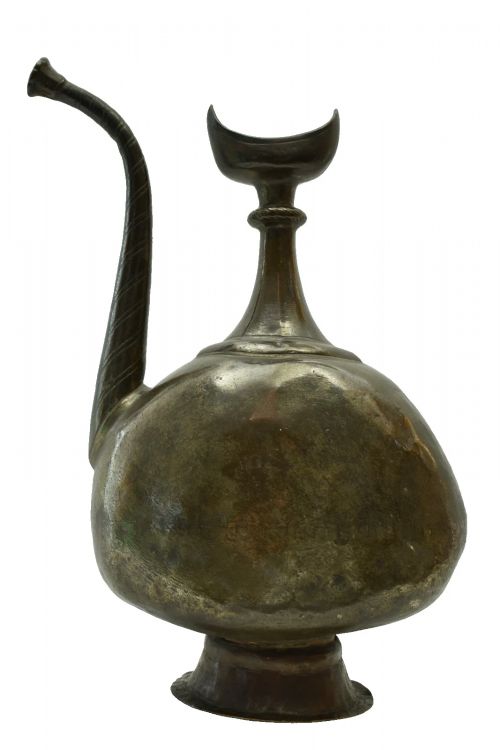


Copper Pitcher Jug
These copper pitcher jug examples bring practical utility and warm metallic tone into a room, spanning Georgian, Victorian, and Arts and Crafts periods.
Copper Pitcher Jug
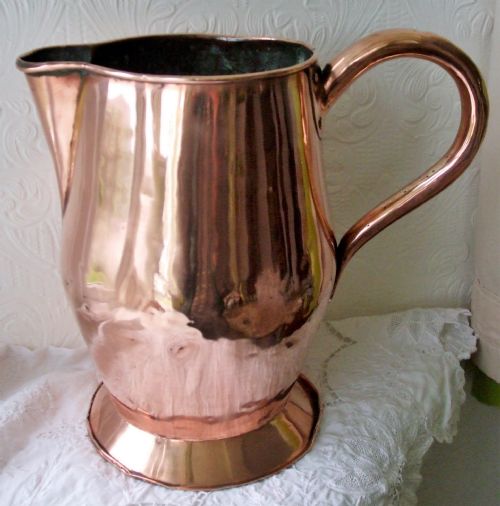
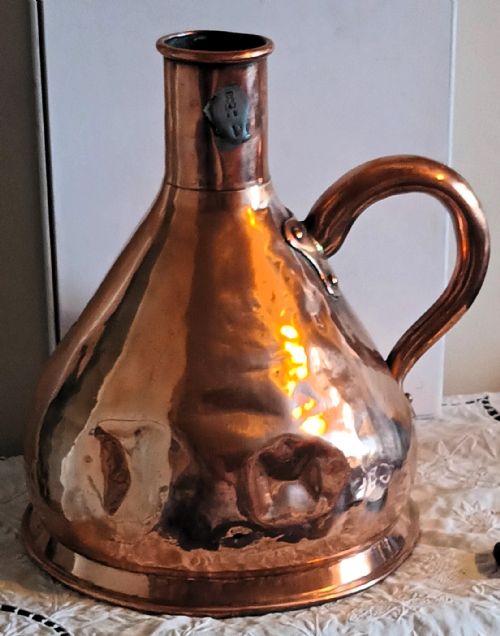
A copper pitcher jug serves primarily as a liquid container, appearing in forms such as English measuring vessels, harvest jugs, and Jersey cans. The selection includes large Georgian and Victorian capacity measures, alongside decorative serving tankards and flagons.
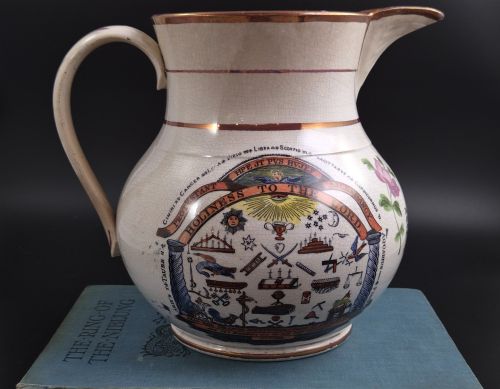
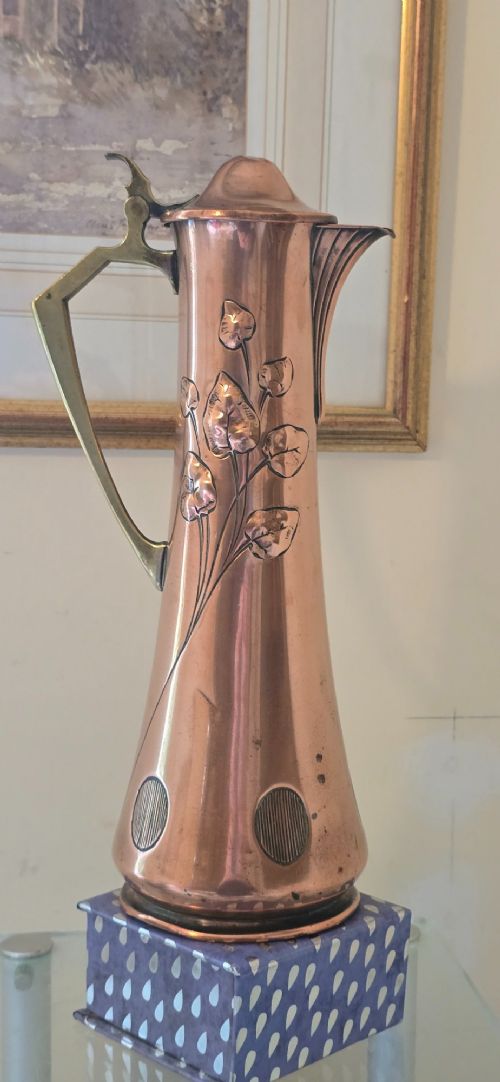
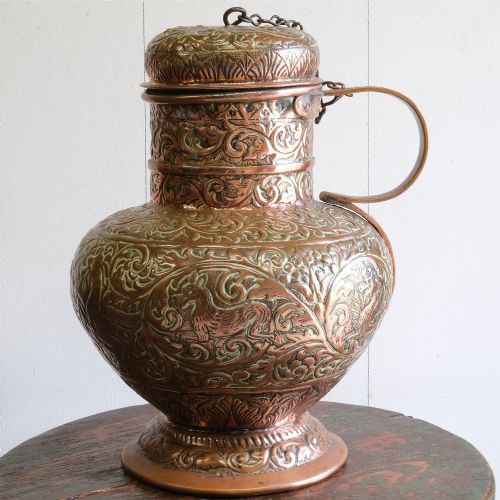
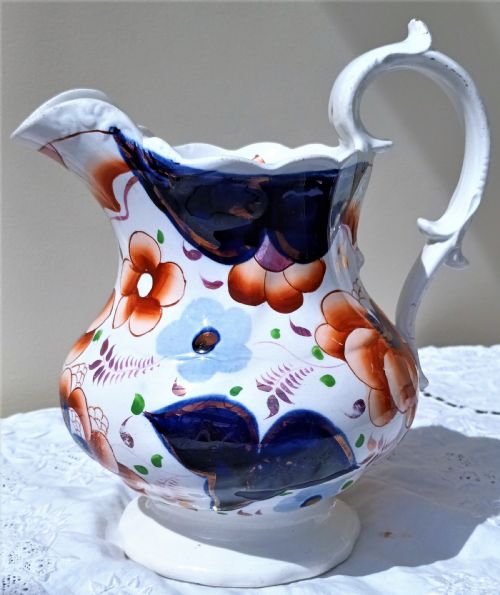
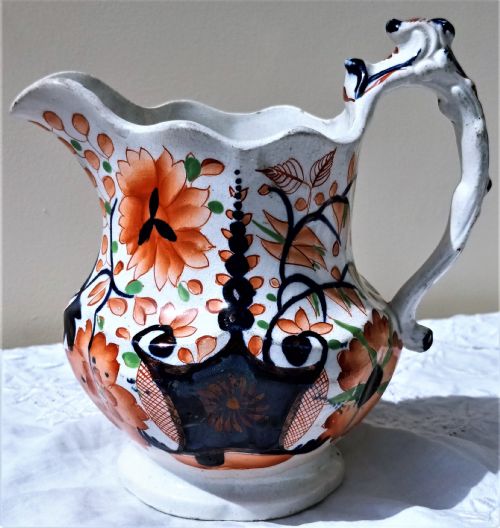
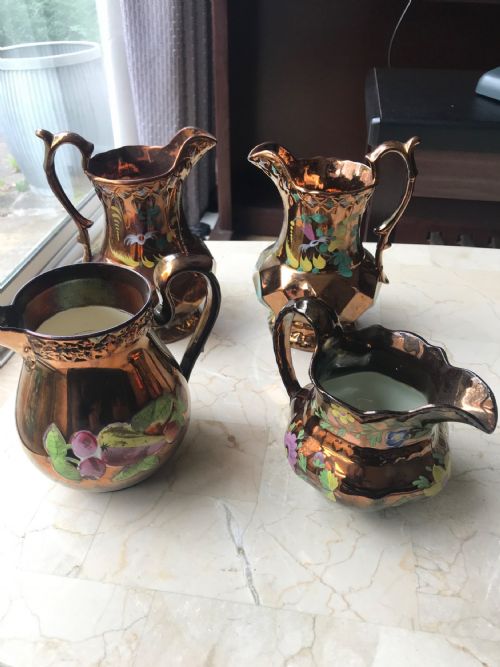
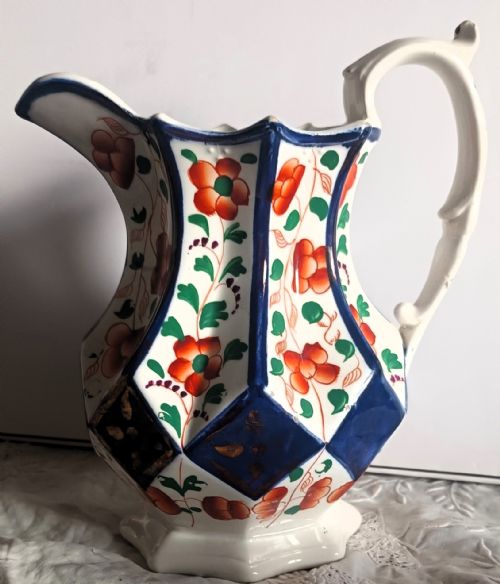
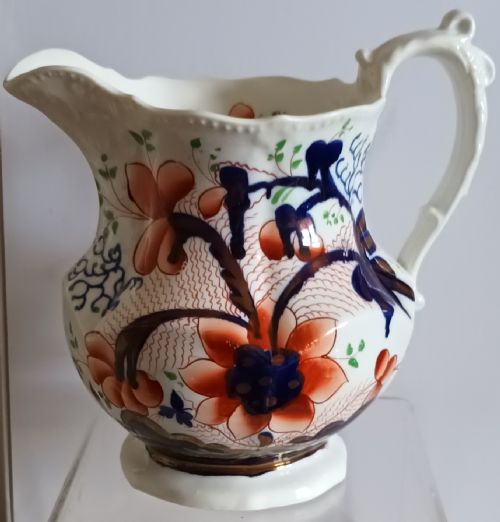
Makers and artisans also shaped these forms within specific movements, producing Art Nouveau and Arts and Crafts designs alongside Middle Eastern and Ottoman ewers. Earthenware and ceramic pieces featuring copper lustre decoration sit alongside these solid metal items.
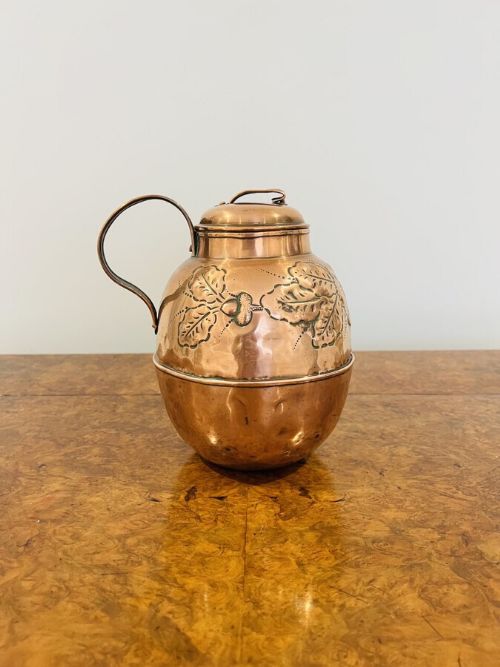
Buyers encounter graduated sets of measuring jugs as well as individual lidded pitchers. These objects originate from English domestic and commercial spaces, alongside continental European workshops.
How they were made
Makers formed the metal bodies from sheet copper and bronze, frequently incorporating brass for spouts, rims, or handles. Riveted joints, folded seams, and beaten surfaces demonstrate the handwork involved in shaping rigid sheet metal into fluid spouts and cylindrical bodies.
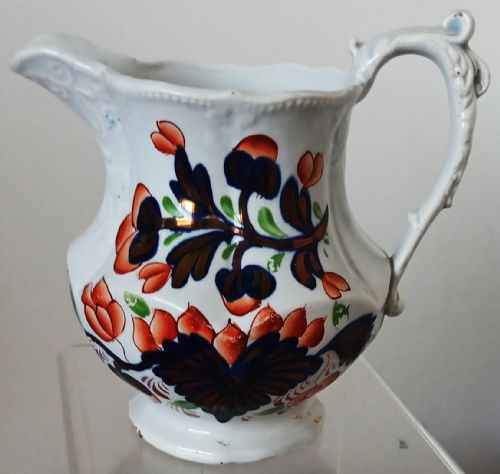
Artisans applied relief decoration, silver inlay, and cast finials to define the Arts and Crafts, Art Nouveau, and Islamic styles. Ceramic alternatives relied on earthenware and ironstone bodies finished with copper lustre glazes and polychrome hand painting.
Listings include copper, brass, and bronze alongside earthenware, ironstone, and ceramic bodies finished with copper lustre glaze.
What varies in quality
The refinement of the metalwork distinguishes standard utility vessels from exhibition pieces, particularly where handlers shaped complex curves and applied floral relief ornamentation by hand. Weight, gauge thickness, and the crispness of capacity stamps separate everyday kitchen measures from presentation flagons.
Surface preservation affects visual presence, as unpolished patination differs from aggressive cleaning that removes tool marks. In ceramic examples, the richness of the copper lustre glaze and the precision of the hand-decorated botanical patterns determine the tier of the piece.
Joseph Sankey·Livesley Powell & Co·Orme Evans & Co·J. Bower·WMF
The Copper Pitcher Jug Glossary
- Jersey can
- A distinctive tall copper pouring vessel originating from the Channel Islands featuring a cylindrical body and a strap handle. These were utilised for dairy storage and domestic pouring.
- Haystack measure
- A traditional British liquid measure shaped with a tapering cylindrical body that resembles a stacked pile of hay. These bear official capacity verification stamps.
- Ewer
- A large pitcher with a wide spout and a curved handle designed for holding water or wine. This form appears across European metalwork and Islamic metal art.
- Copper lustre
- A ceramic glaze technique incorporating metallic copper salts to produce a reflective, iridescent sheen on earthenware or porcelain. Staffordshire potteries produced many milk and water jugs using this finish.
- Flagon
- A large vessel with a handle and lid intended for holding beverages at table. These metal containers often hold multiple pints or gallons.
Copper Pitcher Jug: Frequently Asked Questions
How do I clean an old copper jug?
Wash the surface gently with warm soapy water and a soft cloth to remove surface dust. Avoid abrasive metal polishes that strip away historical patination.
Dry the metal thoroughly with a soft towel to prevent water spotting. Leave the natural darkening intact if you prefer an aged appearance.
Were these jugs used for measuring?
Many metal examples served as official capacity measures in taverns and markets. Makers stamped these vessels with volume indicators to comply with trade standards.
Other pieces functioned as domestic water jugs, creamers, or decorative serving vessels rather than strict trade tools.
How do I tell Victorian from Georgian copper?
Georgian measuring vessels often display heavy cast brass rims and hand-beaten construction marks from early sheet production. Makers stamped verification ciphers relating to reigning monarchs on the lip or handle.
Victorian examples frequently incorporate machine rolling, crisper stamped capacities, and stylistic influences from the Arts and Crafts movement.
Can I use these pitchers for serving drinks?
Solid metal pitchers retain temperature well and hold liquids safely if the interior remains clean. Check the interior lining to ensure the metal is suitable for consumable fluids.
Ceramic lustre jugs function well for serving water or milk, provided the glaze has no hairline cracks.