



Copper Garden Tub
A copper garden tub brings a weathered metallic warmth to outdoor planting spaces, combining deep historical utility with robust domestic metalwork.
Copper Garden Tub
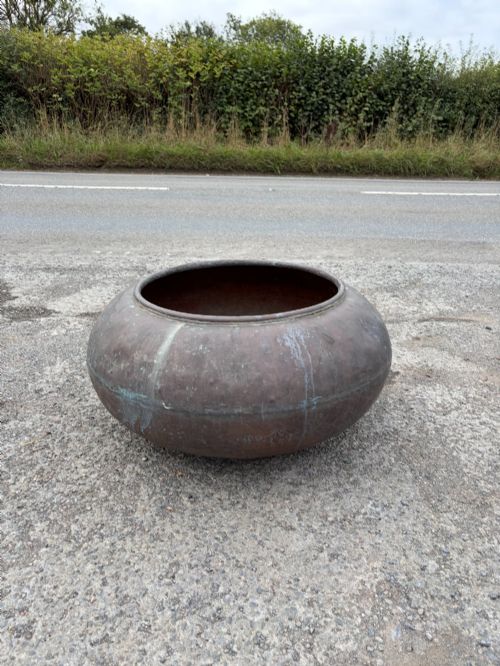
When you search for a copper garden tub, you encounter large domestic vessels repurposed from earlier agricultural, culinary, and washhouse duties. The selection spans nineteenth-century English and French examples, including cauldrons, cheese vats, boilers, wash tubs, and coppers.
You meet pieces originating from the Victorian era alongside rustic farmhouse and provincial styles. Many function equally well as log bins or display pots, showing the heavy utilitarian roots of nineteenth-century metalwork in garden settings.
How they were made
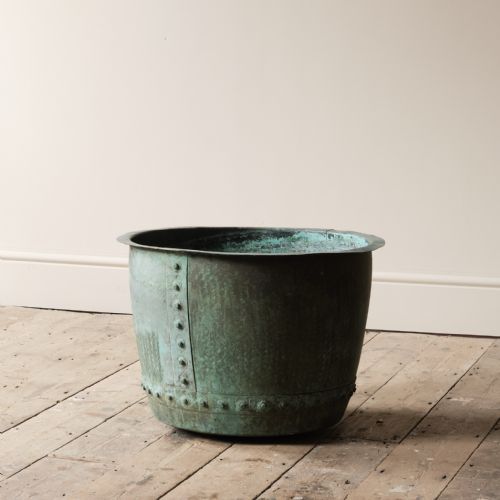
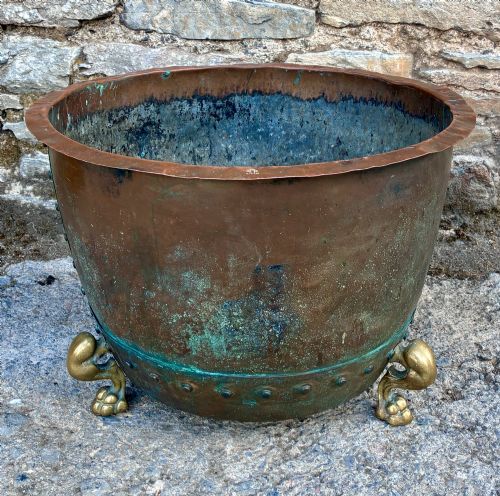
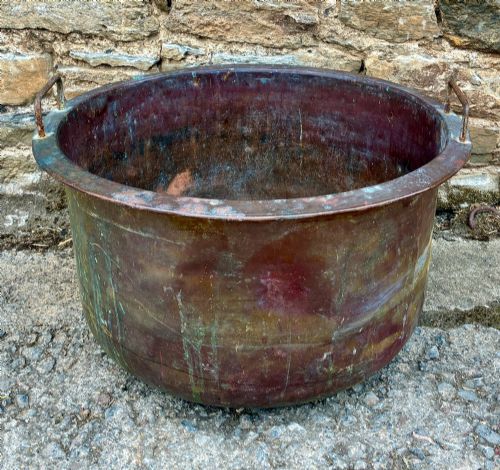
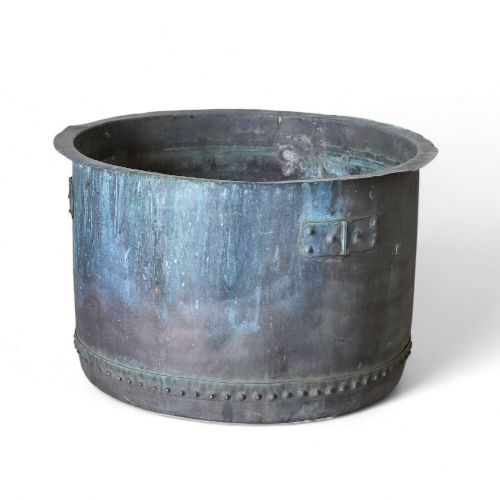
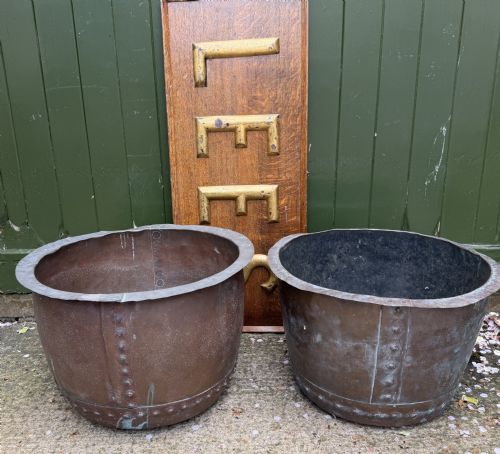
These vessels rely on heavy sheet copper joined by hand-riveting, creating robust seams that tolerate moisture and outdoor use. Blacksmiths and metalworkers incorporated wrought iron swing handles and cast iron components to support the weight of these substantial containers.
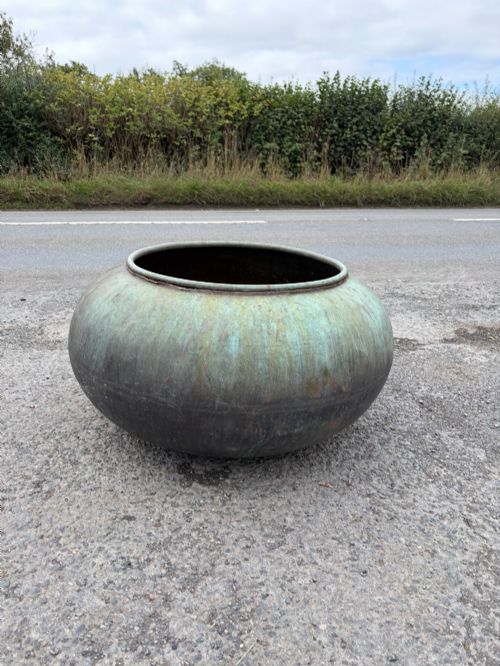
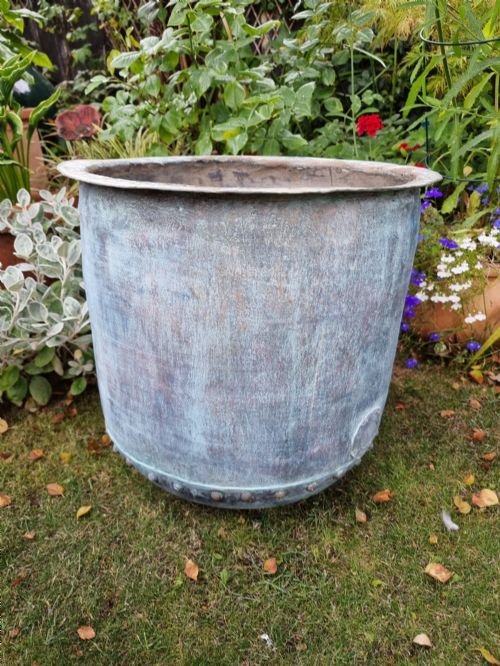
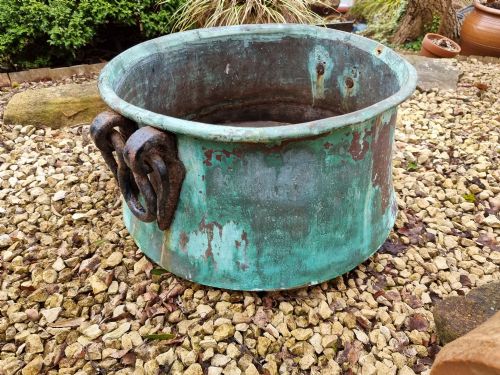
Surfaces often display natural patination and verdigris finishes developed through age and exposure, alongside occasional remnants of earlier painted schemes or steel framing.
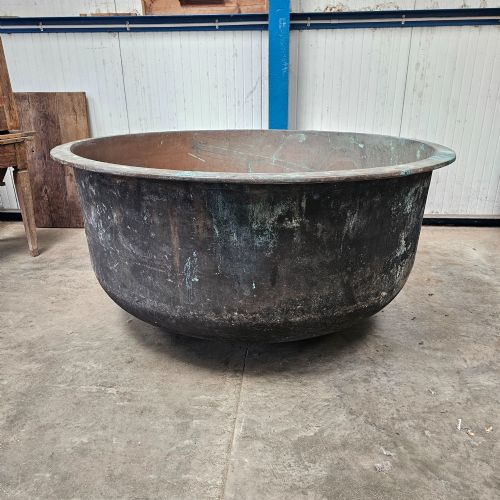
Several pieces started life boiling milk in French cheese vats or heating wash in nineteenth-century utility rooms before retiring to the herbaceous border.
What varies in quality
Quality rests in the weight of the metal gauge, the integrity of the hand-riveted joints, and the survival of original iron swing handles or mounting hardware. Pieces that retain structural soundness alongside rich, undisturbed patination and verdigris surface accumulation stand apart from lighter or heavily restored examples.
The scale of the vessel also dictates character, with exceptionally large French cheese vats and cauldrons offering a commanding presence compared to standard domestic wash tubs and smaller planters.
The Copper Garden Tub Glossary
- Verdigris
- A green patina or crust form that accumulates on copper and brass through atmospheric exposure over decades. This natural oxidation layer protects the underlying metal and signals authentic age.
- Cauldron
- A large deep metal pot with a wide mouth, historically used for boiling or heating liquids. In garden settings, these heavy vessels serve as substantial planters.
- Cheese vat
- A large industrial vessel originally employed in dairy production for curdling milk. Their immense scale makes them striking garden display pots.
- Wrought iron
- Iron that has been heated and shaped by a blacksmith's hammer, known for its fibrous texture and strength. It provides sturdy handles and mounts for heavy copper vessels.
- Log bin
- A deep container traditionally kept near a hearth for storing firewood. Their robust build suits damp outdoor environments when repurposed for plants.
Copper Garden Tub: Frequently Asked Questions
How do I use a copper tub outside?
These vessels adapt readily to outdoor planting schemes, serving as containers for small trees, shrubs, or floral displays. Their generous proportions accommodate root systems while anchoring a garden design with metallic texture.
Ensure adequate drainage if planting directly, or use the tub as a decorative outer cachepot for potted plants. Position the piece on a stable surface where weathering can continue naturally.
Can I leave copper tubs out in winter?
Copper withstands seasonal temperature shifts well, though standing water inside the vessel should not freeze solid and expand against the riveted seams. Empty or tip containers during freezing weather to protect the metal.
Positioning the tub slightly off the ground on bricks or pot feet prevents moisture from trapping underneath during wet winter months.
How do I date an antique copper tub?
Dating relies on manufacturing techniques, such as hand-riveting patterns, handle construction, and the presence of wrought iron versus later steel elements. Nineteenth-century examples often display irregular rivet spacing and heavier gauge copper.
Stylistic cues, including French provincial cheese vat forms or Victorian utilitarian shapes, also help anchor the piece within a specific nineteenth-century decade or era.
What is the green stuff on copper?
The green layer is verdigris, a natural chemical patina formed when copper reacts over many years with moisture, oxygen, and carbon dioxide. This surface crust is prized by collectors for authenticating age and adding visual depth.
Leave this weathered surface undisturbed rather than polishing it away, as the verdigris layer protects the underlying metal from further corrosion.