
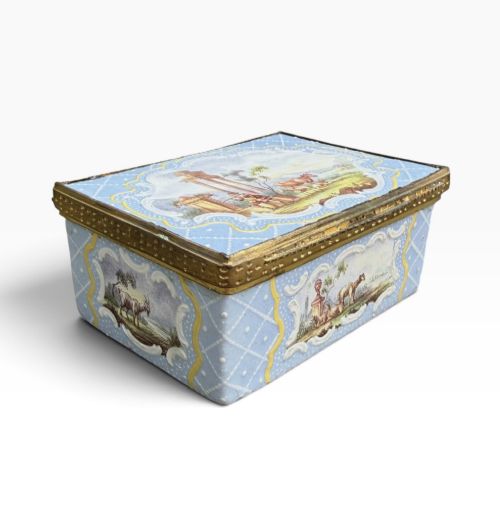
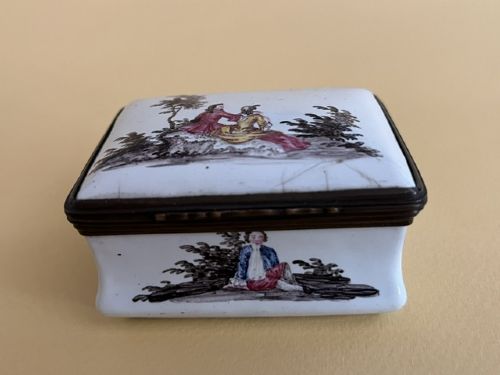


Copper Enamel Bonbonniere Box
A copper enamel bonbonniere box is a small Georgian container for patches or snuff, prized for its painted lid and metal mounts.
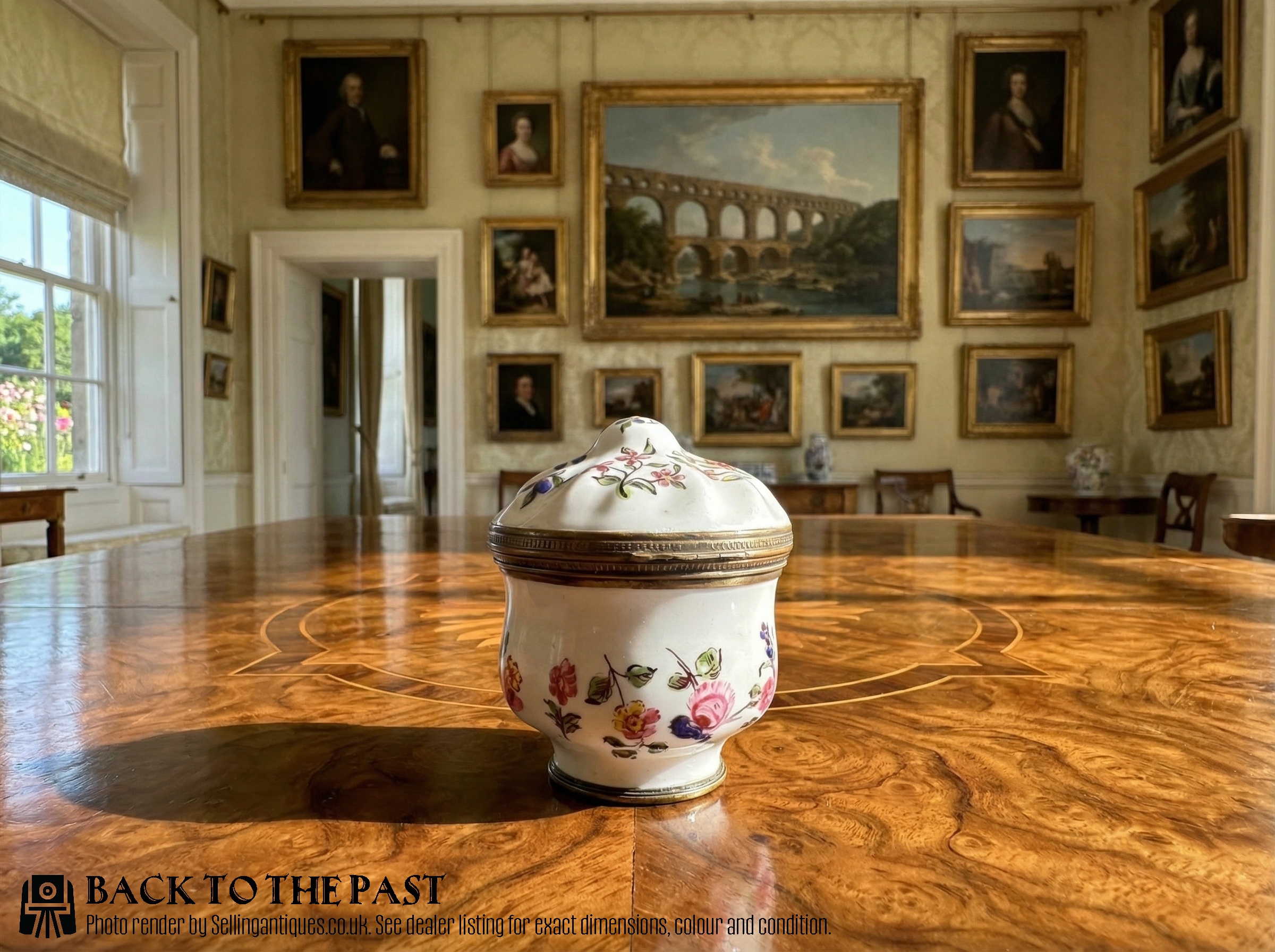
Copper Enamel Bonbonniere Box
A copper enamel bonbonniere box sits comfortably in the palm, built to hold small personal items like patches or snuff. These pieces date predominantly to the eighteenth century, with occasional nineteenth-century examples appearing.
The most common form on this page is the rectangular patch box or snuff box originating from Staffordshire and Bilston workshops. Georgian styles dominate the selection, including Rococo revival influences.
How they were made
Maker's shaped copper forms provide the rigid base for these small containers, coated in a smooth layer of white or coloured enamel. Artisans then hand-painted detailed scenes or subjects directly onto the glazed surface.
Gilt metal or brass mounts secure the edges and form the hinges that join the lid to the base. Gilded metal frames add a neat finish to the rim of each box.
What varies in quality
The fineness of the hand-painted decoration determines the visual appeal of an enamel box. Superior examples display crisp detail in portraits or animal subjects, such as the King Charles Cavalier Spaniel.
The precision of the metal mount and the crispness of the enamel glaze distinguish finer pieces from simpler counterparts. Weight and snugness in the closing of the hinge also indicate standard of manufacture.
The Copper Enamel Bonbonniere Box Glossary
- Bonbonniere
- A small ornamental box originally intended for holding sweets or bonbons. These containers evolved to hold snuff or cosmetic patches.
- Patch box
- A small pocket container fitted with a mirror inside the lid, used by Georgian society to hold fabric patches. These cosmetic patches covered facial blemishes.
- Snuff box
- A small hinged container designed to hold ground tobacco. Gentlemen and ladies carried these in pockets or reticules.
- Bilston enamel
- Enamelware produced in the Staffordshire town of Bilston during the Georgian period. These items typically feature copper bases with white enamel coatings.
- Gilt metal
- Metal treated with a thin layer of gold or gold-coloured wash. This material frames the enamel panels and forms the hinges.
Copper Enamel Bonbonniere Box: Frequently Asked Questions
What did people keep inside a copper enamel bonbonniere box?
These small containers held items like powdered tobacco or small silk patches used for facial decoration.
Ladies and gentlemen carried them in pockets or purses for quick access during social calls.
How do I date an eighteenth century enamel box?
Dating relies on stylistic clues, mounting techniques, and the shape of the copper base.
Georgian pieces from Bilston exhibit characteristic hand-painting and brass or gilt metal mounts typical of the seventeen-seventies and eighties.
Are these boxes fragile for daily handling?
The enamel surface is glass fused to copper, meaning it withstands careful handling but cracks under sharp impacts.
Displaying them away from table edges protects the glaze from accidental knocks.
Where were most English enamel boxes made?
Staffordshire, particularly the town of Bilston, served as the primary centre for English enamel production during the Georgian era.
Local workshops specialised in shaping copper and firing opaque white enamel coatings.