




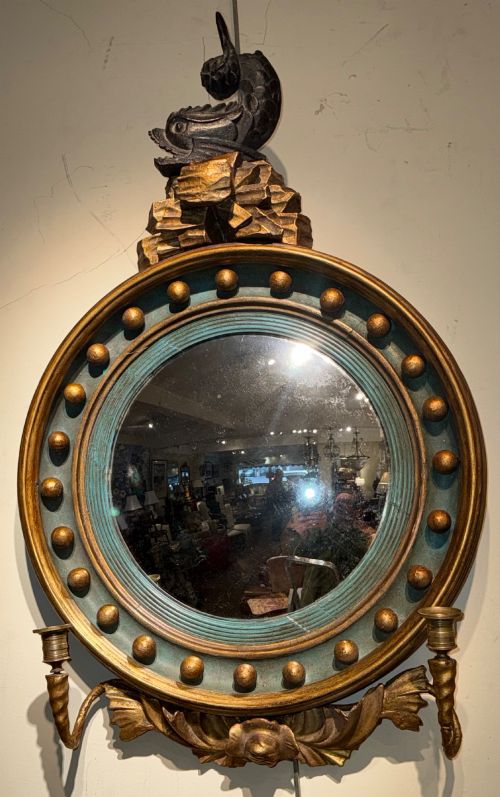


Convex Mirror Balls
Convex mirror balls draw the eye with curved glass and gilded frames, bringing depth and light into a room.
Convex Mirror Balls
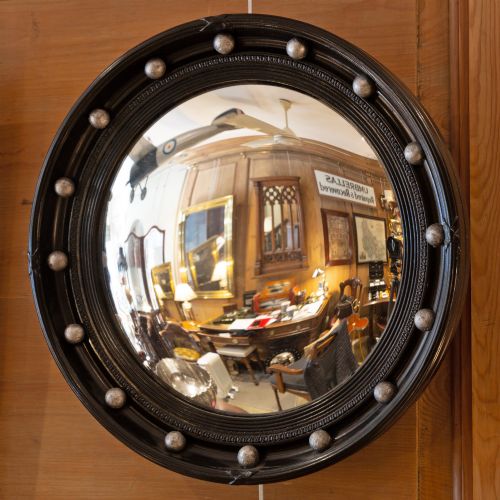
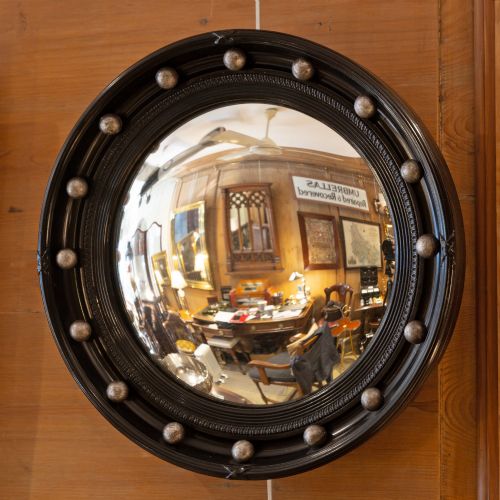
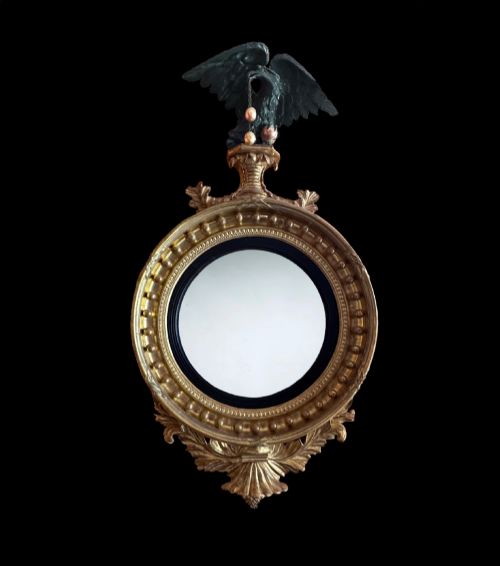
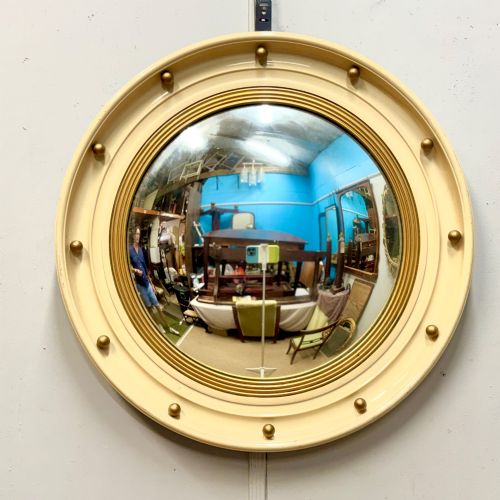
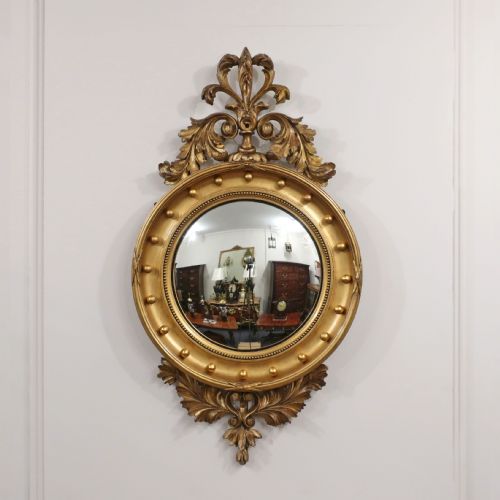
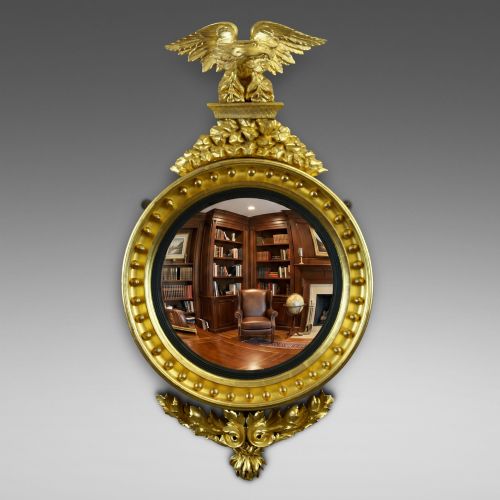
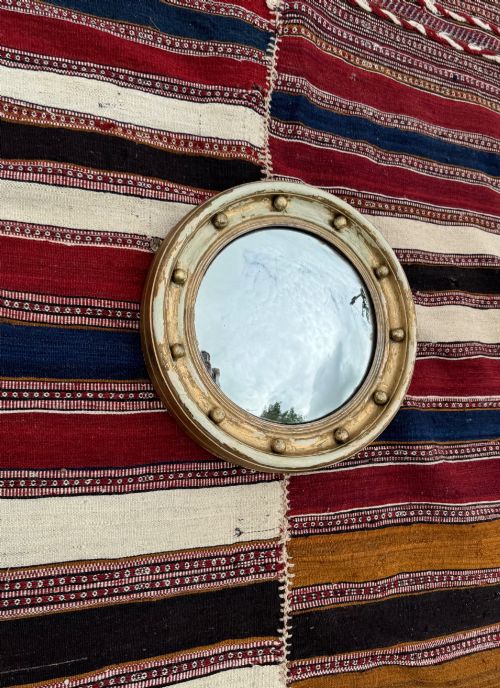
Convex mirror balls, often listed as wall mirrors and butler's mirrors, provide a wide-angled, spherical reflection that historically allowed servants to monitor a dining room at a glance. You will frequently encounter circular frames rendered in giltwood, ebonised wood, and painted wood.
The selections span the Regency period, Regency Revival style, and the Victorian era, alongside pieces dating through the nineteenth century into the early twentieth century. These wall-mounted optical pieces serve as striking focal points in hallways and drawing rooms alike.
How they were made
Frames are constructed from wood and gesso, then finished with metallic leaf or paint to achieve the characteristic gilt appearance seen across the inventory. The reflective surface utilises curved mirrored glass to distort perspective and encompass the entire interior view.
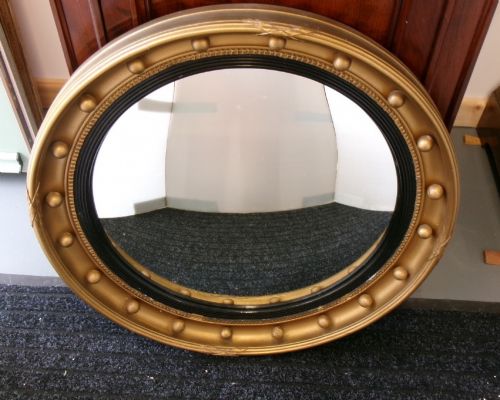
Carved details such as ebonised slips add depth to the timber framing, while specialised mounts secure the heavy circular glass safely within the wooden structure.
Convex Mirror Balls Retail Price Guide 2026
Typical asking prices for convex mirror balls among the pieces listed under this phrase on Sellingantiques today, from the lower quarter to the upper quarter. They describe what is for sale here now, not the wider market.
The inventory combines nineteenth-century examples with twentieth-century items, spanning glass, giltwood, gesso, and ebonised wood.
What varies in quality
The finesse of the carved timber framing dictates the distinction between standard production and exceptional examples, particularly in Regency pieces featuring elaborate ornamentation. Crisp detailing in the gesso and the depth of the gilding separate standard wall mirrors from superior works.
The clarity and distortion of the curved glass itself influence the overall visual impact, as does the proportional balance between the circular mirror plate and its surrounding frame.
The Convex Mirror Balls Glossary
- Convex glass
- Curved glass that projects outward to produce a wide-angled, rounded reflection of the surrounding interior.
- Giltwood
- Timber that has been coated with a thin layer of gold leaf or metallic gilt finish, standard for Regency frames.
- Ebonised slip
- A dark, treated inner moulding positioned between the mirror plate and the main frame to provide optical contrast.
- Gesso
- A plaster-like mixture applied to wood frames to create a smooth base suitable for intricate carving and gilding.
- Butler's mirror
- A circular convex wall mirror traditionally utilised in dining spaces for practical observation.
Convex Mirror Balls: Frequently Asked Questions
Where should I hang a convex mirror?
These pieces suit reception rooms, halls, and dining spaces where their wide field of reflection expands the perceived dimensions of the interior.
Position the frame at eye level to maximise both the decorative impact and the utility of the curved glass.
How do I clean convex mirror glass?
Apply a soft, dry cloth to remove dust gently from the curved surface without applying excessive pressure to the antique glass.
Avoid spraying liquid cleaners directly onto the plate, as moisture can seep behind the reflective backing or damage the surrounding giltwood.
How can I tell a Regency mirror from later revivals?
Regency pieces exhibit the construction methods, timber patination, and carving styles characteristic of the early nineteenth century.
Later Regency Revival pieces replicate these forms using nineteenth and twentieth-century manufacturing techniques.
What is an ebonised slip?
An ebonised slip is a dark inner ring placed directly against the glass to frame the reflection.
This dark wooden element creates a visual boundary that separates the reflective glass from the gilded outer frame.