
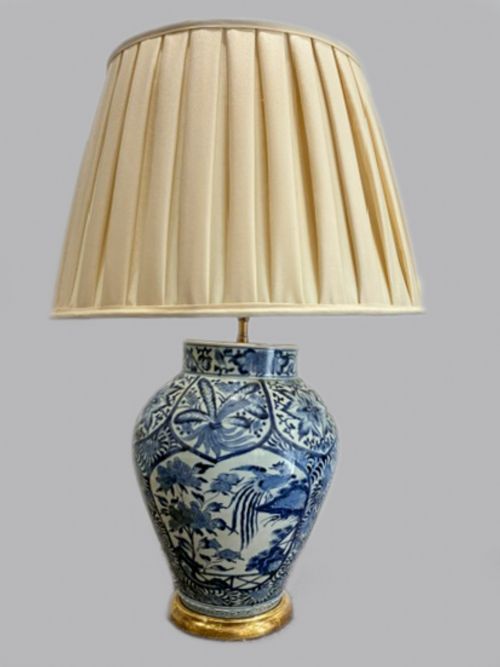
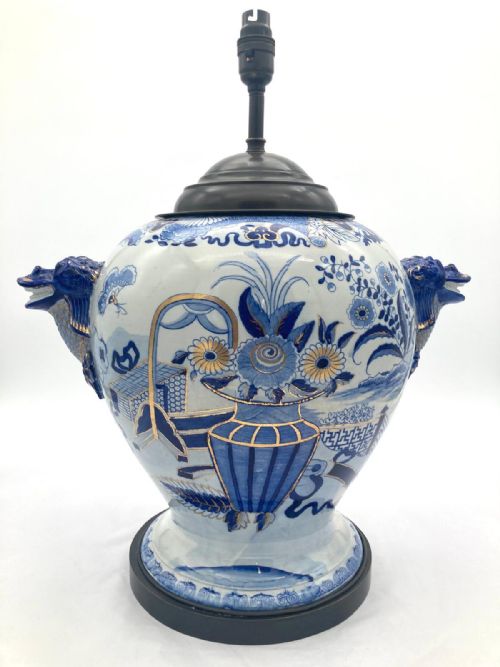
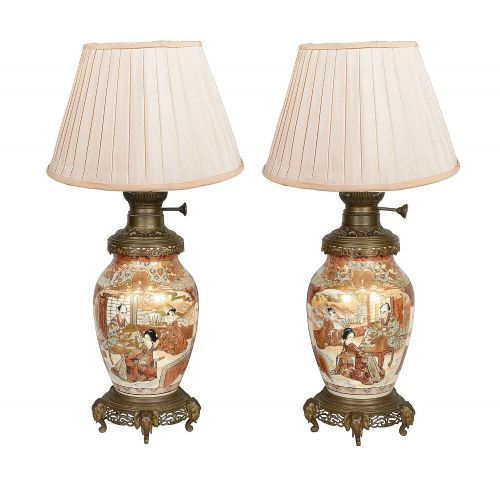


Converted Ceramic Vase Lamp
These converted ceramic vase lamps bring centuries of Asian and European porcelain into domestic lighting, offering rich decorative presence.
Converted Ceramic Vase Lamp
A converted ceramic vase lamp takes historical vessels and adapts them for modern illumination. You will frequently encounter Chinese and Japanese porcelain pieces from the seventeenth through the nineteenth centuries repurposed into table lamps.
The selection ranges from Dutch Delftware and French porcelain to Japanese Satsuma, Imari, and Kutani wares. These objects typically retain their original hand-painted surfaces, framing domestic spaces with historical ceramic forms.
Materials and mounting techniques
The bodies utilise ceramic, porcelain, or stoneware formed through traditional throwing and moulding techniques before receiving hand-painted enamel decoration. Metal mounts in brass or gilt secure the electrical fittings to the antique vessel.
Fabric and silk shades complete the structure, resting above the ceramic body. The conversion process integrates wiring through the base or top without destroying the integrity of the original glaze.
Materials paired with these ceramics include brass, silk, gilt, and carved wood bases.
Assessing quality in conversions
The standard of the original ceramic painting and the stability of the mounting dictate the tier of the piece. Finer vessels display precise brushwork, vibrant underglaze blues, and well-preserved enamel details.
The discretion of the conversion matters significantly. Top examples incorporate electrical fittings that respect the vase body, while lower tiers rely on intrusive drilling or unbalanced mounts.
Hicks and Meigh·Samson
The Converted Ceramic Vase Lamp Glossary
- Celadon
- A term for pottery denoting both wares glazed in jade green and the specific translucent green glaze itself. This finish originated in China and spread across Asian kilns.
- Imari
- A style of Japanese export porcelain decorated in underglaze blue, iron red, and gold. These wares were produced in Arita and shipped to Europe from the port of Imari.
- Baluster
- A tall vase form with a rounded lower body that tapers toward the neck. The shape resembles a classical architectural baluster.
- Cloisonne
- An enamelwork technique where metal wire creates raised barriers on a ceramic or metal base to contain coloured pastes. These compartments are fired to produce a smooth, patterned surface.
- Crackware
- A ceramic glaze featuring a network of fine decorative fissures deliberately formed during the cooling process. This finish appears frequently on nineteenth-century Chinese export pieces.
Converted Ceramic Vase Lamp: Frequently Asked Questions
How do I date a vase lamp?
Examine the base ceramic body for stylistic markers, glaze characteristics, and potting techniques. Asian dynasties, European periods, and nineteenth-century export markers provide the primary chronological clues.
The electrical hardware often dates to a later twentieth-century conversion, meaning the dating relies entirely on the ceramic vessel beneath the mounts.
Were these lamps originally made for lighting?
Almost none of these ceramic vessels started life as lighting. They were originally manufactured as jars, beakers, spill vases, or display urns.
Craftsmen adapted them later by fitting them with electrical components, turning decorative vessels into functional table lamps.
How do I care for a porcelain lamp?
Dust the ceramic body gently with a dry, soft cloth to protect the painted enamel and gilt surfaces. Avoid harsh chemical cleaners that might degrade historical glazes.
Check the stability of the brass mounts and wiring periodically to ensure safe operation alongside the antique porcelain.
What is the difference between Arita and Kutani?
Arita porcelain emerged from Hizen province, known for early blue and white wares and Imari export styles. These pieces often feature crisp cobalt designs under clear glazes.
Kutani wares originate from Ishikawa Prefecture, typically displaying dense, colourful enamel palettes featuring reds, greens, and gilt detailing across the vessel.