

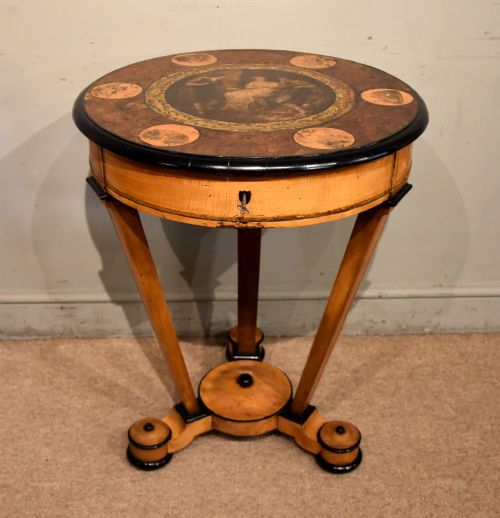


Continental Centre Table
A continental centre table anchors a room with distinctive European craftsmanship and presence, offering both a striking display surface and historical utility.
Continental Centre Table
A continental centre table represents a diverse group of freestanding tables designed to sit in the middle of a room rather than against a wall. The examples found here span from the eighteenth century through to the early twentieth century, taking forms such as sofa tables, low tables, drum tables, and occasional dining pieces.
The styles recorded across these listings range from Biedermeier and Alpine Country to Rococo Revival, Dutch Baroque, and Victorian Continental. Walnut, oak, fruitwood, birch, and ebonised wood provide the primary structures for these versatile furnishings.
Alongside standard tables, the selection includes related decorative objects such as porcelain figurines, lidded vases, and centrepieces. Buyers seeking a functional yet decorative focal point will find numerous historical variations within this category.
How they were made
Cabinetmakers utilised dense timbers like walnut, oak, mahogany, and fruitwood to build the structural frames of these tables. Marquetry inlay added complex geometric or floral patterns across the wooden surfaces using contrasting veneers.
Ornate ormolu mounts and gold leaf accents enriched the designs of mid-nineteenth-century pieces. Skilled carvers shaped oak and other woods to create detailed structural elements and decorative borders.
Continental Centre Table Retail Price Guide 2026
Typical asking prices for continental centre table among the pieces listed under this phrase on Sellingantiques today, from the lower quarter to the upper quarter. They describe what is for sale here now, not the wider market.
What varies in quality
The refinement of the marquetry and the precision of the wood inlay distinguish superior examples from standard ones. Execution in the carving of the wood and the quality of the ormolu mounts dictate the overall distinction of a piece.
Material selection plays a significant part, with finely figured walnut or exotic fruitwoods commanding greater attention than simpler domestic timbers. The integrity of the structure and the preservation of original surfaces govern the lasting appeal of each table.
Eugene Clauss of Paris
The Continental Centre Table Glossary
- Marquetry
- Decorative veneer work forming pictures or patterns by using small pieces of wood. This technique requires immense precision to fit different timbers together seamlessly.
- Ormolu
- Gilded bronze applications used for decorative mounts on furniture. It adds a metallic lustre that highlights the contours of nineteenth-century pieces.
- Biedermeier
- A central European design style prioritising clean lines and utilitarian grace over excessive ornamentation. It emerged during the first half of the nineteenth century.
- Parquet
- Geometric wood mosaic work used for flooring or table tops. This technique creates repeating patterns across rectangular surfaces.
Continental Centre Table: Frequently Asked Questions
Where should a centre table go?
These tables are built to stand freely in the middle of a room, where their design can be appreciated from every angle.
They function effectively in large hallways, drawing rooms, or reception spaces as a central platform for decorative objects.
How do I identify a Biedermeier table?
Biedermeier pieces typically feature restrained geometric forms, smooth wood grains, and a lack of heavy carving. The focus rests on the natural beauty of veneers like birch and fruitwood.
Such tables date mostly from the nineteenth century and offer a clean aesthetic that suits modern interiors.
What is a sofa table?
A sofa table is a longer, narrower form traditionally placed directly behind a sofa or used freestanding in a room. They often incorporate drop leaves or drawers for added versatility.
Examples in this category showcase continental woods and marquetry work from the nineteenth century.
How do I care for antique wood surfaces?
Maintain wood surfaces by keeping them away from direct sunlight and sudden changes in temperature or humidity. Regular dusting with a soft, dry cloth preserves the finish.
Avoid using modern chemical polishes, relying instead on traditional wax applied sparingly when the wood appears dry.