
Concealed Sword Stick
A concealed sword stick combines a walking cane with a hidden blade, offering gentlemen practical defence and style in the Victorian and Edwardian periods.
Concealed Sword Stick
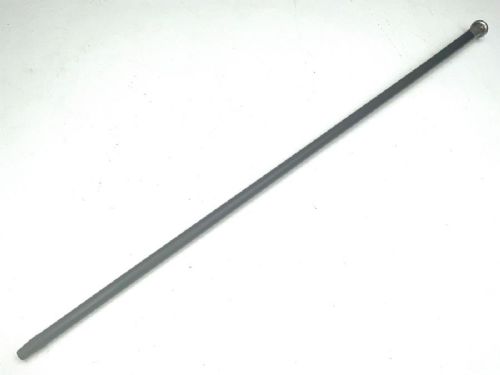
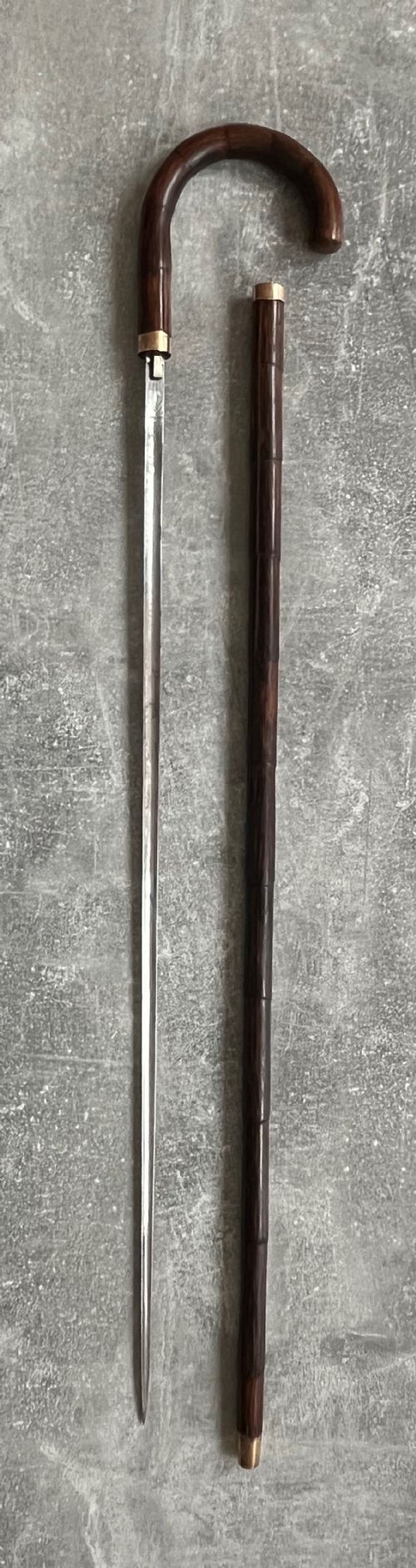
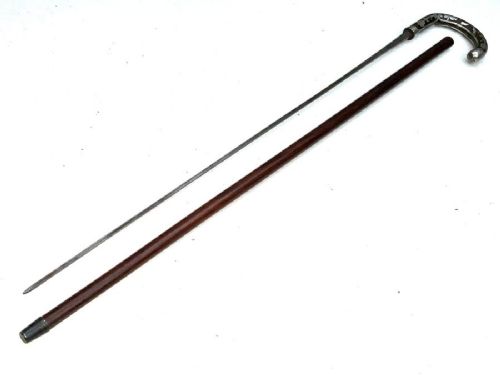
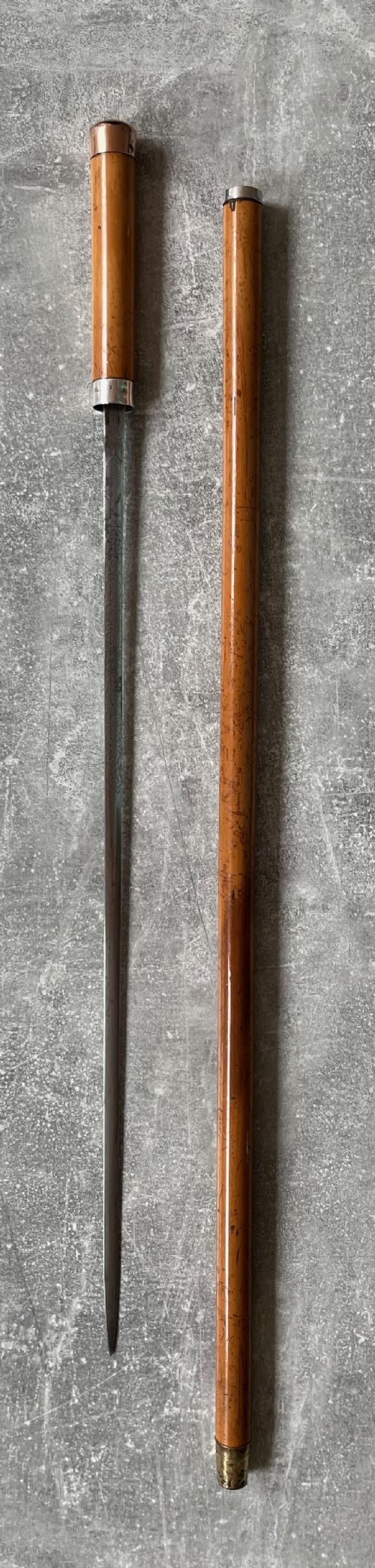
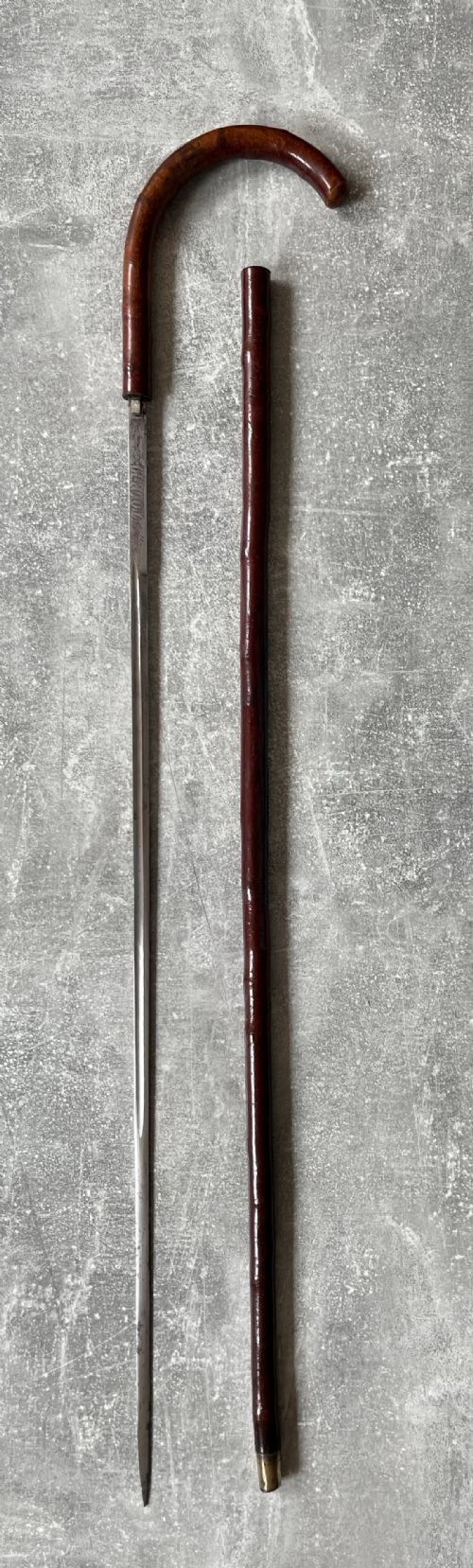
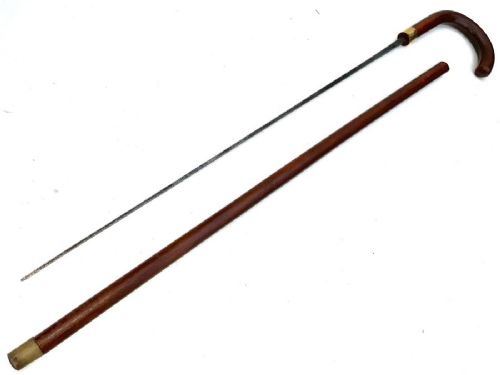
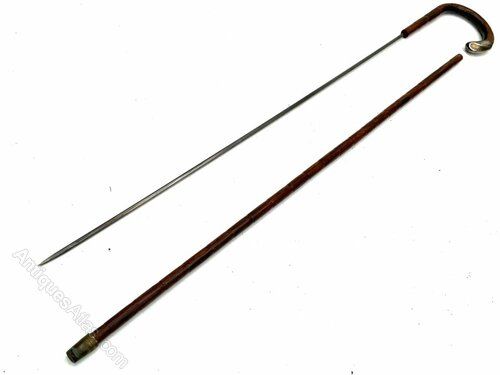
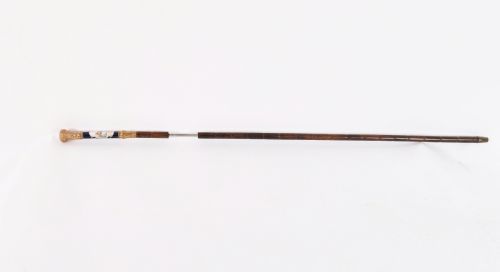
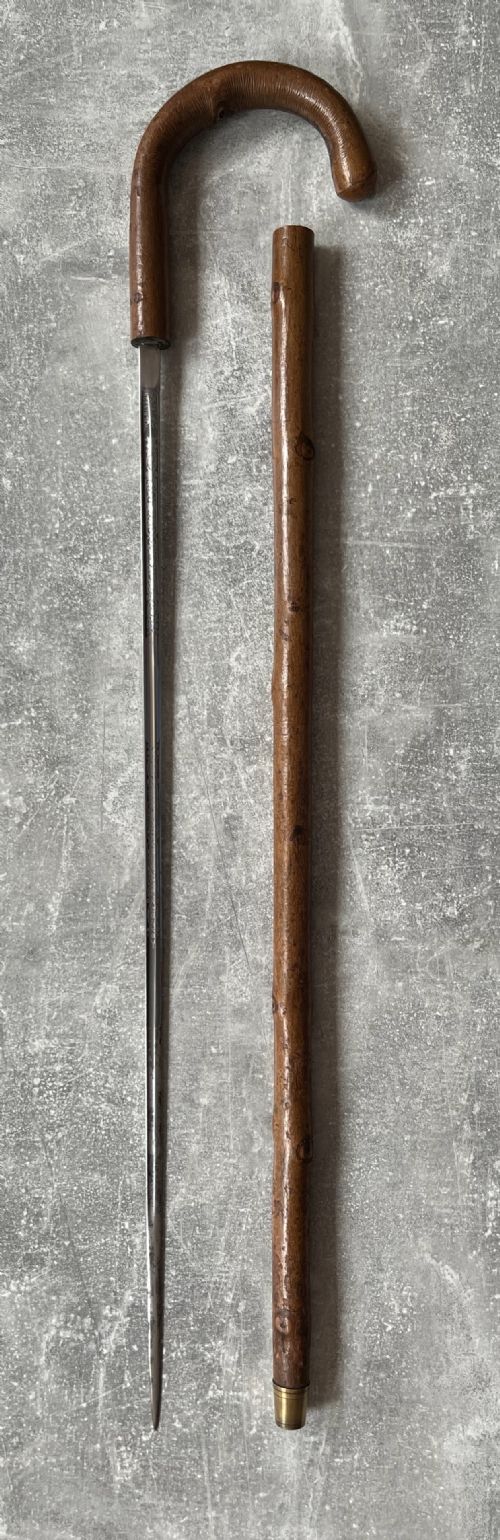
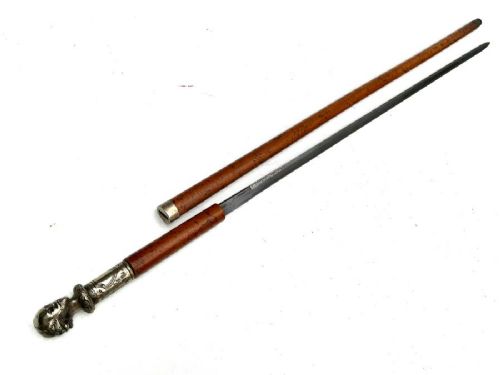
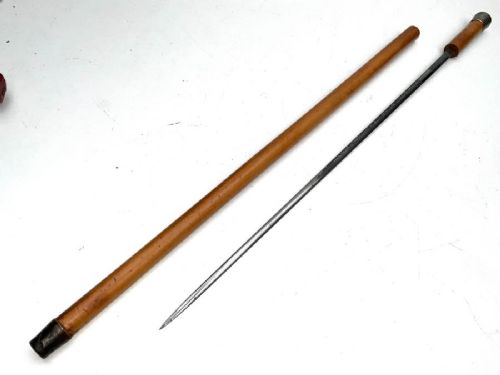
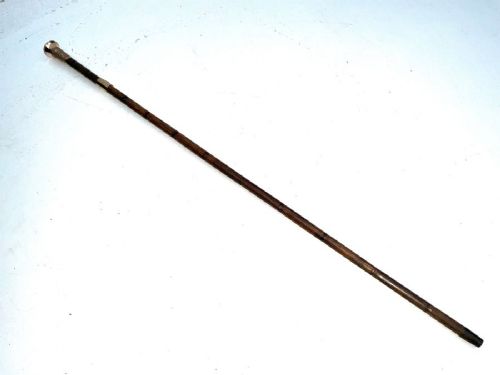
A concealed sword stick serves as an everyday walking cane while housing a hidden steel blade within its shaft.
Most examples originate from the Victorian and Edwardian eras, spanning the late nineteenth and early twentieth centuries.
Makers utilised various timber and metal forms, from malacca cane and partridge wood to military swagger sticks.
Materials and Construction
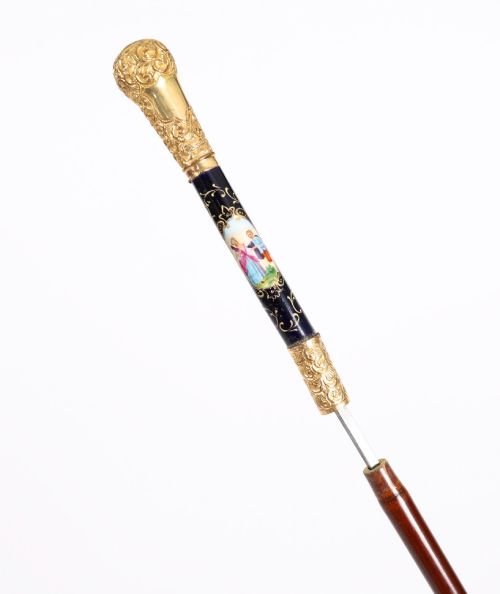
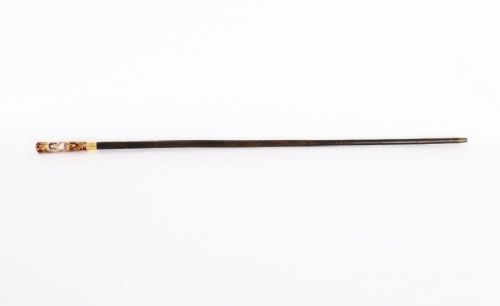
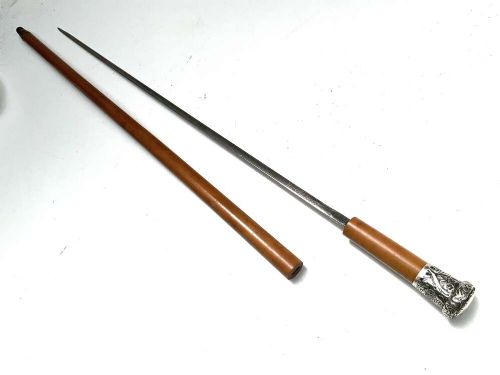
Craftsmen shaped shafts from natural woods like malacca, hazel, cherrywood, and ebonised wood, pairing them with horn, bone, or porcelain handles.
Blades were forged from steel, frequently incorporating Toledo steel or marked by makers such as Wilkinson.
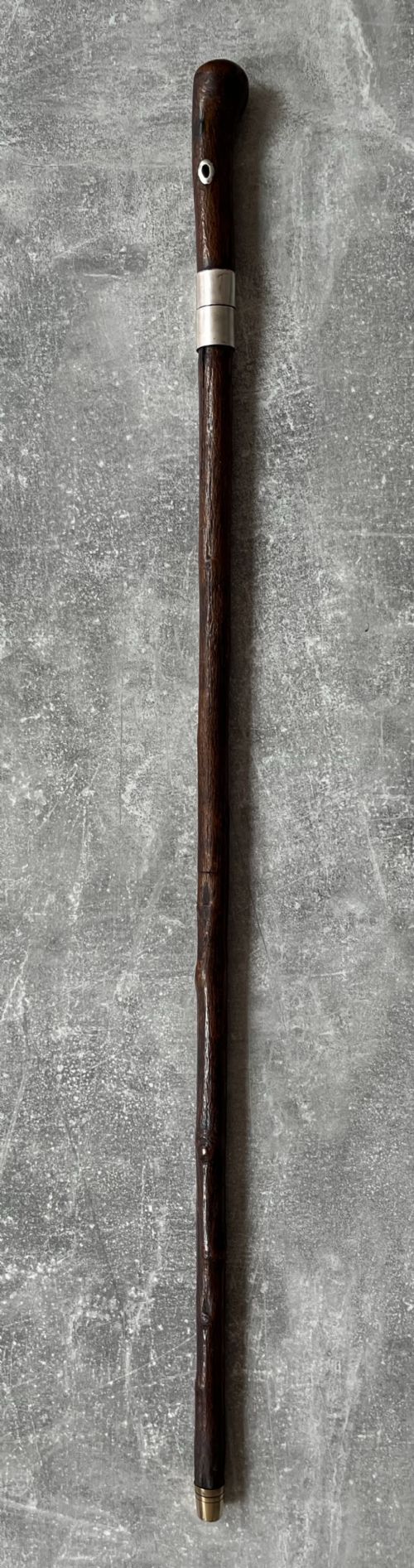
Mounts and collars in silver, brass, or gold plate secured the junction between handle and shaft.
Listings feature woods such as malacca cane, rosewood, cherrywood, hazel, and blackthorn alongside porcelain and silver mounts.
Factors of Quality
The precision of the button release mechanism dictates how smoothly the blade unlatches from the shaft.
Blade engraving and the quality of the forged steel separate standard utility canes from fine officer or presentation pieces.
The integrity of the timber shaft and the snugness of the fit when closed determine the longevity of the stick.
Brigg·Wilkinson·Sevres
The Concealed Sword Stick Glossary
- Toledo blade
- A steel blade originating from Toledo, Spain, known for flexibility and strength. These blades are often etched.
- Swagger stick
- A short walking stick carried by military officers. Some examples conceal short blades.
- Malacca cane
- A mottled brown rattan stem imported from Southeast Asia. It provides a durable and flexible shaft.
- Ebonised wood
- Timber treated to resemble ebony. This finish offers a uniform black surface.
Concealed Sword Stick: Frequently Asked Questions
How do I release the hidden blade?
Most pieces utilise a small button or collar release near the handle to unlatch the blade from the interior of the shaft.
Pulling straight down on the handle slides the steel blade out smoothly.
Were these used as weapons?
Gentlemen carried these sticks for personal protection during the nineteenth and early twentieth centuries.
They doubled as walking support and a concealed deterrent in urban environments.
How do I identify a military piece?
Military examples often feature specific regiment references, such as guards battalions or officer insignia.
They frequently take the form of swagger sticks or carry service dates.
What woods are most common?
Makers frequently selected malacca cane, hazel, partridge wood, and ebonised timber for their strength.
Exotic woods and faux bamboo patterns also appear across the nineteenth century.