
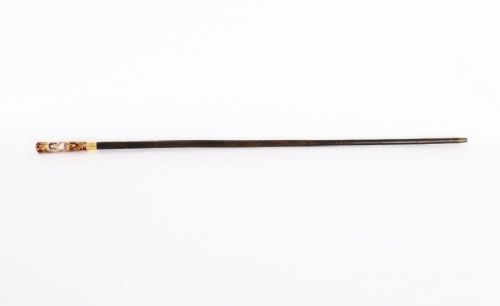
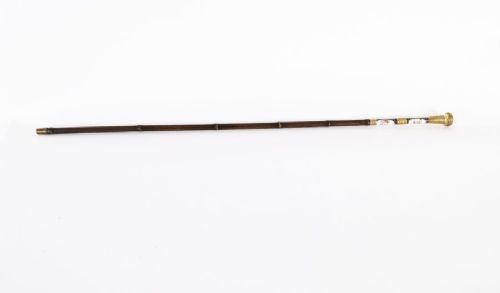
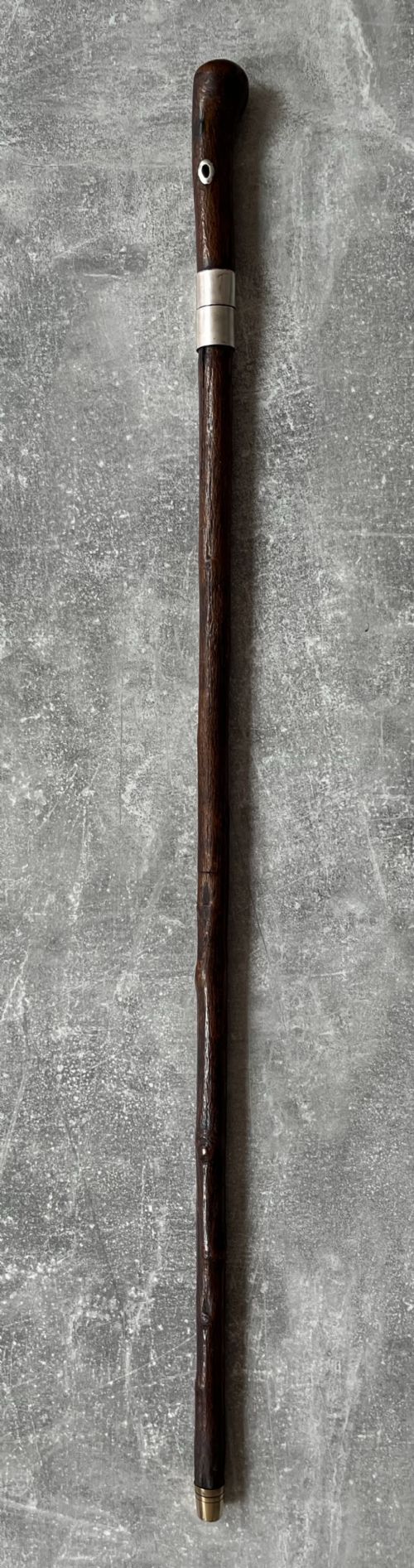


19th Century Sword Cane
A 19th century sword cane is a gentleman's disguise that pairs everyday support with a hidden steel blade.
19th Century Sword Cane
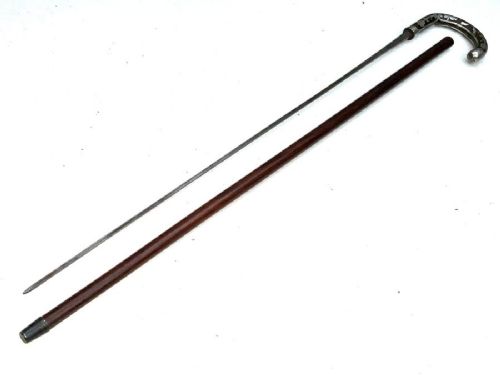
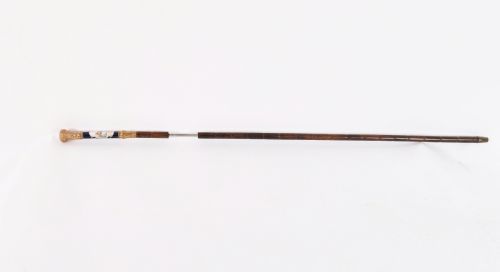
The selections span English, French, and Imperial Russian workshops, dating from the Victorian and Edwardian eras. Certain pieces incorporate precious metals and porcelain alongside the core wood and steel construction.
How they were made
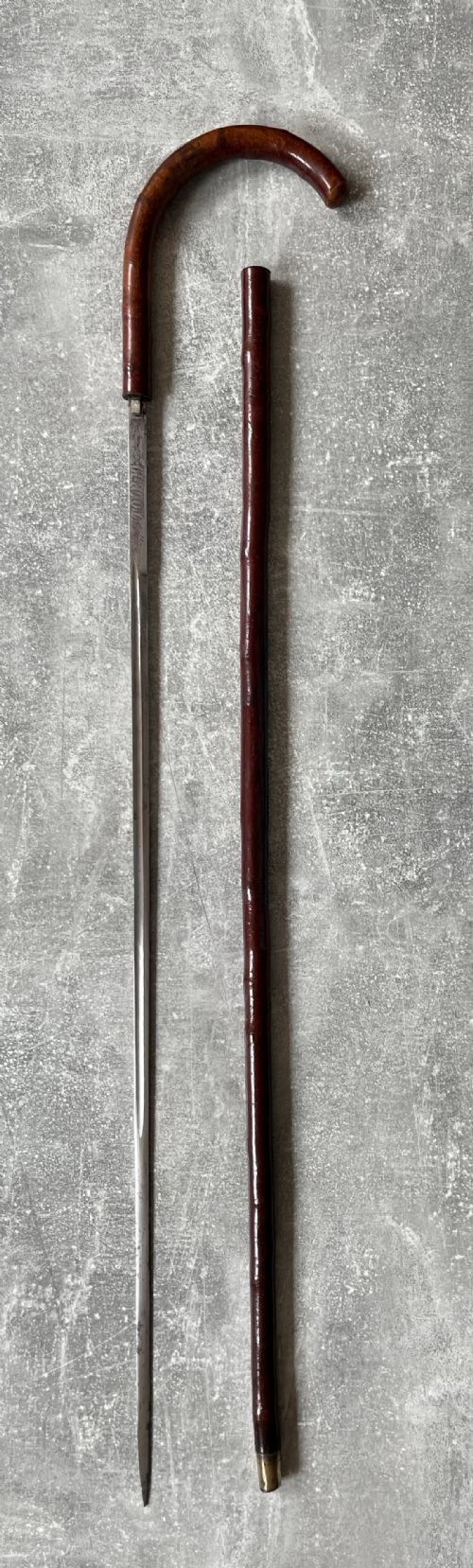
Makers utilised resilient timbers such as malacca, cherrywood, hazel, and briar for the shafts, housing slender steel blades within. Handles and collars of silver, brass, bone, horn, and porcelain were then fitted to the tops.
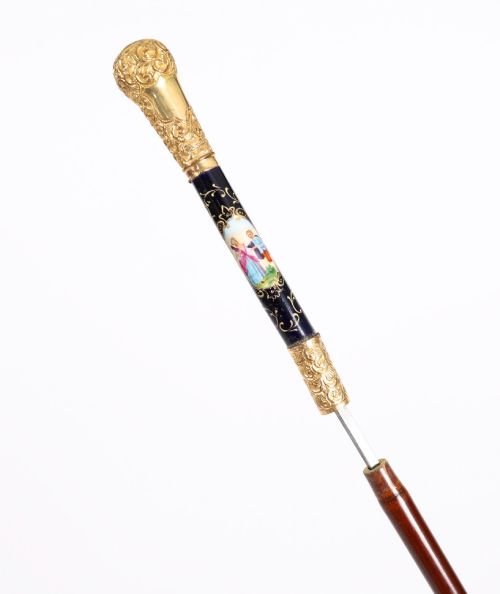
French workshops often mounted hand-painted Sevres porcelain plaques or gold plate onto the handles, whilst English makers favoured silver collars and horn knops paired with bamboo or ebonised wood.
What varies in quality
The distinction between standard walking sticks and finer examples lies in the materials chosen for the handle and mountings. Solid silver collars, hand-painted porcelain panels, and intricate silver horse head grips elevate the work significantly.
The origin and maker also define the piece, with documented workshops like Brigg or specific geographic origins such as Warsaw commanding closer attention from collectors than unsigned utility sticks.
Brigg
The 19th Century Sword Cane Glossary
- Malacca
- A sturdy rattan cane imported from Southeast Asia, prized for its mottled brown finish and strength. It served as a favoured shaft material.
- Sevres
- A type of fine porcelain produced by the French state factory, frequently incorporated into luxury handles during the nineteenth century.
- Collar
- The metal band fitted around the shaft just below the handle, often rendered in silver and used to secure the join.
19th Century Sword Cane: Frequently Asked Questions
How do I secure the blade inside the cane?
Most sword canes utilise a friction fit, a screw thread, or a simple spring-loaded catch housed within the collar to lock the blade securely in place during transit.
Twisting or pulling the handle releases the mechanism, allowing the steel blade to slide smoothly out of the wooden shaft.
What materials make up the shafts?
Makers constructed shafts from natural woods including malacca, hazel, cherrywood, briar, and bamboo, frequently applying ebonisation for a dark, polished finish.
Each timber offered distinct flexibility and weight, balancing the need for sturdy walking support with the hollow interior required to house a steel blade.
Were these canes used for defence?
Gentlemen in the nineteenth century carried these items for personal protection whilst navigating urban streets or travelling through rural areas.
The concealed steel blade provided an immediate means of defence that remained discreetly hidden until drawn from the wooden scabbard shaft.
How do I date a sword cane?
Dating relies on hallmarks upon silver collars, the specific style of the handle, and the timber used for the shaft. Victorian and Edwardian examples often display distinct regional craftsmanship and decorative motifs.
French pieces from the nineteenth century frequently showcase Sevres porcelain or gold plate, whilst English specimens often pair silver with malacca.