




Compact Victorian Desk
A compact victorian desk offers clever storage and a dedicated writing surface, making it an essential piece for small rooms.
Compact Victorian Desk
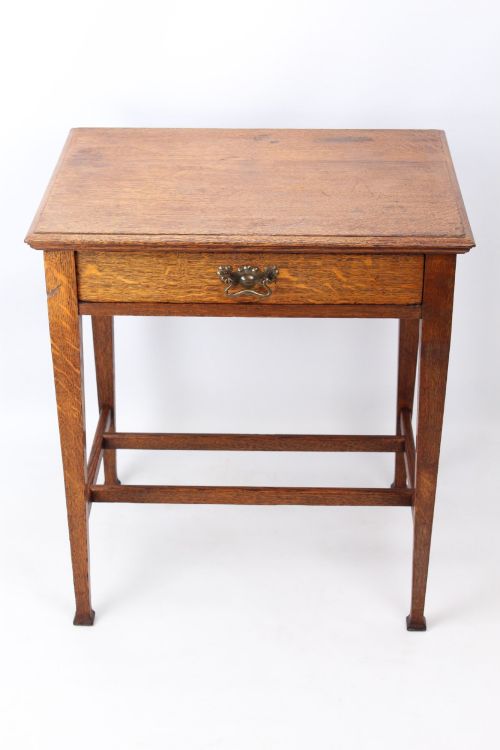
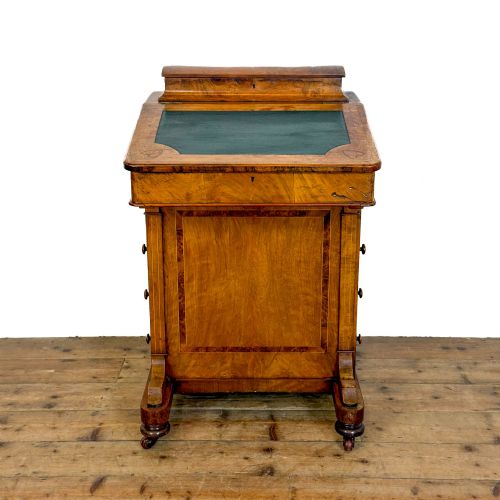
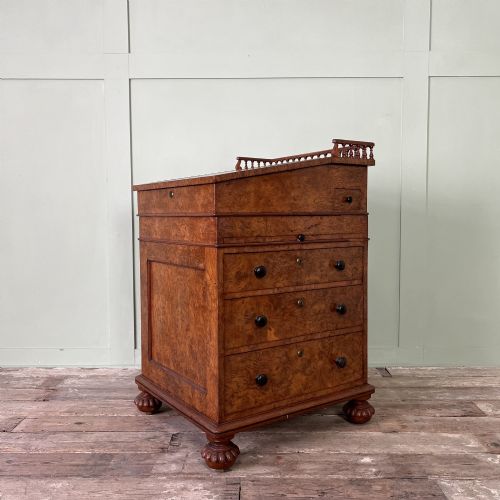
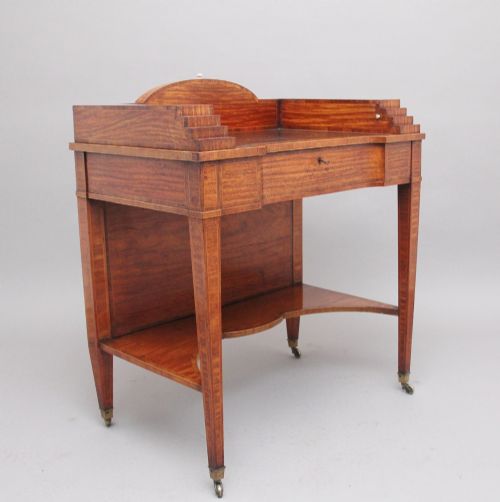
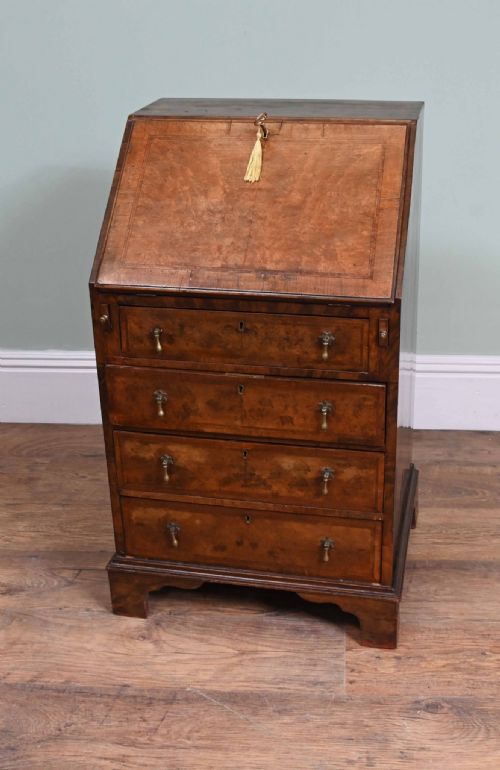
When you search for a compact victorian desk, you encounter Davenport desks, small writing tables, and secretaire chests designed to maximise utility in restricted spaces. These pieces date across the nineteenth century, with walnut, mahogany, and rosewood forming the primary bodies.
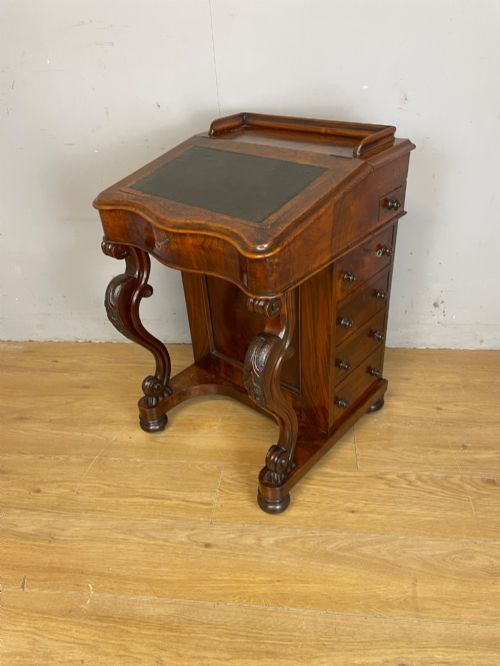
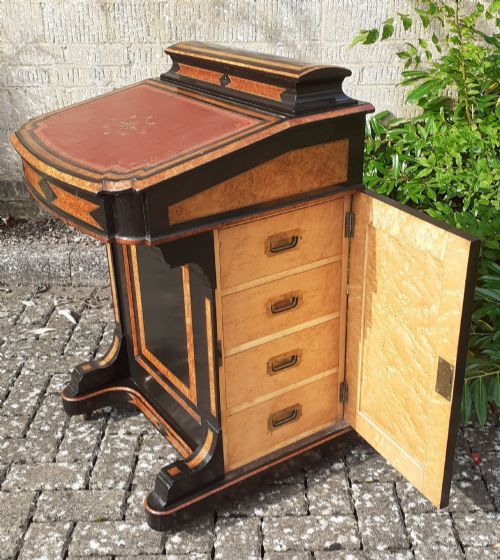
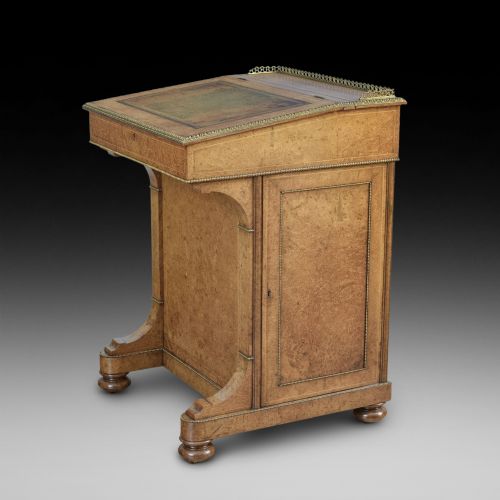
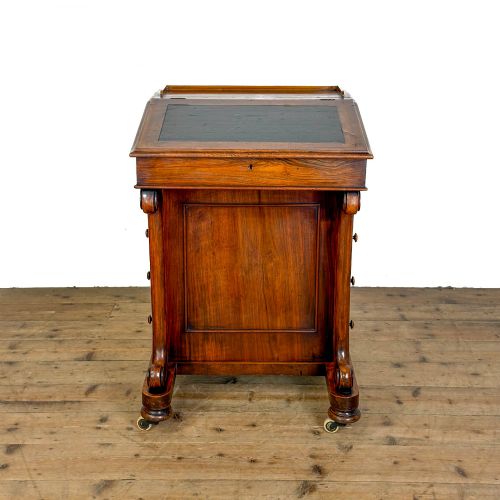
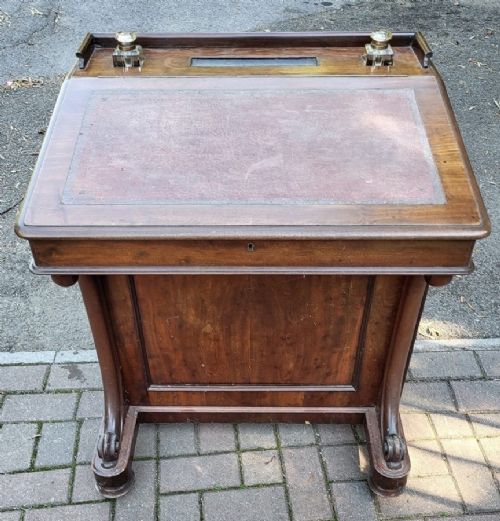
The Davenport desk dominates this category, featuring a sloping top above a bank of drawers whilst maintaining a remarkably small footprint. Cabinet makers constructed these items to serve as portable or space-saving writing stations for the parlour or bedroom.
Materials and Construction
Cabinet makers utilised dense hardwoods such as mahogany and rosewood as structural frames, frequently applying burr walnut or satinwood veneers to create richly patterned exterior surfaces. Brass mounts, boxwood inlay, and leather writing inserts completed the detailed ornamentation of these writing pieces.
The joinery involves precise dovetailing within the drawer construction and careful application of marquetry or crossbanding across the writing slopes. Interior fittings often incorporate maple or satinwood compartments for stationery, highlighting meticulous nineteenth-century cabinet work.
Some Davenport drawers open only when the desk lid is unlocked, keeping secret letters safe from wandering eyes.
Quality and Craftsmanship
The standard of timber selection largely dictates the quality, with highly figured burr walnut and rich flame mahogany commanding greater admiration than plain secondary woods. The intricacy of internal stationery fittings and the precision of boxwood inlay also distinguish standard workshop production from master cabinet maker output.
Original hardware such as brass handles and working locks with matching keys elevate the desirability of a piece. The condition of the leather writing surface and the stability of the sloping desk lid reflect the original integrity of the construction.
Gillow and Co·Gillows of Lancaster
The Compact Victorian Desk Glossary
- Davenport
- A compact pedestal desk featuring a sloping, hinged writing surface and a bank of side drawers. This form became popular during the nineteenth century for ladies' writing use.
- Burr walnut
- Timber taken from the wart or burl of a walnut tree, producing highly twisted and decorative grain patterns. Makers veneered this wood onto carcases to create striking visual movement.
- Secretaire
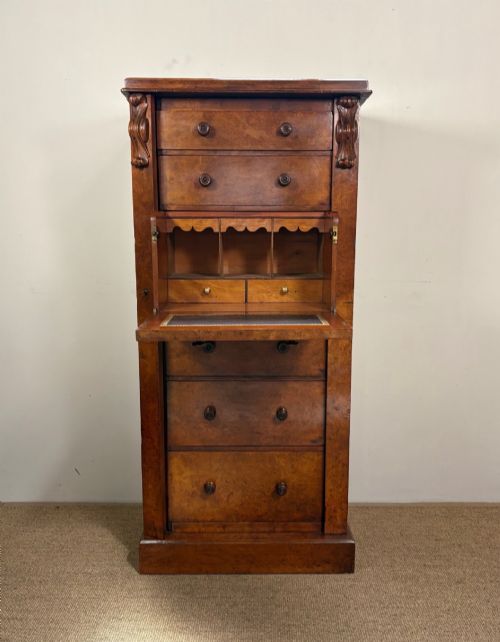
- A piece of furniture containing a concealed writing drawer or fold-down writing flap. These compartments often house pigeonholes and small drawers for letters.
- Crossbanding
- A narrow strip of veneer applied around the border of a larger panel with the grain running perpendicular to the centre. This technique frames the primary timber.
- Marquetry
- Decorative woodwork where pieces of various coloured woods are fitted into a veneer to form geometric or floral patterns. Artisans used this method to adorn the tops of desks and cabinets.
Compact Victorian Desk: Frequently Asked Questions
What is a Davenport desk?
A Davenport desk is a small pedestal writing desk with a sloping top and drawers opening to the side.
Cabinet makers designed them during the nineteenth century to provide a functional writing space without occupying much room.
How do I use a compact desk today?
These desks serve well as laptop stations or dedicated correspondence areas in bedrooms and hallways.
The internal compartments remain useful for organising modern stationery and small household items.
Are the writing slopes adjustable?
Many writing slopes lift open to reveal storage spaces beneath for paper and ink.
The angle itself usually remains fixed to support comfortable handwriting.
How do I identify a nineteenth-century piece?
Examine the secondary woods inside the drawers and look for hand-cut dovetail joints.
Nineteenth-century items often feature traditional French polish finishes and construction methods typical of the Victorian era.