



Compact Oak Gateleg Table
A compact oak gateleg table provides folding surface space with heavy timber strength, answering every small-room problem with genuine period character.
Compact Oak Gateleg Table
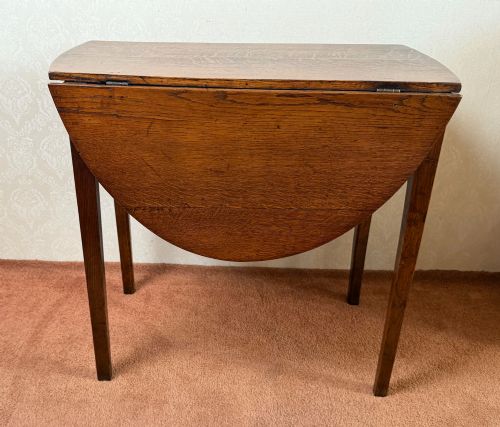
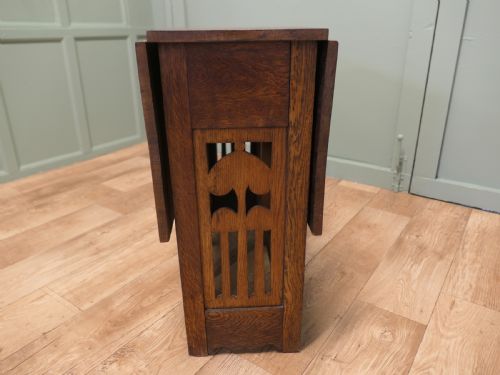
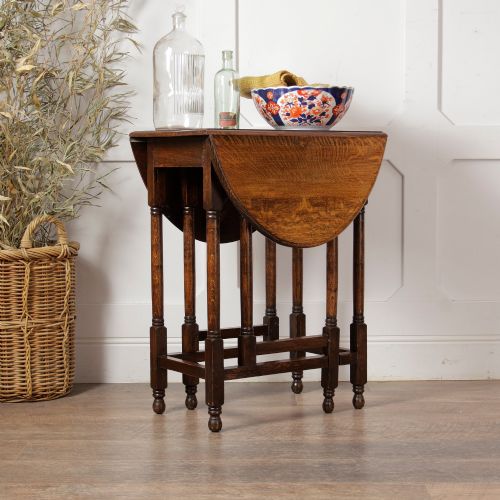
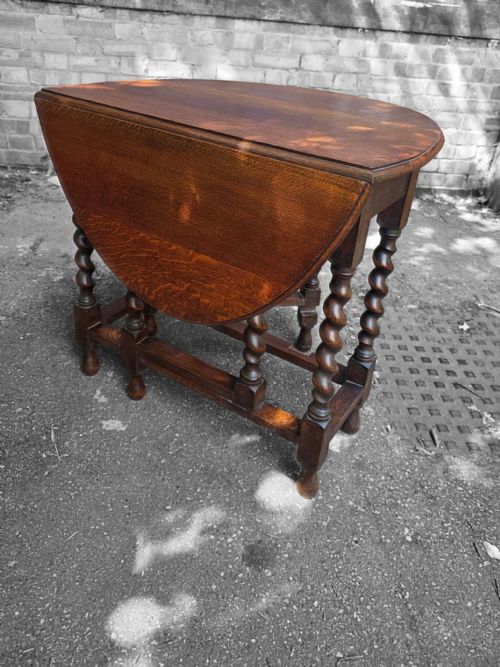
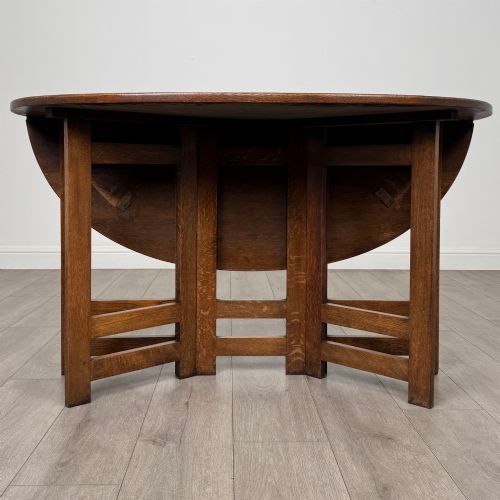
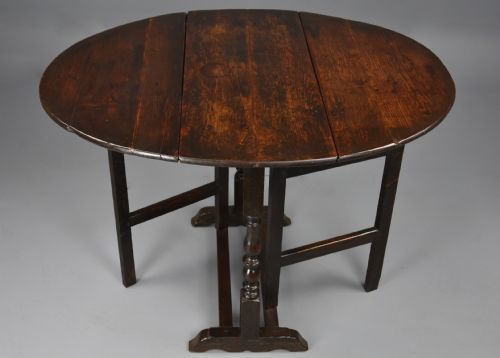
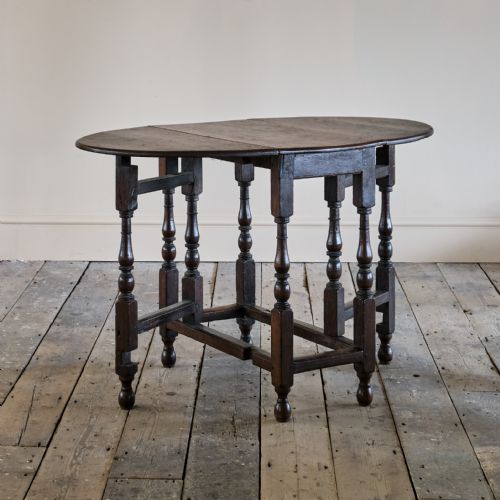
A compact oak gateleg table operates with hinged leaves supported by swinging legs, allowing the surface area to expand or contract according to the room. These versatile pieces appear across multiple eras, including seventeenth-century examples of small proportions, eighteenth-century formats, nineteenth-century adaptations, and twentieth-century revivals.
The selection here includes dining tables, side tables, coffee tables, and occasional tables designed to save space while retaining solid timber construction. Buyers encounter forms ranging from simple drop-leaf designs to narrow spacesavers and oval configurations suited to modern domestic use.
What varies in quality
Quality rests in the structural integrity of the pivoting gateleg framework and the alignment of the drop leaves when fully extended. Early seventeenth-century examples command attention through untouched original patination and small proportions, whereas later pieces depend on the crispness of turning work and the stability of the hinges.
The choice of solid timber versus veneered substitutes alters the durability and weight of the table significantly. Superior execution shows in balanced proportions, tight joints that withstand frequent folding, and well-preserved historical surfaces.
Compact Oak Gateleg Table Retail Price Guide 2026
Typical asking prices for compact oak gateleg table among the pieces listed under this phrase on Sellingantiques today, from the lower quarter to the upper quarter. They describe what is for sale here now, not the wider market.
Some miniature wine tables sneak into the inventory, proving that even tiny furniture demands a proper place to hold a glass.
The Compact Oak Gateleg Table Glossary
- Gateleg table
- A table with one or two hinged leaves supported by legs that swing outward like a gate. This design saves floor space when folded down.
- Drop leaf
- A hinged flap attached to the fixed centre top of a table. It drops vertically when not in use.
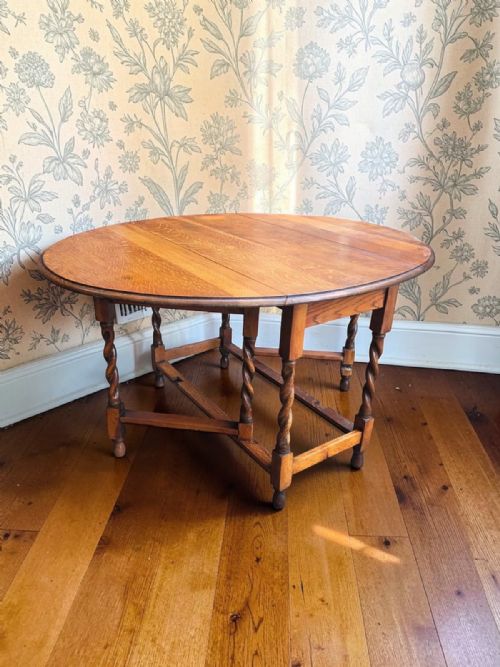
- Barley twist
- A spiral turning carved into furniture legs, popular in seventeenth-century and later revival pieces. It creates a rope-like visual rhythm.
- Patina
- The surface sheen and colour acquired by wood through age, handling, and wax polishing. It reveals the gradual history of the material.
- Jacobean revival
- A nineteenth and twentieth-century style copying seventeenth-century English furniture forms. It uses dark oak, geometric panels, and turned supports.
Compact Oak Gateleg Table: Frequently Asked Questions
Where does a compact gateleg table fit best?
These tables suit tight spaces, hallways, or smaller dining areas where rigid furniture consumes too much room. Dropping one or both leaves instantly opens up floor space.
Leaving the table folded creates a narrow console or side surface for lamps and books. Raising the leaves transforms the piece into a functional dining or work station.
How do I distinguish seventeenth-century oak from later revivals?
Early seventeenth-century pieces display hand-cut joinery, pegged joints, and deep patination developed over centuries of use. Tool marks and timber shrinkage offer clear clues to genuine age.
Revival pieces from the nineteenth and twentieth centuries often feature machine-cut elements, standard hinges, and cleaner timber surfaces without the deep wear patterns of early examples.
Can I use an oak gateleg table every day?
Solid oak construction provides the durability required for daily domestic life, handling regular dining and household tasks with ease. The timber resists everyday bumps and scuffs well.
Care involves using coasters under hot cups and avoiding excessive moisture on the surface. Regular waxing maintains the protective layer on the timber.
What is the difference between a side table and a dining table here?
Side tables and coffee tables feature lower heights or narrower closed footprints designed for occasional placement against walls. They serve decorative or supporting functions in a room.
Dining tables provide standard table height and wider leaf spans to accommodate seating. The gate mechanism on dining versions requires sturdier leg supports to bear weight during meals.