




Comb Back Dining Chairs
Comb back dining chairs bring sturdy vernacular character to the table, offering practical seating rooted in centuries of rural British craftsmanship.
Comb Back Dining Chairs
When you search for comb back dining chairs, you encounter robust wooden seating rooted in the English country tradition, spanning the eighteenth, nineteenth and early twentieth centuries. These pieces encompass both individual armchairs and matched sets intended for the dining table, with origins stretching from regional workshops to the production hubs of High Wycombe.
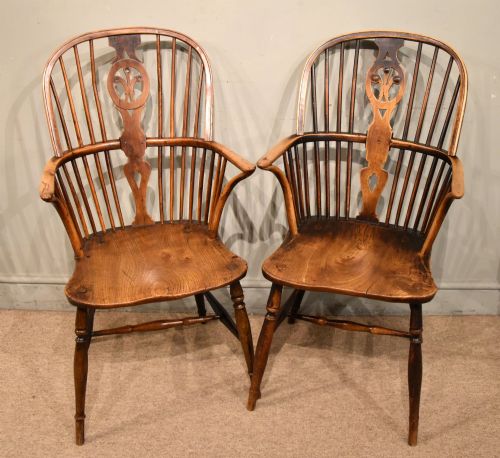
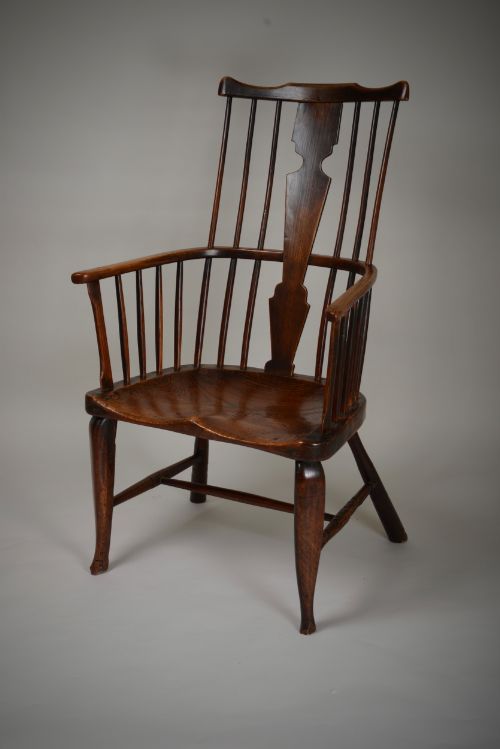
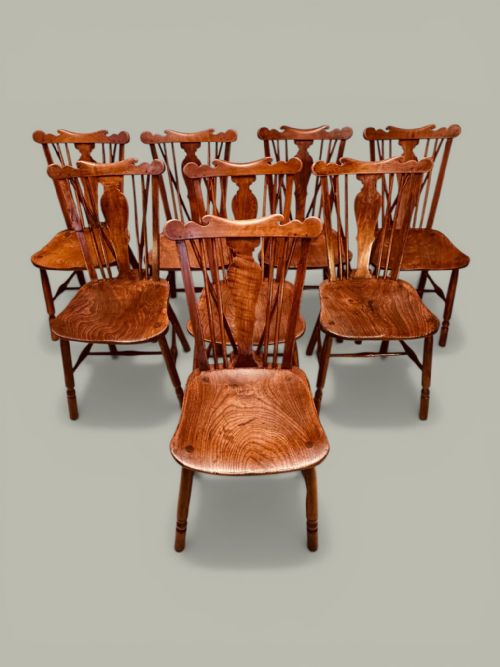
The format typically presents a distinct headpiece where the spindle tops emerge through a horizontal crest rail, resembling the teeth of a comb. You will most frequently meet side chairs and carvers fashioned in combinations of elm, ash and fruitwood, often designated under broader vernacular styles such as Windsor or rustic farmhouse.
Earlier examples lean towards the Georgian and eighteenth-century periods, displaying sculptural carved seats and generous proportions, while later nineteenth-century and nineteen-hundreds interpretations offer sturdy utility for country kitchens. Armchairs and captains' chairs feature prominently alongside sets of dining chairs, demonstrating the enduring versatility of these rural forms.
How they were made
Makers relied on a judicious mix of timbers chosen for specific structural demands, pairing resilient elm for carved solid seats with flexible ash, fruitwood, alder or cherrywood for steam-bent bows and spindles. Yew and pine also appear across regional variants, utilising local woodland resources to build up resilient, unyielding frames.
Construction hinged on traditional Windsor techniques, where individual turned legs and back spindles are wedged directly into a thick wooden saddle seat rather than joined by a traditional frame. The distinct comb back format required precise drilling and shaping of the top rail to receive the upper tips of the vertical spindles securely.
Comb Back Dining Chairs Retail Price Guide 2026
Typical asking prices for comb back dining chairs among the pieces listed under this phrase on Sellingantiques today, from the lower quarter to the upper quarter. They describe what is for sale here now, not the wider market.
Some nineteenth-century makers built comb backs tall enough for a tired farm worker to nod off without losing chin support.
What varies in quality
The distinction between ordinary utility seating and superior examples lies in the fluidity of the timber selection and the grace of the turning work. Better pieces exhibit deep, comfortable saddling to the elm seat and well-proportioned, tapered spindles that show confident hand-working rather than rigid uniformity.
Proportion and stance separate the finer regional pieces from later commercial production, with early eighteenth-century examples displaying thinner, more dynamic arm bows and refined undercarriages. The integrity of the wood grain and the natural patination built up through generations of domestic use also dictate the visual presence of each chair.
The Comb Back Dining Chairs Glossary
- Comb back
- A Windsor chair variation where the vertical spindles extend right through a horizontal crest rail at the top, creating a shape reminiscent of a hair comb.
- Windsor
- A traditional chair construction method where legs, back and arms are pegged directly into a solid wooden seat rather than joined to a separate frame.
- Saddle seat
- A thick wooden seat base scooped and carved into a concave shape to mimic a saddle and improve sitting comfort.
- Vernacular
- Objects designed and built by regional makers using local materials and traditional methods, prioritising practical function over academic style.
- Stick back
- A minimalist chair back composed of simple turned wooden rods inserted into the seat and top rail without elaborate splats or bow elements.
Comb Back Dining Chairs: Frequently Asked Questions
What is a comb back dining chair?
A comb back dining chair is a traditional wooden seat featuring vertical spindles that pierce straight through a flat horizontal top rail. These pieces belong to the wider Windsor family and were built for everyday domestic use in British homes.
They combine robust construction with regional character, typically pairing a solid elm seat with turned ash or fruitwood legs and spindles.
How do I date an old Windsor chair?
Dating involves looking at the thickness of the seat, the curvature of the arm bow and the turning style of the legs. Earlier eighteenth-century examples tend to have deeper saddle carving and more slender, organic lines.
Nineteenth-century and later pieces often show heavier proportions and more uniform machine assistance in the turning of the spindles and legs.
Are these chairs comfortable for daily dining?
These chairs were designed for practical dining and domestic work, with ergonomically scooped wooden seats that offer surprising support. Many people use them daily around a kitchen or dining table without cushions.
Because the timber is solid wood rather than upholstered padding, adding a loose pad can soften the seat for longer dinner parties.
What woods were used to build them?
Makers selected timbers based on their mechanical properties, most commonly pairing tough elm for the solid plank seat because it resists splitting. Spindles, legs and bows were turned from flexible hardwoods like ash, fruitwood, cherrywood, alder and yew.
This mixed-wood construction allowed each part of the chair to perform its specific structural job efficiently.