
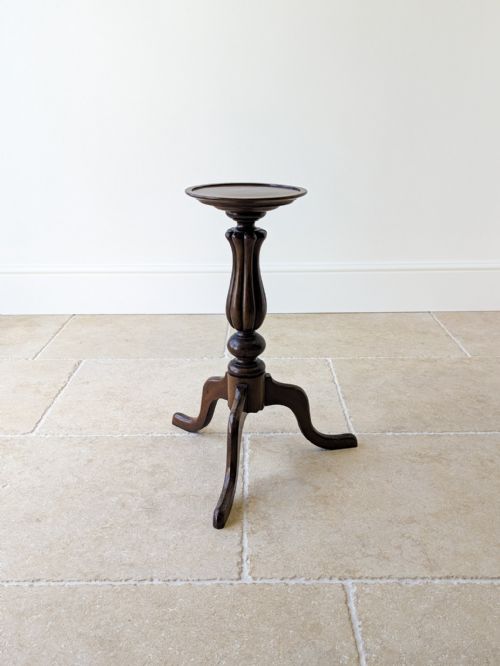
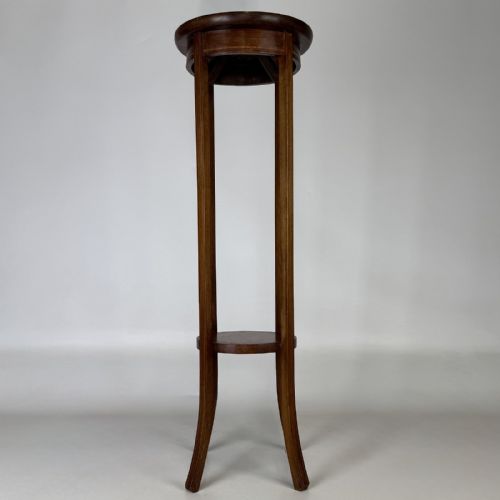
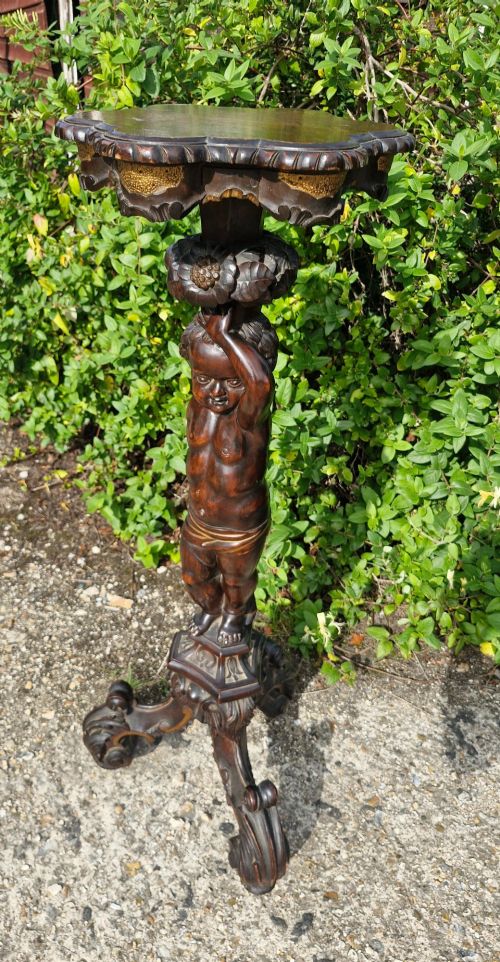
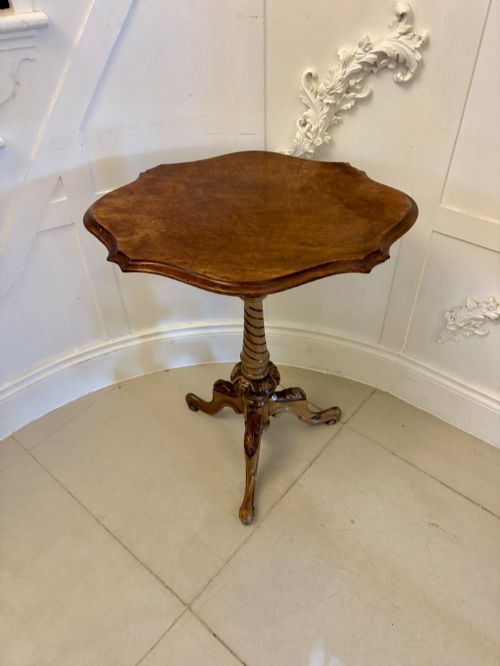
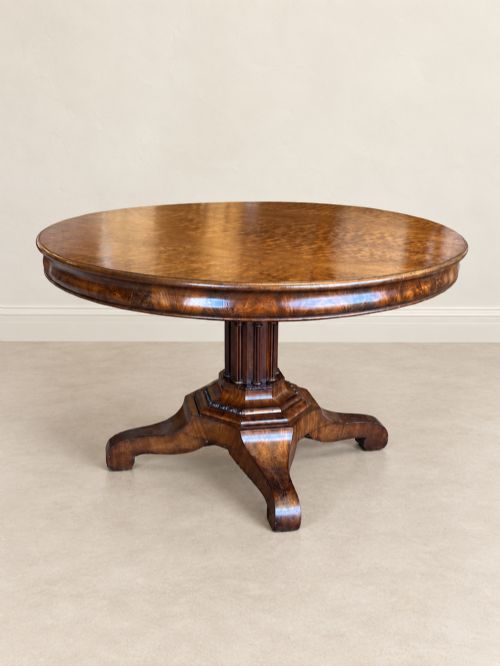
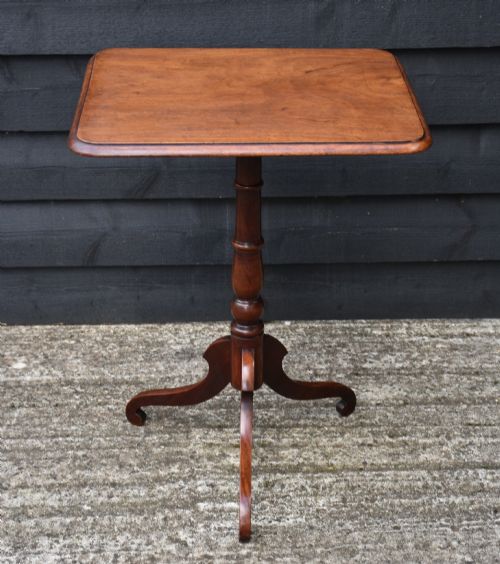
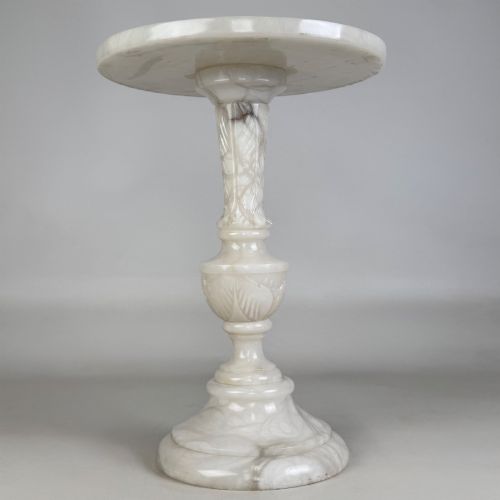
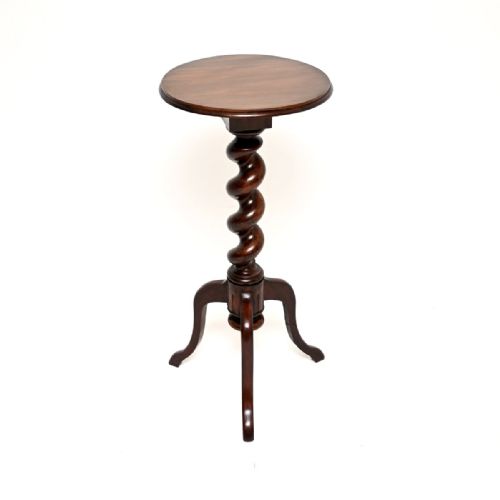

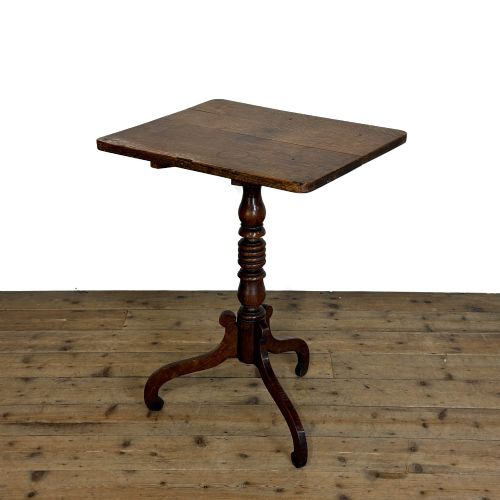
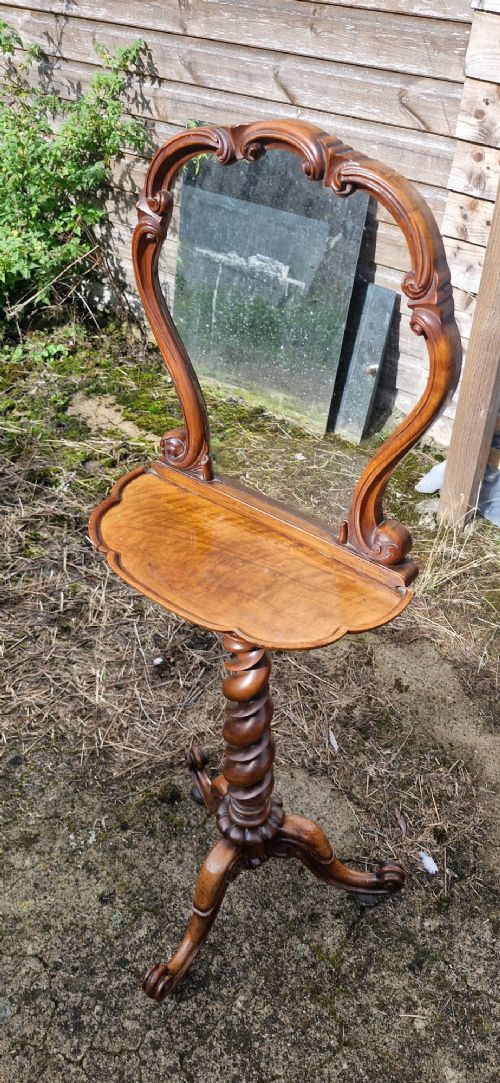
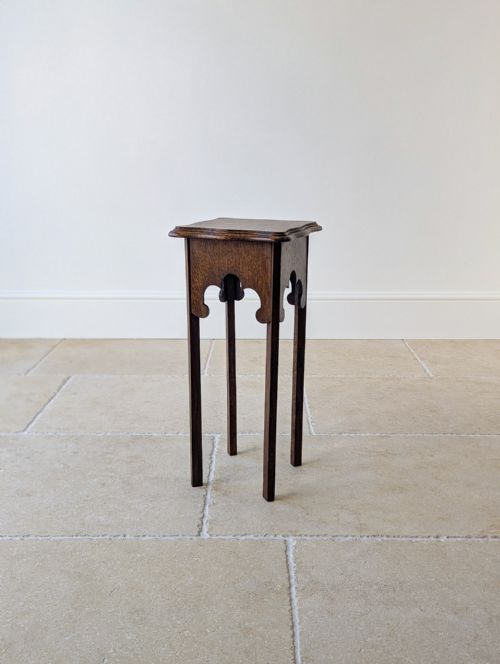
Column Pedestal Table
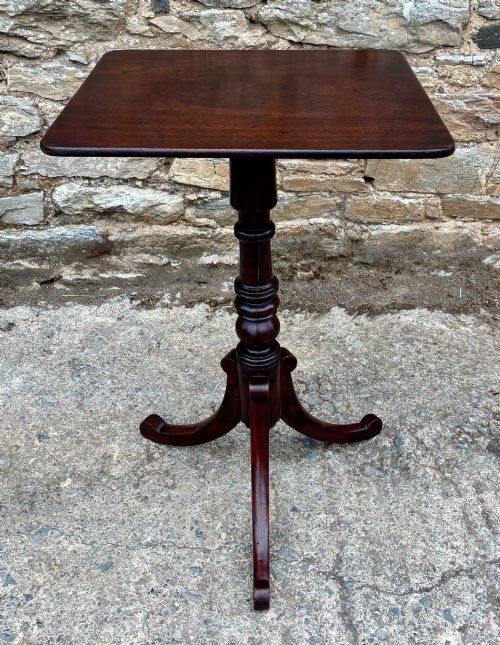
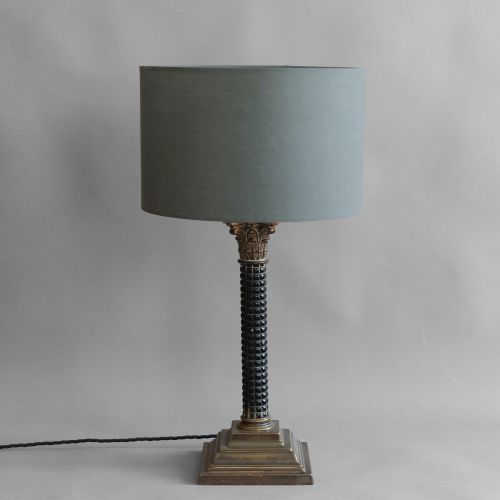
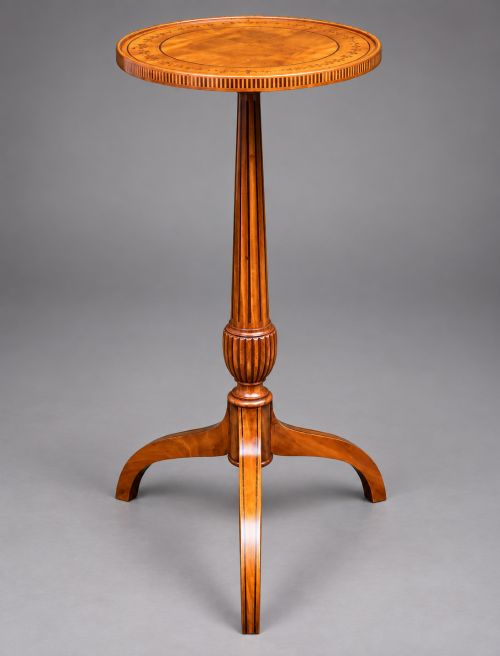
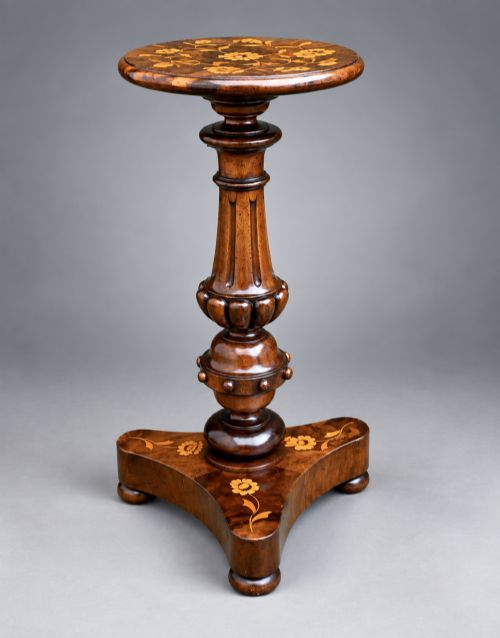
These column pedestal table examples range from Regency wine stands to Victorian tripod lamp holders, offering sturdy central support and compact tops.
Column Pedestal Table
A column pedestal table provides a central support pillar beneath a compact surface, serving roles as varied as wine tables, lamp holders, and plant stands. The pieces span Georgian, Regency, Victorian, and Edwardian periods, reflecting changing domestic habits across centuries.
Occasional tables and wine tables dominate the selection, frequently featuring tilt-top mechanisms for storage. Plant stands and lamp tables appear regularly, utilising narrow footprints suited to corners and corridors.
Origins include English workshops, continental European makers, and regional British centres. Materials range from domestic hardwoods to imported exotic timbers paired with marble and brass.
Materials and Construction
Makers utilised dense timbers such as mahogany, walnut, oak, and rosewood for stability, often applying burr veneers or satinwood inlay to visible surfaces. Tripod bases and central columns required precise joinery to support heavy tops without tilting.
Secondary elements include brass mounts, engraved pillars, and inset marble slabs. Tilt-top mechanisms relied on wooden catches and metal hinges concealed beneath the surface.
Listings feature items spanning the 19th century, Victorian, Edwardian, and Regency periods, constructed from mahogany, walnut, oak, and marble.
Evaluating Quality
The standard of carving and inlay separates standard production from finer output. Crisp execution on barley twist legs, fluted columns, and marquetry panels indicates skilled handwork rather than mass production.
Timber selection drives value, with figured burr walnut, well-matched mahogany grain, and genuine satinwood commanding attention. The integrity of the pedestal joint and the flatness of the table top determine structural longevity.
Gillow·Shoolbred
The Column Pedestal Table Glossary
- Tripod base
- A support structure resting on three feet, commonly found on wine and candle stands to ensure stability on uneven floors.
- Tilt-top mechanism
- A hinge arrangement allowing the table surface to fold vertically when not in use, saving space in smaller rooms.
- Gueridon
- A small ornamental stand or table, frequently round and supported by a single central column.
- Marquetry
- The art of applying decorative pieces of veneer to a structure to form intricate patterns and pictures.
- Barley twist
- A spiral turning technique used on table stems and lamp stands, popular during the Victorian era.
Column Pedestal Table: Frequently Asked Questions
What is a column pedestal table used for?
These tables function as versatile surfaces for lamps, drinks, and plants. Their central pillar design allows them to occupy minimal floor space.
Historically, specific forms such as wine tables and candle stands served evening entertaining in drawing rooms and parlours.
What periods do these tables come from?
The selection spans from Georgian and Regency eras through Victorian and Edwardian periods. Each era brought distinct decorative preferences, from neoclassical lines to heavy turned walnut.
Late nineteenth-century revival styles also draw upon earlier Baroque and Chippendale designs.
How do I care for mahogany and walnut surfaces?
Maintain timber surfaces by dusting with a dry cloth and avoiding direct sunlight to prevent fading. Occasional waxing preserves the moisture and sheen of the wood.
Keep marble and brass elements clean with appropriate non-abrasive cloths to protect inlaid details.