

Column Bedside Lamp
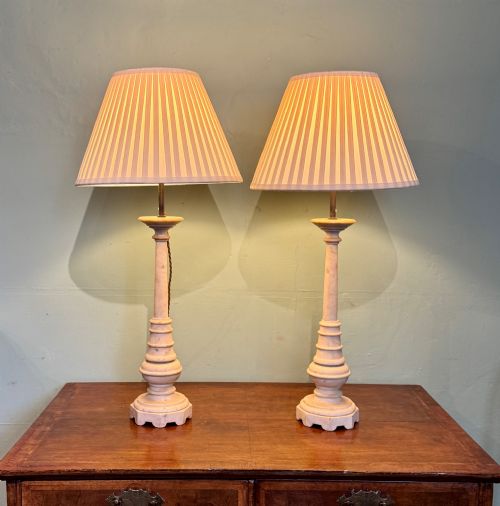
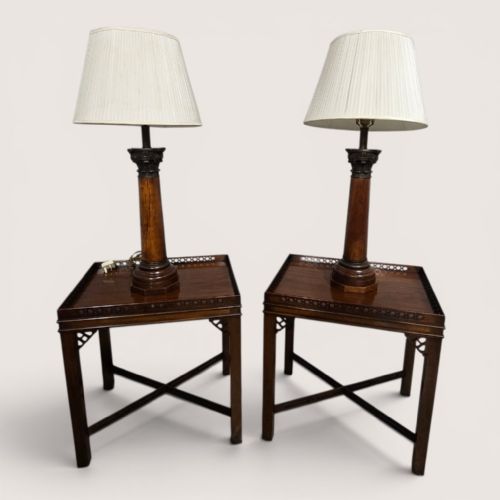
A column bedside lamp brings classical architecture into the bedroom, offering upright brass shafts and detailed capitals that elevate interior lighting.
Column Bedside Lamp
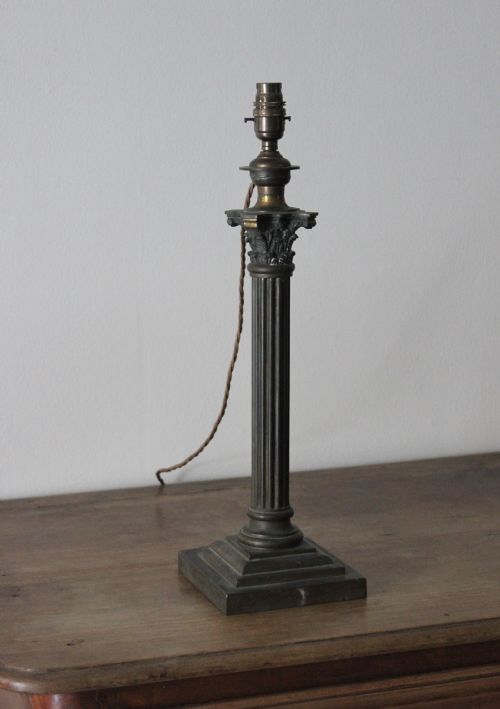
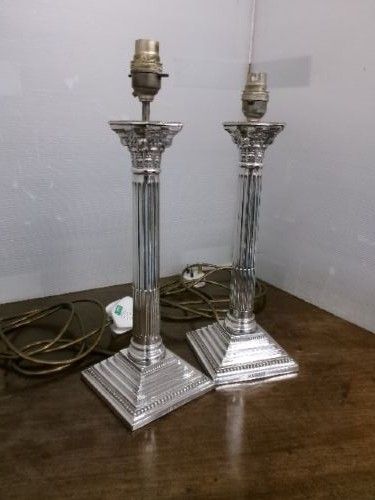
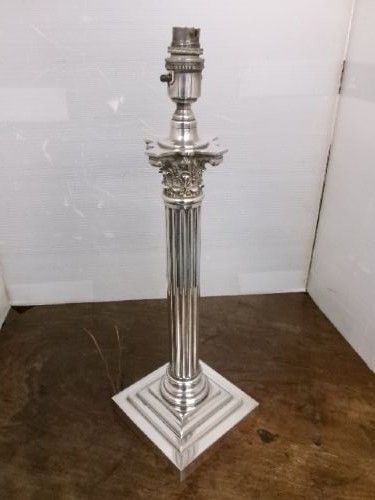
A column bedside lamp takes its architectural cues from historical building orders, translating monumental stone piers into domestic lighting. These pieces draw from the Victorian and Edwardian eras, as well as the 1920s and 1930s, adapting historical proportions for residential interiors.
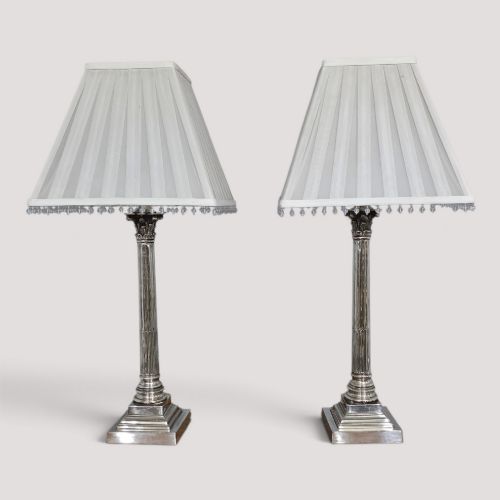
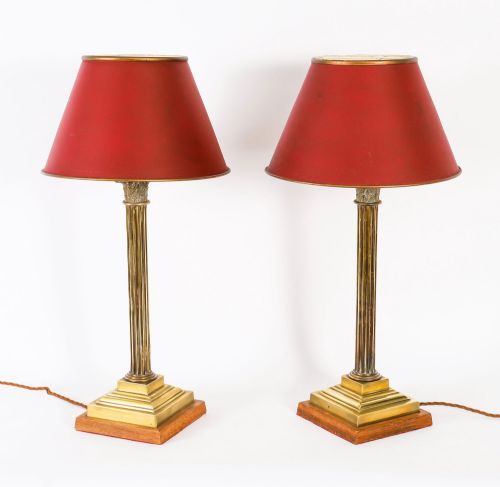
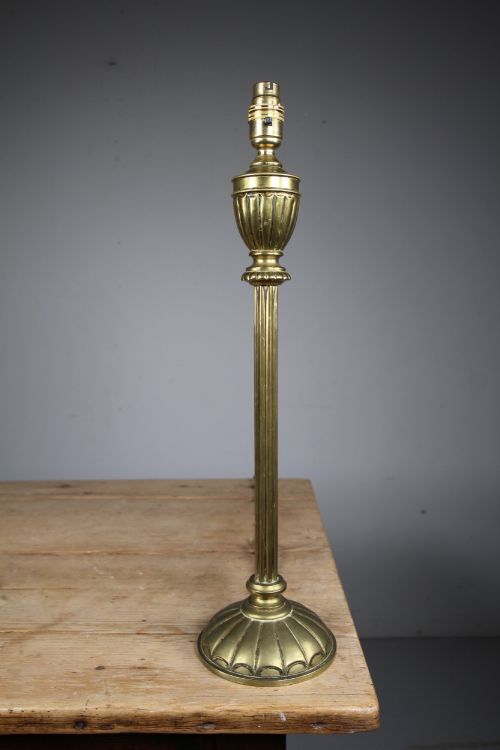
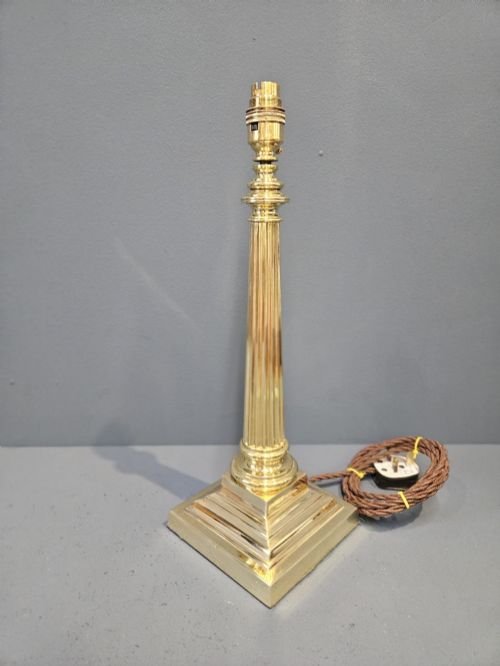
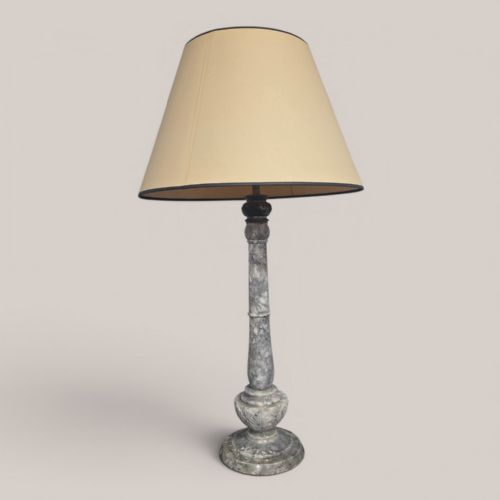
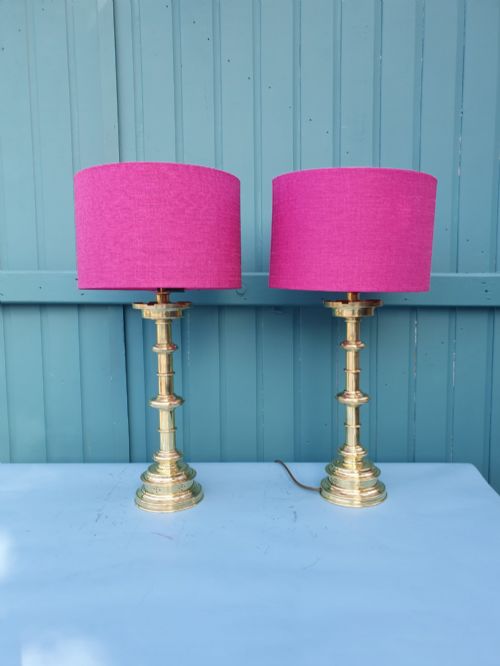
The most common variants on this page utilise brass, silver plate and marble, often fashioned into slender shafts with stepped square bases. Makers adapted these forms from classical orders such as Corinthian, Doric and reeded columns, alongside later Art Deco glass and ormolu designs.
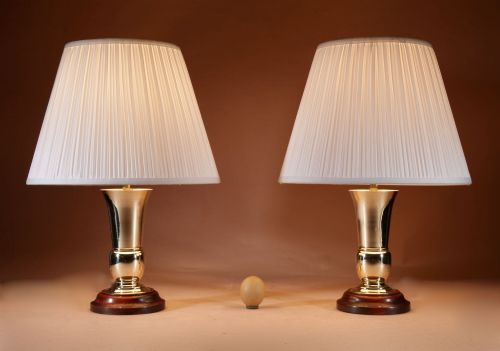
While many listings describe table and bedside illumination, the selection frequently incorporates candlestick conversions and taller display columns alongside standard forms. Buyers encounter both single lamps and symmetrical pairs, spanning the late nineteenth century through the interwar period.
Materials and construction methods
Brass and silver-plated metal provide the structural backbone for these lighting fixtures, often shaped via casting and turning on a lathe. Workshops applied patination or silver plating to achieve polished reflective surfaces or darker, aged finishes.
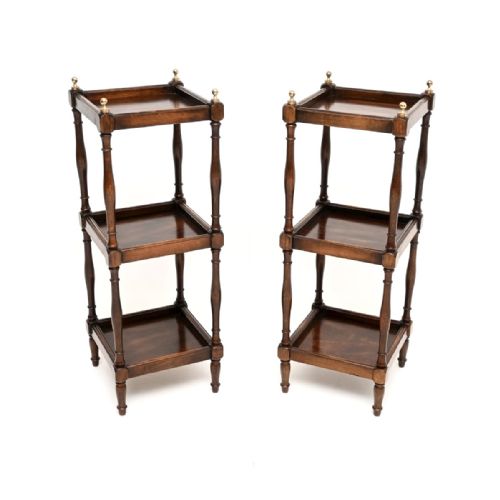
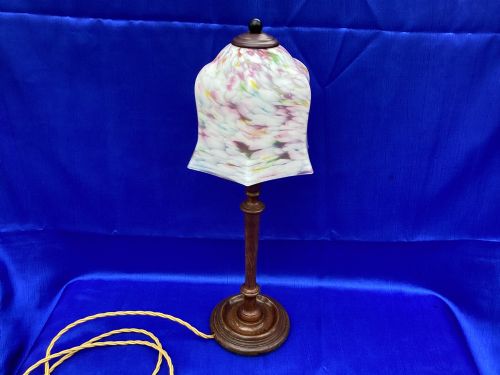
Marble and cut glass feature prominently in the construction of bases and central shafts, introducing substantial weight and varied texture to the designs. Timber elements such as mahogany and oak appear in turned wooden shafts and associated bedside furniture.
Many historical examples began life as candlesticks or oil lamps before undergoing conversion to electricity with contemporary wiring. Cast capitals, such as the ornate acanthus leaf motifs found on Corinthian orders, were soldered or bolted to the main upright stems.
Column Bedside Lamp Retail Price Guide 2026
Typical asking prices for column bedside lamp among the pieces listed under this phrase on Sellingantiques today, from the lower quarter to the upper quarter. They describe what is for sale here now, not the wider market.
Listings span periods from 1890 through the 1930s, uniting Victorian brasswork with Edwardian proportions and Art Deco glass.
Distinctions in craftsmanship
The refinement of the cast metalwork dictates the upper tier of quality, seen in crisply detailed acanthus leaves on capitals and deeply struck maker stamps. Inferior pieces rely on soft, blurred casting that lacks architectural precision and structural definition.
Weight and material selection set the finer examples apart from mass-produced alternatives, with heavy gauge brass, solid marble blocks and thick silver plating commanding higher regard. Lighter hollow metals and thinner veneers indicate a more utilitarian standard of production.
Proportion and symmetry define the success of a pair, where matching height, uniform patination and balanced base dimensions show deliberate workshop pairing rather than assembled matches.
James Hinks of Birmingham
The Column Bedside Lamp Glossary
- Corinthian capital
- The uppermost member of a classical column, distinguished by carved acanthus leaves and scrolling volutes. This ornamental feature tops many brass and silver-plated lighting designs on this page.
- Silver plate
- A thin layer of silver bonded to a base metal core such as copper or brass. This technique offered the visual lustre of solid silver at a lower production cost.
- Ormolu
- Gilt bronze produced by applying a mixture of mercury and gold leaf to bronze, then firing it to drive off the mercury. It adds a rich golden sheen to twentieth-century decorative bases.
- Reeded column
- A vertical decorative moulding consisting of parallel convex strips running up the shaft. This treatment provides textural contrast against smooth metallic surfaces.
- Doric column
- A sturdy classical architectural order featuring a plain, unadorned capital and a simple shaft. It represents a more austere aesthetic than the heavily decorated Corinthian style.
Column Bedside Lamp: Frequently Asked Questions
What periods do these lamps come from?
The pieces span the Victorian and Edwardian eras, stretching into the 1920s and 1930s. Styles reflect historical revivals alongside early twentieth-century modernism.
Craftsmanship from these decades relies on traditional metal casting, turning and plating techniques rather than modern automated manufacturing.
Were these originally electric?
Many examples began as oil lamps or ceremonial candlesticks before being converted for electrical use in modern interiors. This historical transition is common among nineteenth-century brass and silver-plated forms.
Rewired fittings ensure the pieces function safely while retaining their original structural metalwork and weighted bases.
How do I choose between brass and silver plate?
Brass offers a warm, golden metallic tone that develops a natural patina over decades of handling and exposure to air. It suits traditional studies and rooms with earthy colour palettes.
Silver plate provides a brighter, reflective surface that brings formal elegance to a bedside setting, requiring occasional polishing to maintain its lustre.
Are pairs matching or assembled?
Listings often feature matched pairs produced together in the same workshop, sharing identical dimensions, casting quality and wear patterns. Other pairings are assembled later based on similar height and material.
Examining the base construction, metal composition and capital detailing reveals whether two pieces originated as a set.