
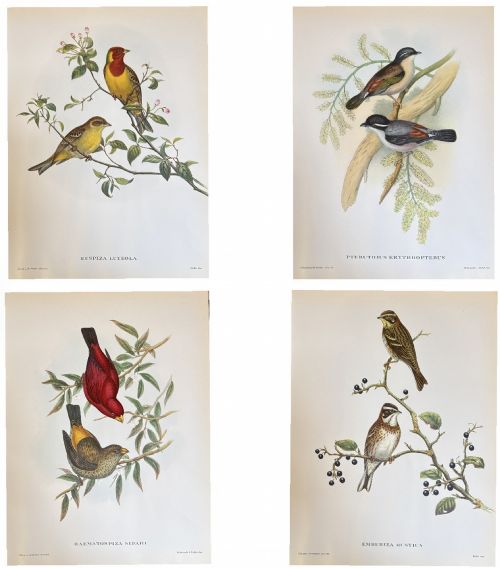
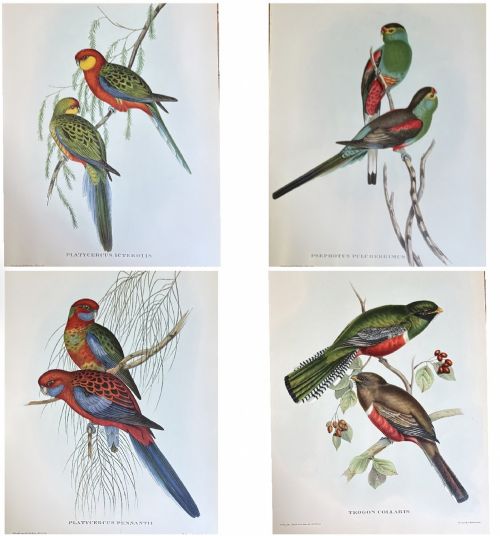
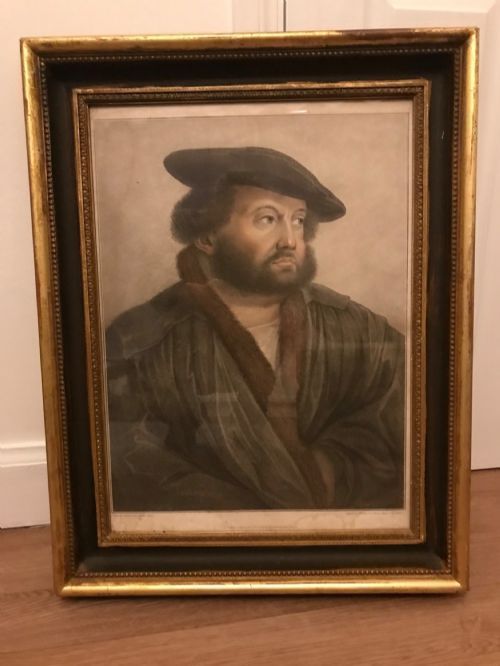
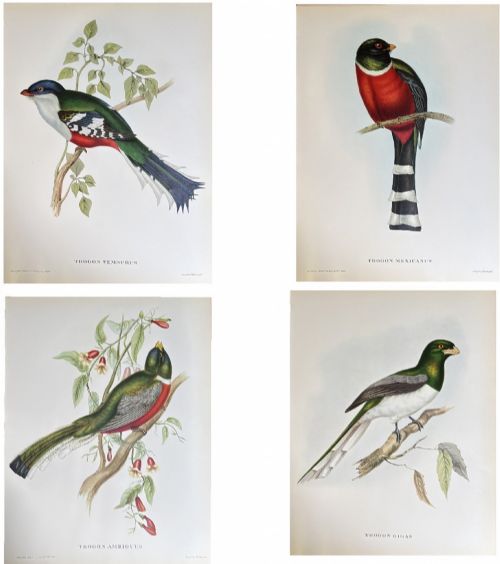





Coloured Paper Engraving
When you search for coloured paper engraving, you are looking at historical prints brought to life with deliberate pigment.
Coloured Paper Engraving
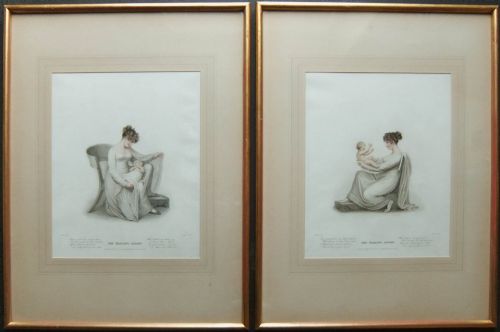
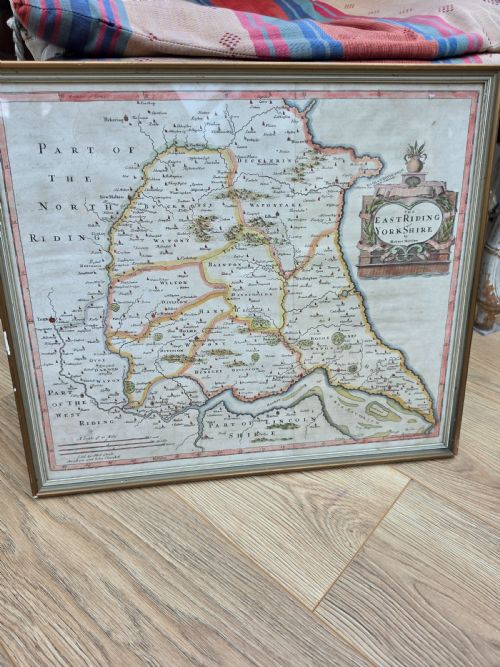
A coloured paper engraving is a printed sheet where ink lines from a metal plate or woodblock meet applied pigment by hand or press. When searching for coloured paper engraving, buyers encounter historical prints ranging from detailed county maps to intricate natural history studies. These works span multiple centuries, appearing in Georgian, Regency, and Victorian formats.
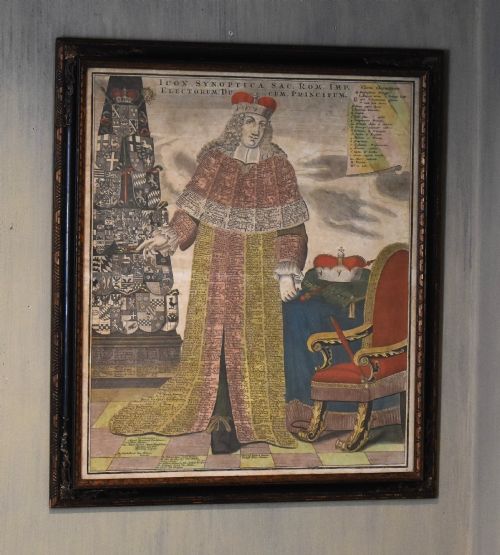
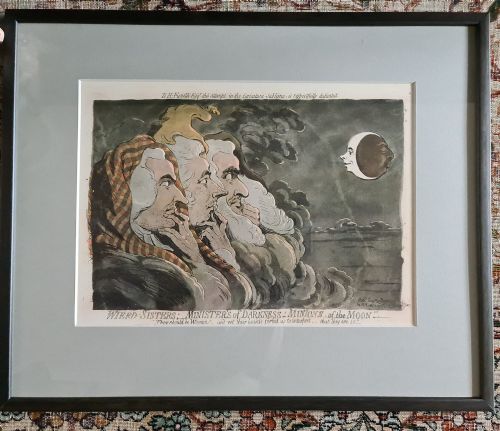
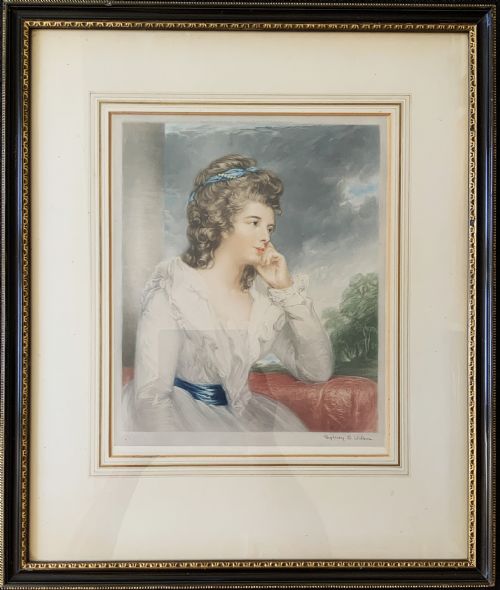
The selections on this page frequently include cartography from seventeenth-century atlas makers alongside botanical and ornithological series. Many examples arrive framed in wood, preserving the delicate paper surfaces beneath glass. Buyers also find portraiture and narrative scenes executed with contemporary watercolour tints.
Originating as working illustrations or decorative atlas plates, these pieces now serve as wall art and collector items. The most common survivals on this page bridge seventeenth-century cartography and nineteenth-century natural history illustration.
Materials and Technique
Makers produced these works by pressing inked metal plates or woodblocks onto dampened paper sheets. Artisans then applied watercolour by hand to specific sections of the impression, creating vibrant areas of tone. This combination of linear engraving and pigment required steady hands and precise colour choices.
Framing often utilised period wood mouldings, occasionally accented with gold leaf or gilt finishes. The paper itself provides the foundational support, interacting directly with ink, watercolour, and environmental conditions over centuries.
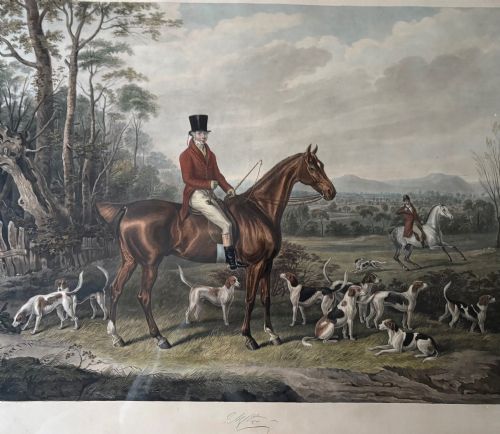
John Mytton's eventful nineteenth-century exploits apparently warranted both aquatint and wax seals.
Evaluating Quality
Quality rests primarily on the crispness of the underlying engraved lines and the precision of the applied pigment. Finer impressions retain sharp details in complex cartographic borders or biological plumage, while worn plates yield softer, blurred boundaries. The skill of the colourist determines whether the watercolour enhances the composition or overwhelms the printed detail.
Condition and presentation further differentiate the pieces at the upper end of the range. Intact margins, stable paper free from heavy discoloration, and appropriate period framing contribute significantly to desirability among collectors.
Francesco Bartolozzi·John Speed·Joan Blaeu·Johannes Janssonius·Robert Morden·John Cary·John Curtis
The Coloured Paper Engraving Glossary
- Engraving
- A printmaking technique where an artist cuts lines directly into a metal plate with a burin. The resulting incisions hold the ink for transfer under pressure onto paper.
- Aquatint
- A variant of etching that produces tonal areas resembling watercolour washes. It was frequently utilised alongside linear engraving for topographical and landscape prints.
- Cartography
- The study and practice of making maps. Historical examples in this category often feature decorative cartouches and hand-tinted regional boundaries.
- Mezzotint
- A printmaking process where the plate is roughened to achieve rich dark tones and subtle gradations of light. It was widely employed for portraiture during the eighteenth and nineteenth centuries.
- Stipple engraving
- A method using dots of varying density to create tonal effects rather than continuous lines. It often produced soft-edged portraits and narrative scenes.
Coloured Paper Engraving: Frequently Asked Questions
How should I display my coloured paper engraving?
Mount the piece behind UV-filtering glass to protect the paper and watercolours from fading under direct light. Keep them away from damp environments and strong heat sources to preserve the structural integrity of the paper.
Ensure the framing allows the paper to breathe without being glued directly to backing boards. Professional conservation framing guarantees long-term stability for historical prints.
How do I distinguish between an original engraving and a reproduction?
Examine the surface under a magnifying glass to check for the distinct impression left by a printing plate pressing into the paper. Original prints display a plate mark indentation and slight ink pooling within the carved lines.
Modern reproductions typically show uniform dot patterns from digital printers or flat surfaces lacking physical indentation. Paper ageing and antique watermarks further help confirm period authenticity.
What periods do these engravings usually date from?
The available selection spans from the seventeenth century through the Victorian era, with significant representation from the Georgian and Regency periods. Seventeenth-century items frequently comprise atlas maps by Dutch and English cartographers.
Later nineteenth-century entries tend to feature natural history plates, botanical studies, and military illustrations. Each period displays distinct printing techniques and stylistic conventions in its hand-colouring.
Were all these prints coloured at the time of creation?
Many maps and natural history plates received hand-colouring shortly after printing to enhance their utility and visual appeal. Workshops employed teams of colourists to apply watercolour washes uniformly across published editions.
Some pieces acquired tinting at later dates by subsequent owners or collectors. Contemporary hand-colouring generally aligns with the established palette of the specific publishing era.