





Colonial Teak Pedestal Table
A colonial teak pedestal table brings substantial timber and intricate carving together, offering a functional surface rooted in nineteenth-century craftsmanship.
Colonial Teak Pedestal Table
A colonial teak pedestal table is a distinctive form originating from nineteenth-century trade and empire, encompassing side tables, occasional pieces, and tilt-top designs. These items frequently display regional Anglo-Indian or Burmese influences, shifting between compact lamp tables and larger centre tables.
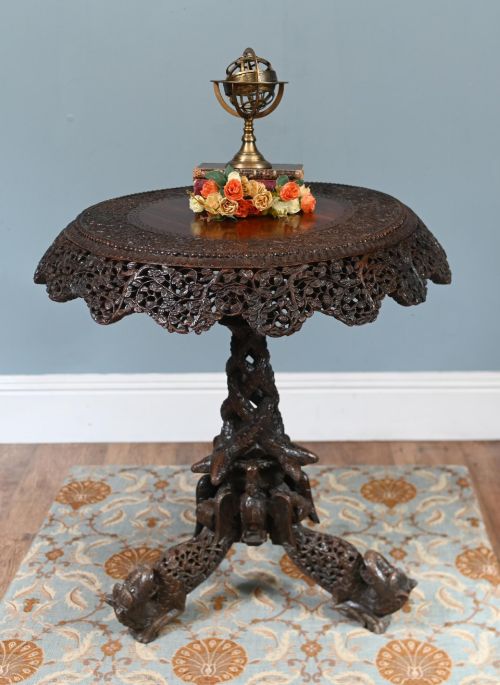
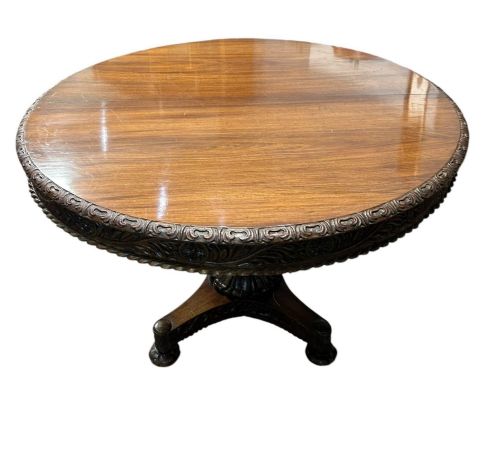
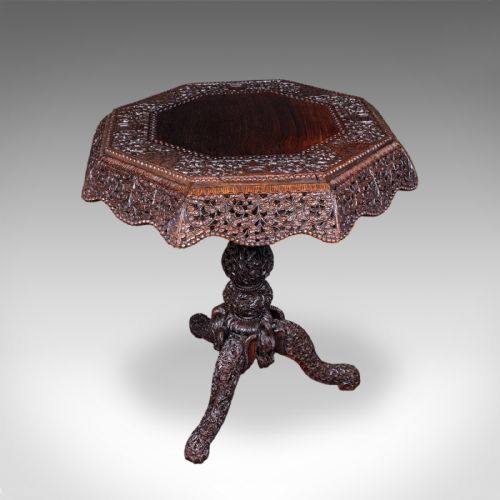
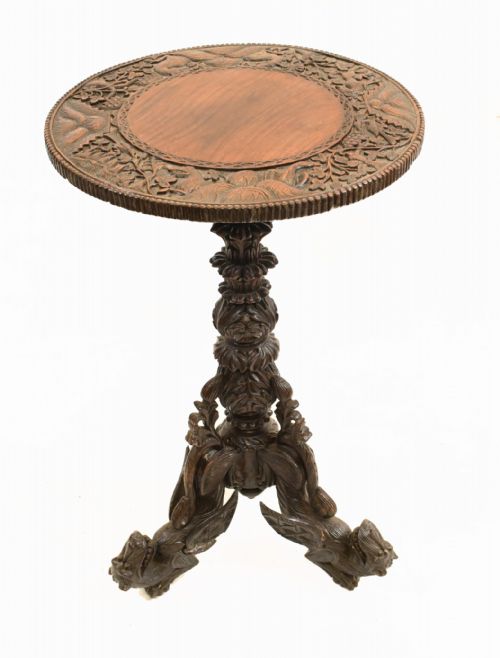
The version most commonly encountered on this page is the carved occasional table or tilt-top side table dating from the Victorian era. These examples combine a sturdy central support with dense surface ornamentation, reflecting the aesthetic preferences of their period.
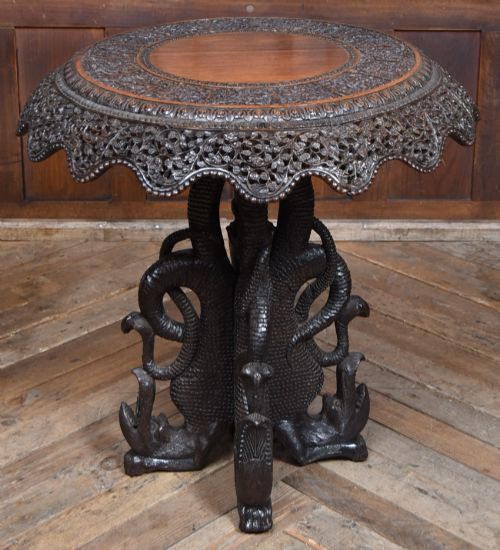
Makers utilised resilient timbers suited to export climates, producing versatile items that functioned as coffee tables, plant stands, or occasional surfaces. The forms range from simple round tops to figural supports shaped like camels or elephants.
Materials and Technique
Constructed primarily from dense tropical hardwoods such as teak, padouk, and rosewood, these pieces rely on the natural weight and durability of the timber to anchor the pedestal base. Artisans selected these dense materials to withstand climate shifts without warping.
Surface ornamentation is achieved through deep hand-carving, often covering the entire top and pedestal shaft with floral or figural motifs. Additional detailing incorporates contrasting elements like bone inlay or functional brass fittings.
Tilt-top mechanisms on occasional tables utilise hinged timber blocks and wooden or brass catches to allow the surface to fold vertically when not in use. This clever engineering combined space-saving utility with ornamental display.
Colonial Teak Pedestal Table Retail Price Guide 2026
Typical asking prices for colonial teak pedestal table among the pieces listed under this phrase on Sellingantiques today, from the lower quarter to the upper quarter. They describe what is for sale here now, not the wider market.
Materials recorded across the inventory include teak, hardwood, rosewood, padouk, brass, wood, and bone.
Evaluating Quality
The crispness and depth of the hand-carving separate superior examples from simpler production pieces, as master carvers achieved remarkable dimension and undercut detail in the hardwood. Softer, shallower carving indicates a more utilitarian workshop output.
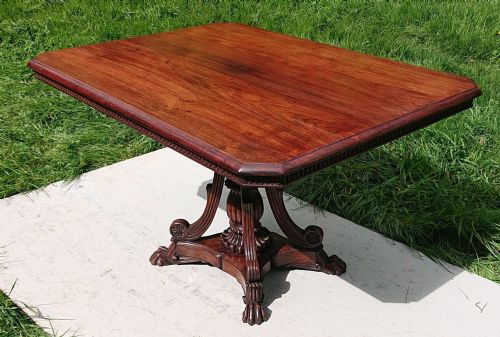
Timber selection and grain matching across the pedestal and top influence the overall visual harmony of the piece, with richly figured rosewood and padouk commanding particular attention. The structural integrity of the central column and its junction with the base legs determines daily stability.
The Colonial Teak Pedestal Table Glossary
- Anglo-Indian
- A descriptive term for furniture made in India during the British period, often combining British furniture forms with local carving traditions. These pieces demonstrate a distinct cross-cultural design vocabulary.
- Tilt Top
- A table mechanism featuring a hinged top that rotates to a vertical position for storage. This clever feature was particularly popular on nineteenth-century occasional tables.
- Padouk
- A heavy, dense tropical hardwood with a reddish hue used extensively in colonial furniture making. Its natural oils make it exceptionally durable.
- Two Tier
- A table featuring an additional lower shelf fitted between the pedestal legs for extra display space. This configuration provides stability alongside added surface area.
- Campaign Table
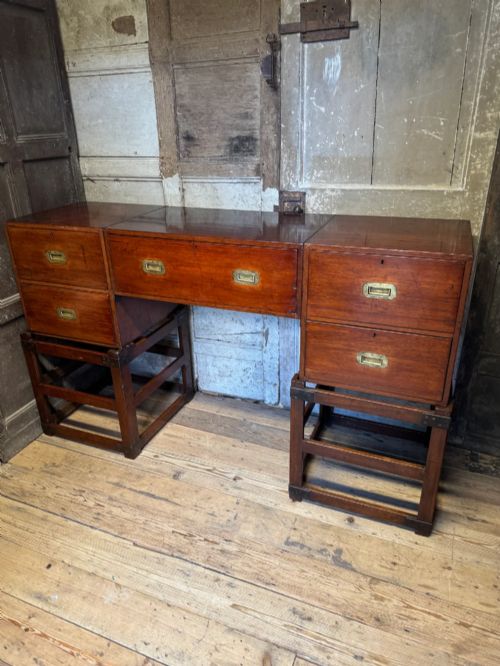
- Portable furniture designed for easy dismantling and transport by military officers or colonial administrators. These items often feature clever folding mechanisms and recessed brass hardware.
Colonial Teak Pedestal Table: Frequently Asked Questions
What is a colonial teak pedestal table?
A colonial teak pedestal table is a nineteenth-century occasional or centre table produced in regions like India and Burma under British influence. These items feature a central pillar support and heavily carved wooden surfaces.
They served various domestic roles in colonial households, functioning as lamp tables, side surfaces, or tea tables. Their sturdy construction and distinctive ornamentation made them popular imports to Britain.
How do I use a tilt top table?
A tilt top table operates via a hinged mechanism beneath the surface, allowing the top to lock flat for use or pivot vertically against the pedestal. This function originally saved space in crowded rooms when the table was not in use.
In a modern interior, you can display the carved top flat as a decorative surface or tilt it upright to showcase the detailed carving underneath when placed against a wall.
What wood are these tables made from?
These tables are predominantly made from teak, alongside other dense tropical hardwoods such as rosewood and padouk. Artisans favoured these timbers for their strength and resistance to humidity.
Occasional decorative details on these pieces may incorporate contrasting materials like bone inlay or brass fittings to highlight the carved motifs.
How do I identify a Burmese table?
Burmese tables from the nineteenth century are typically characterised by exceptionally deep, dense carving that covers the entire top and pedestal. The motifs often feature intricate foliate scrolls, figures, and animals native to the region.
These pieces frequently take the form of round side tables, occasional tables, or two-tier designs utilising dark teak timber.