




Colonial Inlaid Table
A colonial inlaid table brings together dense exotic timbers and intricate contrasting decoration, offering a striking centrepiece rooted in global trade and regional craftsmanship.
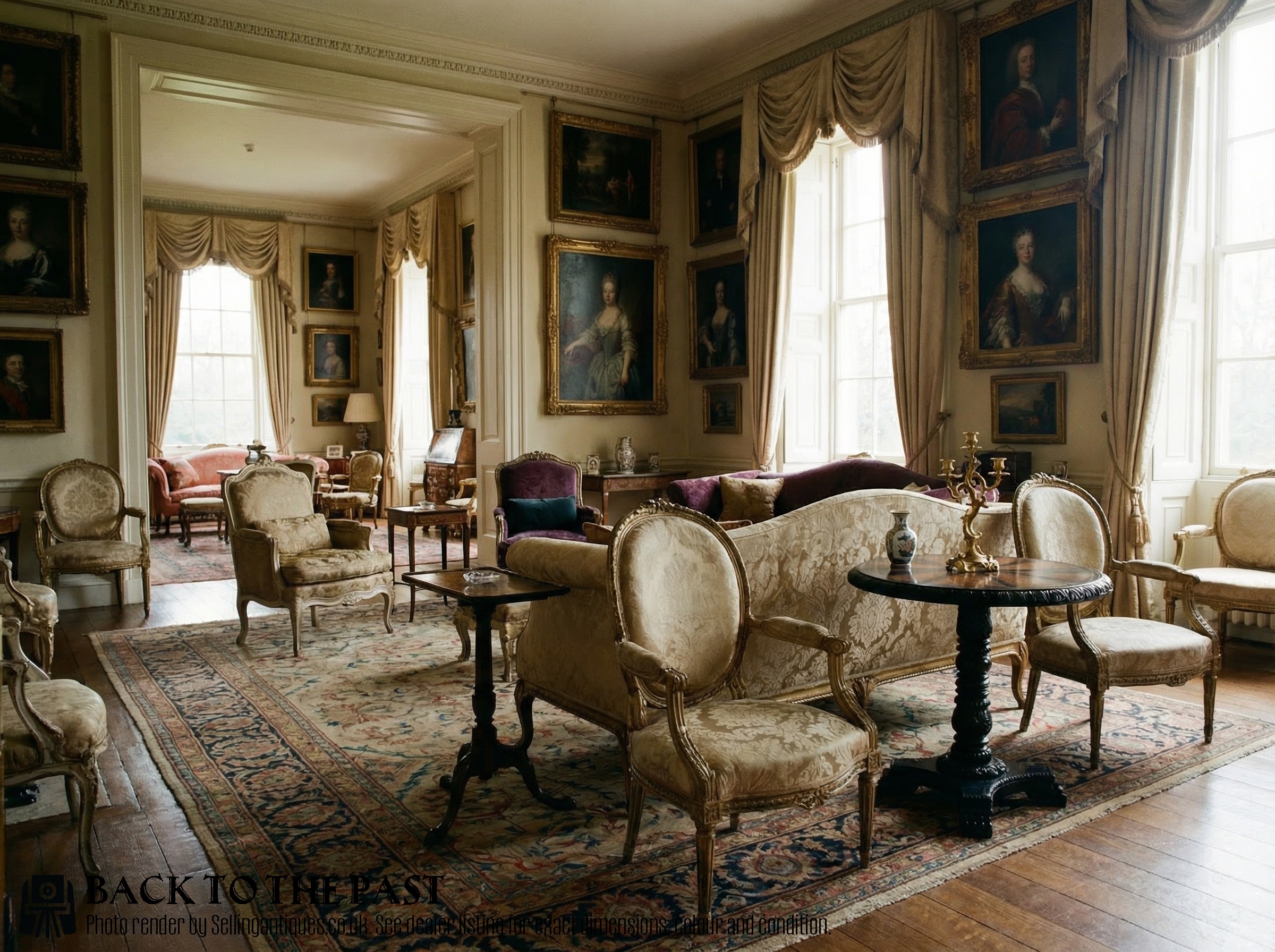
Colonial Inlaid Table
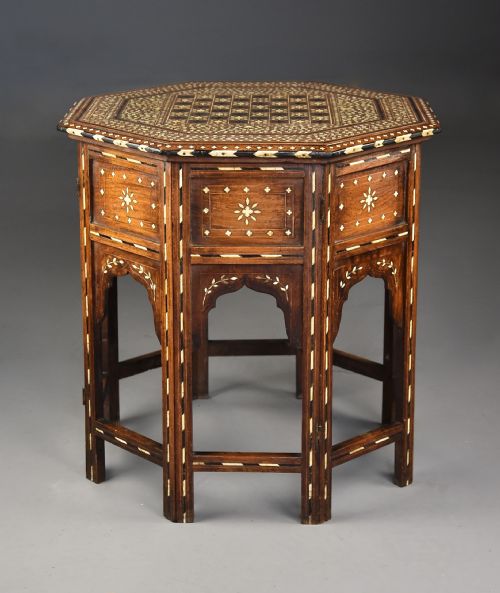
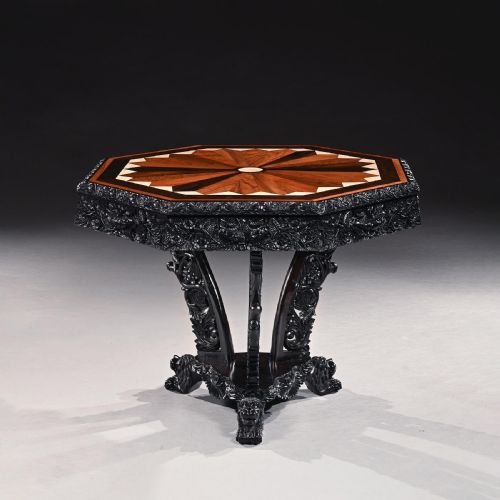
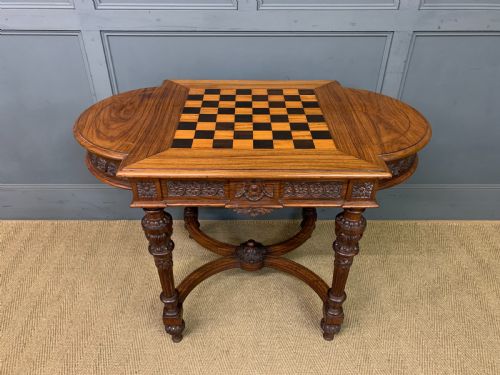
A colonial inlaid table typically emerges from nineteenth-century production centres in India, Ceylon, New Zealand, and the West Indies, reflecting distinct regional aesthetics. These pieces include octagonal occasional tables, games tables, centre tables, and side tables designed for British colonial residences.
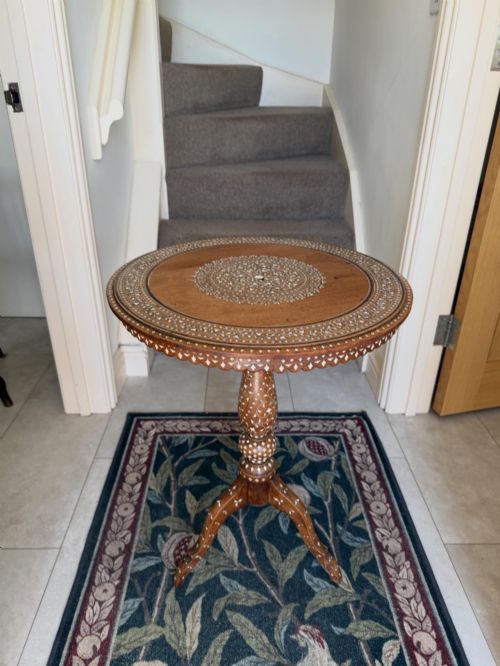
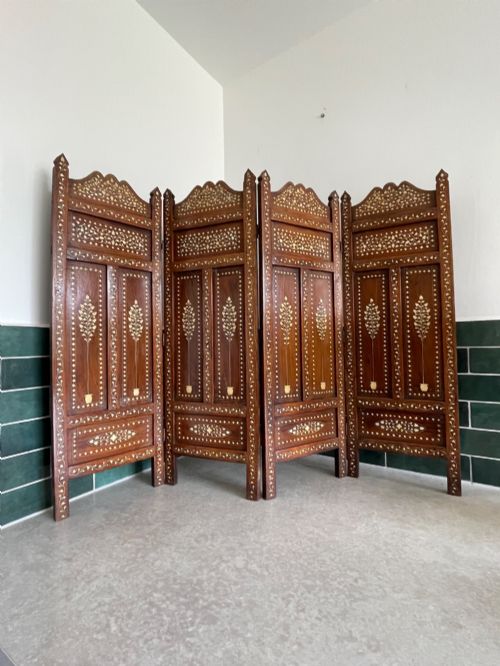
The version most commonly encountered on this page is the Anglo-Indian Hoshiarpur table, generally produced during the late nineteenth century and featuring intricate geometric or figurative patterning.
Makers in Hoshiarpur and other regional workshops combined carved structural timber with contrasting inserts to create portable, decorative furniture for export and domestic use.
Materials and construction
Artisans constructed these tables using dense tropical hardwoods such as teak, rosewood, padauk, ebony, and sandalwood, providing a robust substrate for detailed surface ornamentation.
Intricate decoration relies on contrasting materials including bone inlay, mother-of-pearl, and brass wire or sheet, secured directly into hand-carved recesses within the timber.
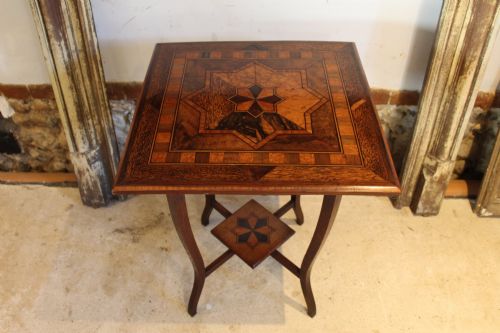
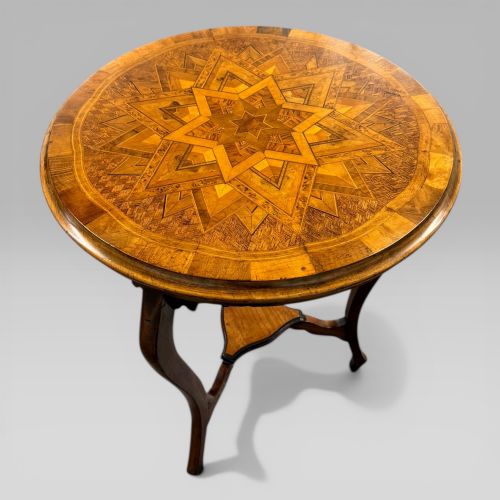
Specimen wood marquetry involves assembling multiple native timbers to form geometric patterns or pictorial surfaces, demonstrating advanced carpentry and slicing techniques.
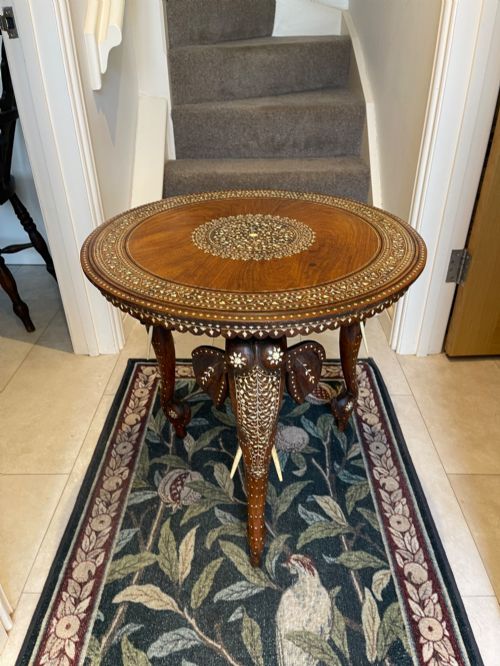
Several tables proudly stand upon carved wooden elephants, keeping a watchful, miniature herd stationed permanently beside the sofa.
Distinctions in quality
The calibre of a colonial inlaid table depends primarily on the precision of the joinery and the intricacy of the surface decoration, where tight fitment of bone, brass, or wood inserts distinguishes finer examples.
Degree of carving depth and clarity across structural elements such as pedestals and elephant-form supports indicate the skill applied during production.
Completeness of the original inlay work and stability of the underlying timber framework dictate the integrity and visual coherence of the piece.
Anton Seuffert·William Norrie
The Colonial Inlaid Table Glossary
- Hoshiarpur
- A city in Punjab, India, renowned for intricate wood carving and geometric bone or brass inlay work on occasional and pedestal tables. Pieces from this tradition often utilise sheesham or teak.
- Specimen wood
- Furniture constructed using a variety of native timbers chosen for their contrasting natural colours and grain patterns. This technique is particularly prevalent in Ceylonese and New Zealand colonial pieces.
- Marquetry
- The art of applying small pieces of veneer to a structure to form decorative patterns or scenes. It differs from inlay by assembling the pattern before fixing it to the surface.
- Pedestal table
- A table supported by a single central pillar rising from a footed base. This form maximises legroom and often incorporates folding mechanisms.
- Occasional table
- A small, versatile table intended for light domestic use rather than a singular dedicated purpose. These are frequently moved around rooms as required.
Colonial Inlaid Table: Frequently Asked Questions
Where were colonial inlaid tables made?
These tables were produced across British colonial territories, with significant production centres in North India, particularly Hoshiarpur, as well as Ceylon, New Zealand, and the West Indies.
Local workshops utilised native timbers and regional decorative motifs to supply both resident British officials and international markets.
How do I care for a bone-inlaid table?
Bone and ivory inlay reacts to fluctuations in relative humidity and temperature, making stable indoor placement essential to prevent shrinkage or lifting.
Dust gently with a dry, soft cloth and avoid commercial polishes or excessive moisture that might stain the porous inlay materials.
Are these tables collapsible?
Certain Anglo-Indian occasional tables incorporate folding or collapsible bases designed for ease of transport and storage.
These folding mechanisms allow the top to detach or the pedestal to fold flat while maintaining structural stability when assembled.