



Colonial Indian Cane
Colonial Indian cane furniture brings together structured seating and woven plant materials to create practical pieces for warm climates.
Colonial Indian Cane
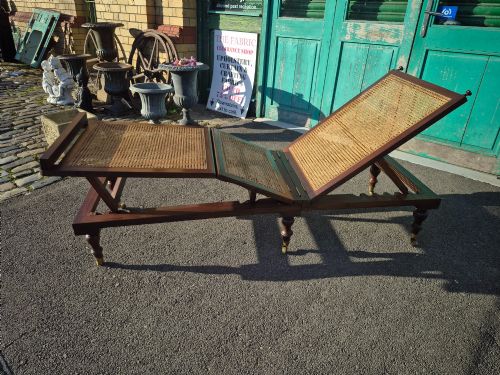
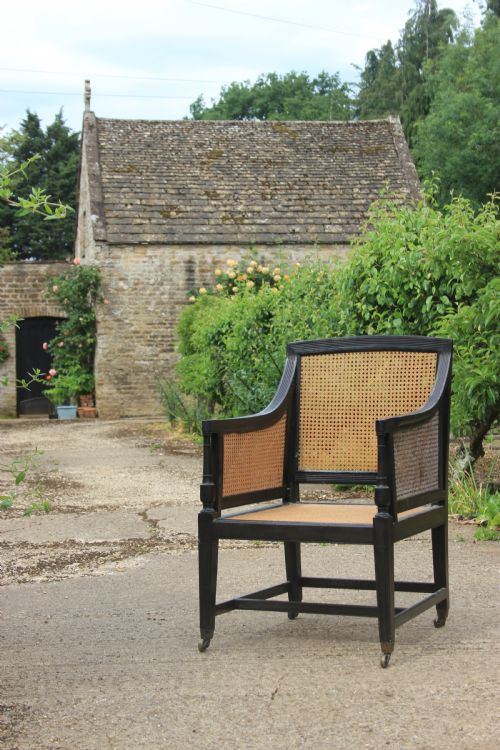
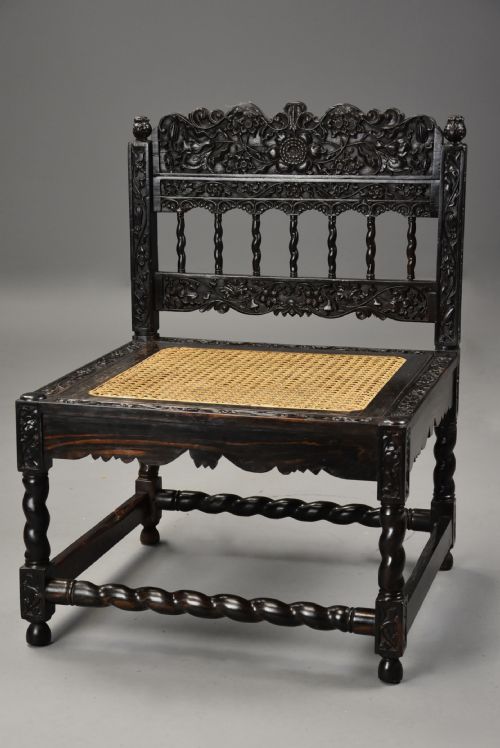
Colonial Indian cane describes seating and daybeds produced during periods of British influence using local timbers and woven plant seating. The pieces vary from armchairs and side chairs to daybeds, sofas, benches, and hall chairs.
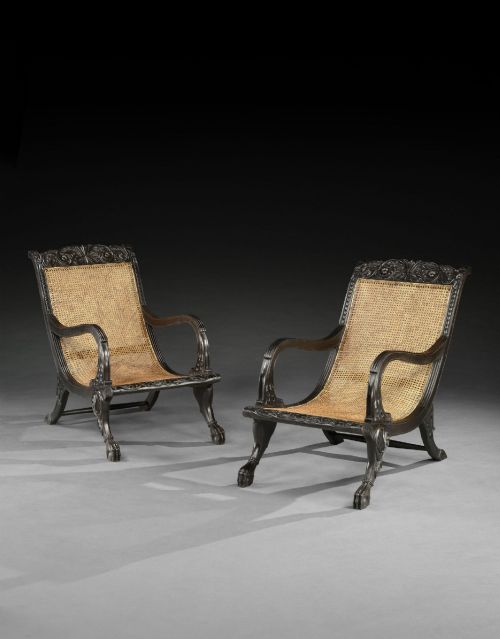
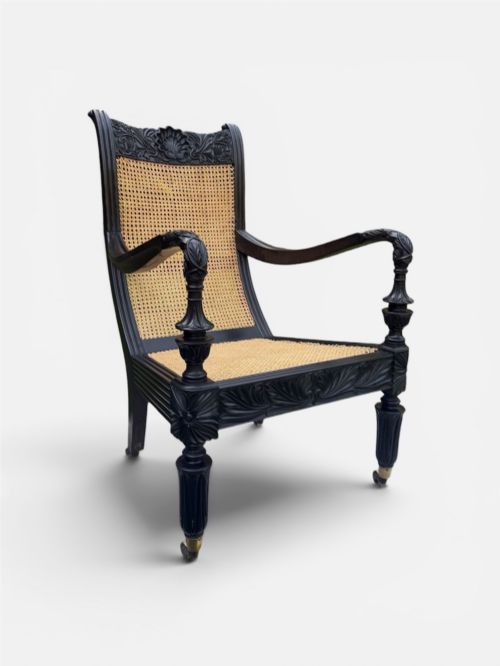
Armchairs and plantation chairs dominate the selection, often featuring deep seats and extended arms designed for resting. The designs draw on Anglo-Indian, Regency, Victorian, and Art Deco styles, showing diverse regional workshops across the subcontinent.
Materials range from dense tropical hardwoods like ebony, teak, rosewood, and padouk to woven cane and rattan. The construction serves both domestic comfort and campaign utility in warmer climates.
Judging the work
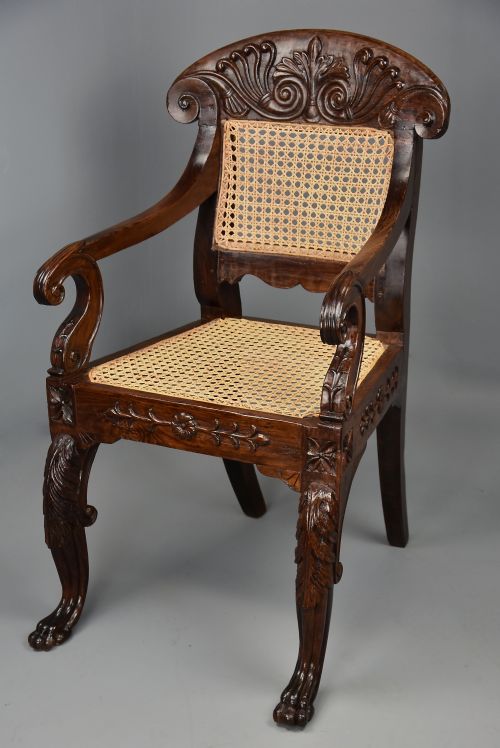
The standard of carving distinguishes the output, ranging from plain functional frames to deeply sculpted foliage and figures executed in solid ebony or rosewood. Precision in the joinery of dense tropical hardwoods indicates the skill of the workshop.
The integrity of the woven cane seating and the retention of original timber surfaces influence the appeal of individual items. Pieces displaying consistent regional styles, such as Ceylonese or Bombay work, carry distinct characteristics.
The Colonial Indian Cane Glossary
- Bergere
- An upholstered or cane-panelled armchair with an enclosed wooden frame. The style often incorporates woven rattan back and seat panels.
- Planplantation chair
- A resting chair featuring extended armrests designed for propping up the legs. These pieces typically include deep seats and durable hardwood frames.
- Campaign style
- Portable furniture constructed for military officers or travellers. These items often incorporate folding mechanisms or brass mounts.
- Padouk
- A heavy tropical hardwood native to Asia, utilised for carved furniture frames. It provides a durable structure with a reddish hue.
- Cane
- Strips of rattan woven into open mesh patterns for chair seats and backs. The material permits air circulation in warm climates.
Colonial Indian Cane: Frequently Asked Questions
What is a plantation chair?
A plantation chair is a deep-seated armchair featuring extended, flat armrests designed for resting the legs. These items date from the nineteenth and early twentieth centuries.
The extended arms often swivel or pull out, allowing the occupant to recline comfortably in warm climates.
How do I care for cane seating?
Keep cane panels clean by dusting with a soft brush and occasionally wiping them with a damp cloth to prevent the material from drying out. Avoid placing the furniture near direct heat sources.
Maintaining moderate humidity in the room prevents the rattan from snapping or losing its tension.
What woods were used?
Makers utilised dense regional timbers including solid ebony, teak, rosewood, padouk, satinwood, and mahogany. These hardwoods resisted humidity and provided strong frames for carved details.
The choice of timber often reflects the specific region of manufacture, such as Ceylon or the Coromandel Coast.
Are these pieces folding?
Some items, such as specific campaign pieces and folding chairs from Burma, incorporate hinged or knock-down joints for transport. The majority of armchairs and daybeds feature rigid, fixed frames.
Examine the joints and any brass hardware to determine if a piece was designed for travel.