
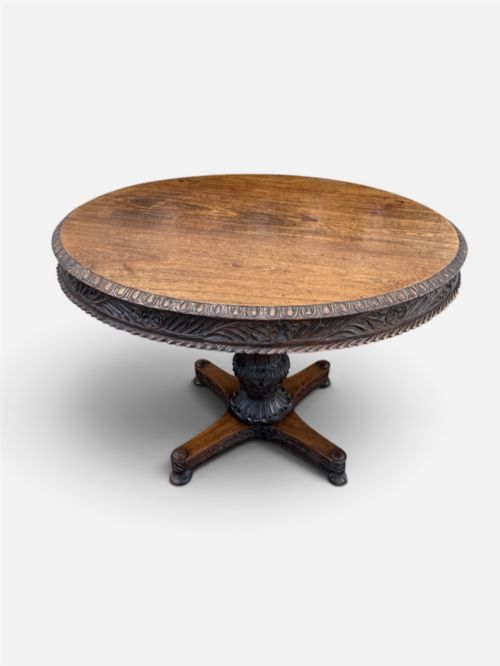
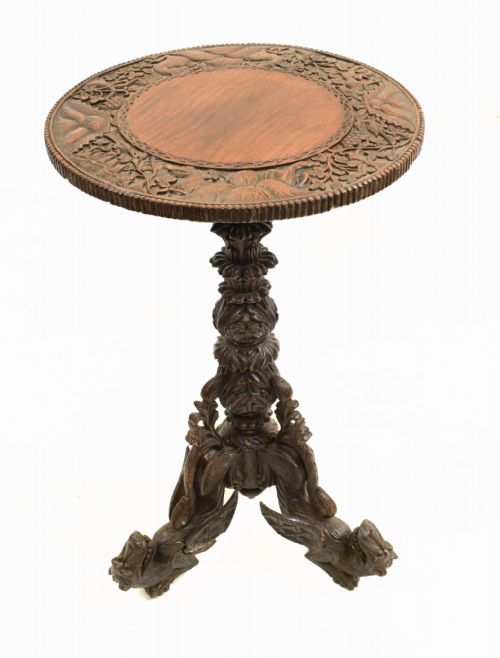
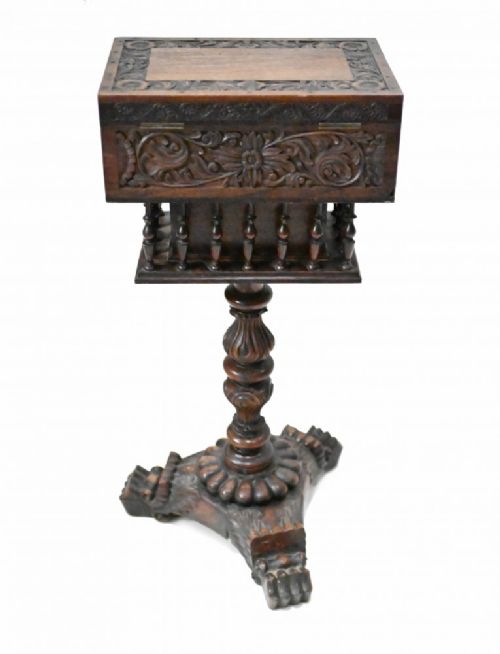


Colonial Carved Pedestal Table
A colonial carved pedestal table brings dense tropical hardwoods and intricate regional carving into domestic British interiors.
Colonial Carved Pedestal Table
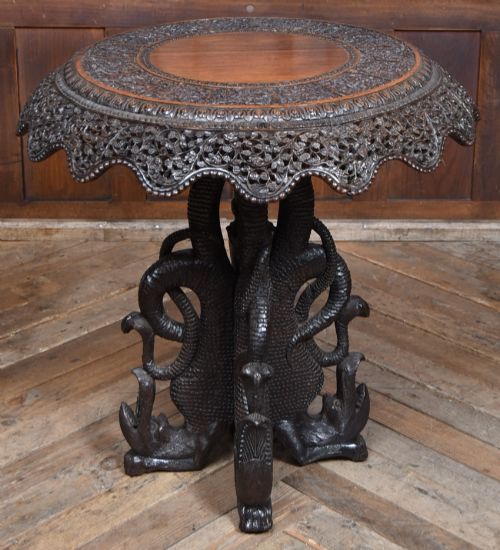
A colonial carved pedestal table is a piece of furniture produced during the nineteenth century under British influence in regions such as India, Burma, and Ceylon. These tables combine traditional local woodworking techniques with European furniture forms ordered by expatriate residents or exported home.
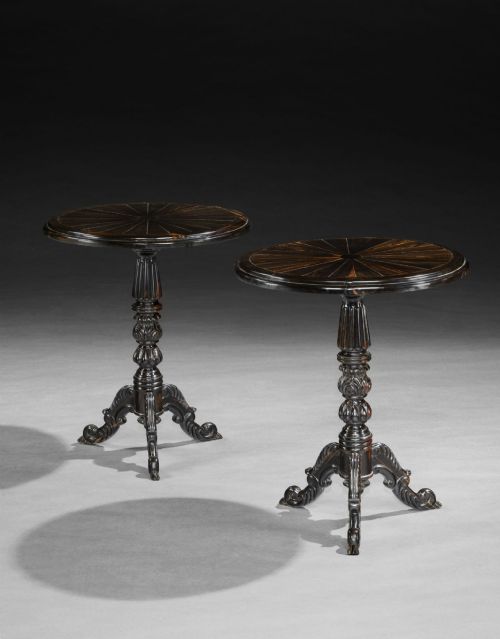
The versions most commonly met on this page are occasional tables, centre tables, and tilt-top tables. They appear in Anglo-Indian, Anglo-Burmese, and Ceylonese styles, featuring heavy carving and regional motifs.
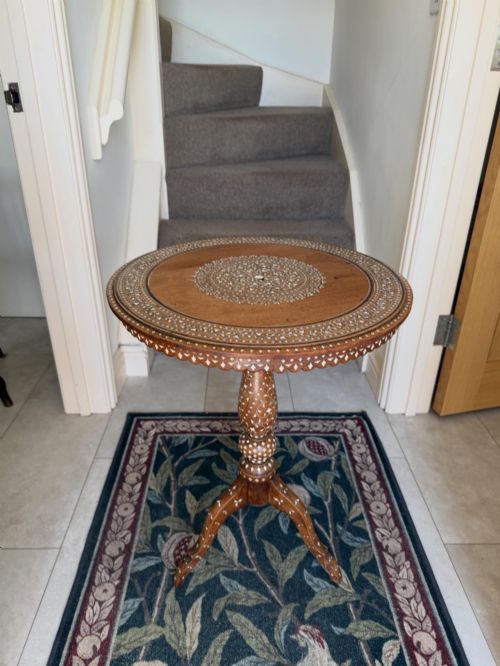
Makers in regions like Hoshiarpur or Bombay utilised local workshop traditions to produce tripod tables, pedestal stands, and larger centre tables. The resulting furniture reflects a distinct cross-cultural aesthetic of the Victorian era.
How they were made
These tables rely on dense tropical timbers including padouk, teak, rosewood, ebony, and satinwood, selected for their stability and weight. Artisans carved these hard woods by hand, executing deep relief work, pierced foliage, and figural elements directly into the solid material.
Construction techniques combine traditional regional joinery with European furniture formats such as tilt-top mechanisms, pillar supports, and tripod bases. Some examples incorporate contrasting inlay materials, including mother of pearl set into the dark timber surfaces.
Materials recorded on this page include ebony, teak, padouk, rosewood, and satinwood.
What varies in quality
The selection and treatment of the timber also determine the standard of the piece. Tables utilising heavily figured rosewood, solid padouk, or exotic specimen woods demonstrate greater material ambition than simpler teak or utility pieces.
Currie And Co Calcutta
The Colonial Carved Pedestal Table Glossary
- Padouk
- A heavy, durable tropical hardwood with a reddish-brown colour that darkens with age. It forms the primary structure for many fine nineteenth-century Anglo-Indian tables.
- Tilt-top table
- A table featuring a mechanism that allows the surface to pivot to a vertical position when not in use. This design saved space in colonial drawing rooms.
- Anglo-Indian
- A descriptive term for furniture made in India during the British period, combining local craftsmanship with European forms. It encompasses varied regional styles from Bombay, Bengal, and the north.
- Teapoy
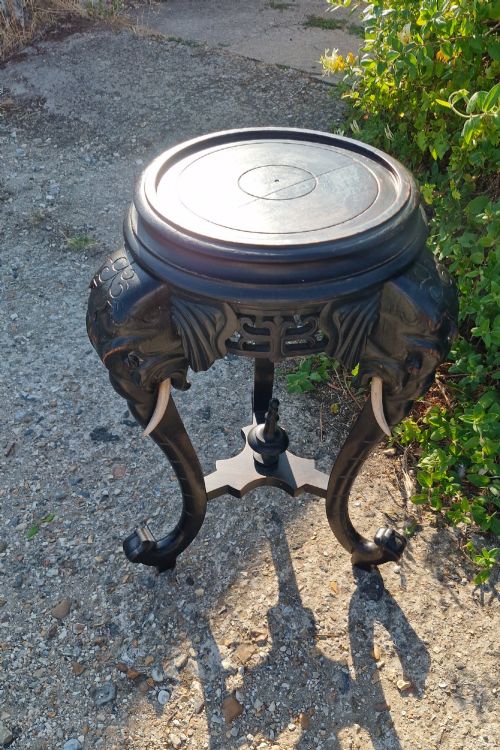
- A small occasional table or stand historically used for serving tea. In colonial examples, these often feature elaborate carved pedestals and circular tops.
- Specimen wood
- Furniture constructed from a mosaic of multiple different timber species to display varied natural tones and grain patterns. Ceylonese workshops frequently employed this decorative technique.
Colonial Carved Pedestal Table: Frequently Asked Questions
How were colonial carved pedestal tables used?
These tables served various domestic functions in nineteenth-century households, acting as centre tables in grand halls, tea tables in drawing rooms, or plant stands.
Tilt-top versions allowed households to clear floor space easily when the tables were not actively in use for dining or display.
Where were these tables manufactured?
Production took place across regions under British administration, principally in India, Burma, and Ceylon. Specific stylistic traits often link pieces to workshops in Bombay, Hoshiarpur, or Burmese carving centres.
Local artisans adapted indigenous woodworking skills to meet the specific demands of British patrons and export markets.
What woods should I look for?
Common timbers include dense tropical hardwoods such as padouk, teak, rosewood, and ebony. Some exceptional pieces incorporate contrasting satinwood or multi-wood specimen tops.
These heavy timbers were selected both for their durability in tropical climates and their rich natural colouration.
How do I care for a carved pedestal table?
Maintain the timber by keeping the table away from direct heat sources and sudden humidity changes, which can cause dense tropical hardwoods to split. Dust the intricate hand-carved surfaces regularly with a soft brush.
Avoid heavy liquid polishes that can build up within the recessed areas of the carving over time.