


Colonial Campaign Table
A colonial campaign table is portable military furniture built for travel, offering sturdy timbers and clever folding mechanisms that suit compact modern rooms.
Colonial Campaign Table
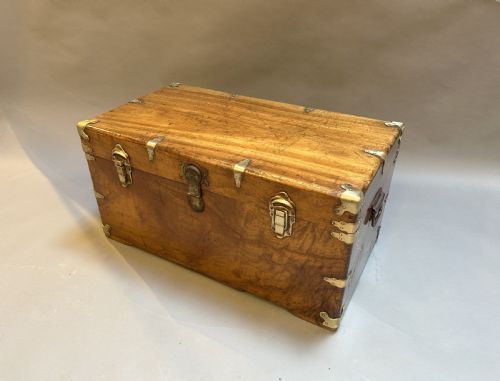
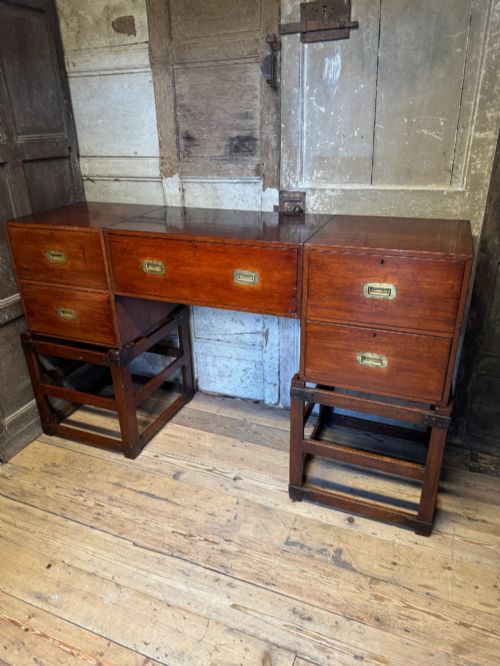
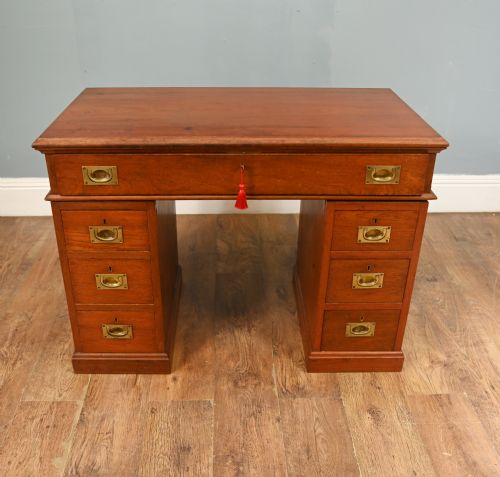
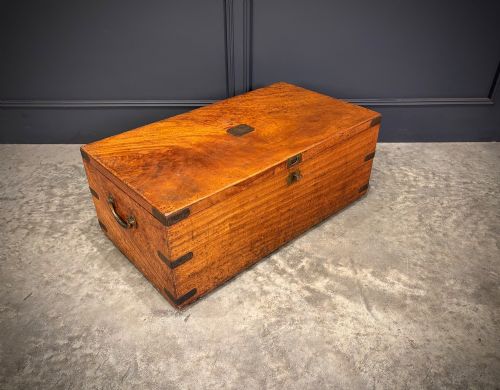
When you search for a colonial campaign table, you look at practical folding or modular furniture engineered for British officers and officials on the move during the Victorian era and into the early twentieth century. These pieces combine utilitarian portability with rich timbers and metal mounts designed to endure arduous transit.
The versions most likely to appear on this page span the nineteenth century, including styles described as Victorian campaign, Anglo-Indian, and colonial safari. They range from small occasional tables and folding tea tables to larger dining tables and carved side tables.
Makers constructed these items from dense woods suited to tropical climates, frequently mounting them with brass to protect corners and joints from heavy knocks. The resulting forms balance military strictness with decorative regional carving.
Materials and construction
Makers relied on durable timbers such as camphor wood, teak, mahogany, padauk, and rosewood, which resisted splitting and warping in humid environments. These woods were often richly grained and polished to a deep lustre.
Brass fittings, hinges, and corner brackets were integrated into the design to reinforce the structure while allowing sections to detach or fold flat. Leather and natural fibre surfaces also appear, alongside intricate hand carving on Anglo-Indian pieces.
Listings feature Victorian and early twentieth-century pieces, spanning the eighteen-fifties to the nineteen-thirties.
Distinctions in quality
Quality rests in the precision of the folding mechanisms and the integrity of the original brass hardware rather than surface decoration alone. Superior examples maintain tight joints and smooth folding actions despite decades of movement.
The choice of timber and the crispness of any hand carving mark the difference between standard field equipment and finer commissioned pieces. Original fittings without later replacements command greater attention from buyers.
The Colonial Campaign Table Glossary
- Campaign furniture
- Portable furnishings designed to dismantle or fold for military officers on active service abroad. These pieces feature recessed handles and removable legs for easy packing.
- Anglo-Indian
- A style describing furniture made in India during the British period, often combining European forms with local artisan carving and exotic hardwoods.
- Camphor wood
- A fragrant timber native to Asia, prized in campaign chests and trunks for its insect-repellent properties and resistance to humidity.
- Padauk
- A heavy, durable reddish-brown tropical hardwood utilised for solid desks and tables.
- Occasional table
- A small, versatile table intended for light, intermittent use around a room rather than a primary dining function.
Colonial Campaign Table: Frequently Asked Questions
What is a campaign table?
A campaign table is portable furniture designed to fold or dismantle for easy transport by military officers. These pieces prioritised sturdy construction and practical disassembly.
They appear in various forms, from small occasional tables to larger dining versions, utilising durable timbers and protective brass mounts.
How were campaign tables used?
Officers used these tables in temporary quarters, tents, and ships during overseas postings. The folding frames allowed quick packing into transport crates.
Today, their compact nature makes them practical for smaller modern spaces where flexibility is needed.
What woods are used?
Common timbers include teak, camphor wood, mahogany, padauk, and rosewood. These woods withstood tropical conditions and heavy travel.
Makers selected them for density and grain, often enhancing the appearance with polish and brass reinforcement.
How do I date these tables?
Dating relies on stylistic clues, construction methods, and materials associated with the Victorian period and the late nineteenth century. Brass hardware and joinery styles shift over the decades.
Records show pieces spanning from the mid-nineteenth century through the early twentieth century.
Are they sturdy enough for daily use?
The original engineering was intended for rigorous field conditions, making well-preserved pieces remarkably durable. The joints and folding mechanisms were built to withstand repeated assembly.
Routine care keeps these tables functional for everyday living in contemporary homes.