

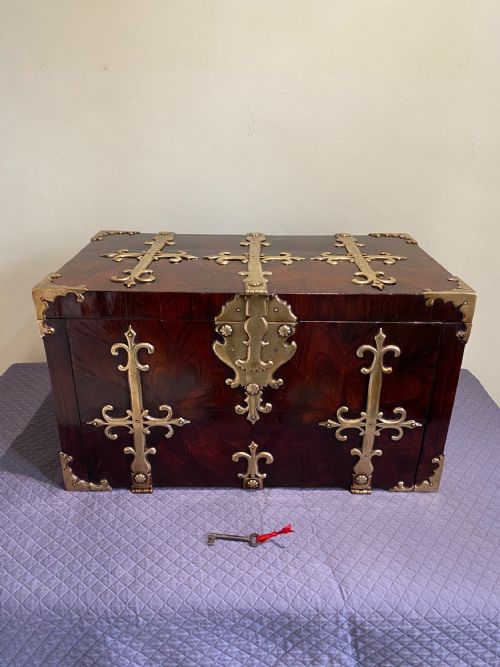


Colonial Brass Mounted Coffer
A colonial brass mounted coffer is a heavy travelling or storage chest built for long journeys and reinforced with metalwork.
Colonial Brass Mounted Coffer
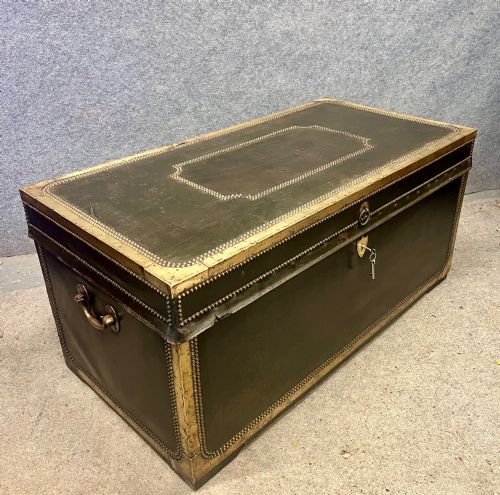
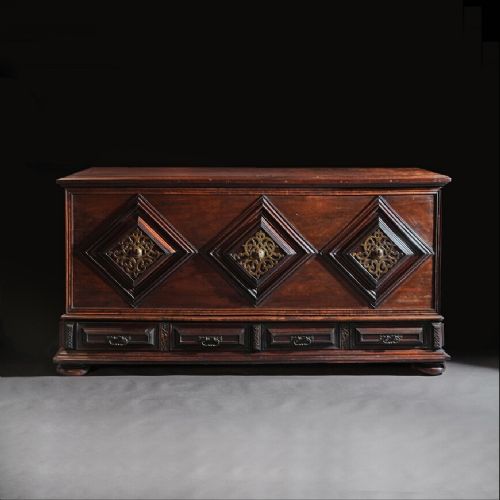
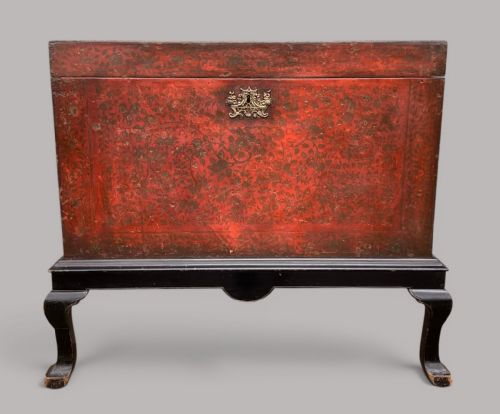
When you examine a colonial brass mounted coffer, you are looking at heavy storage chests and trunks made across global trade routes during the seventeenth, eighteenth and nineteenth centuries. These pieces carry designations such as Anglo-Indian, Dutch Colonial, Portuguese Colonial and China Trade, reflecting the diverse workshops of the British, Dutch and Portuguese empires.
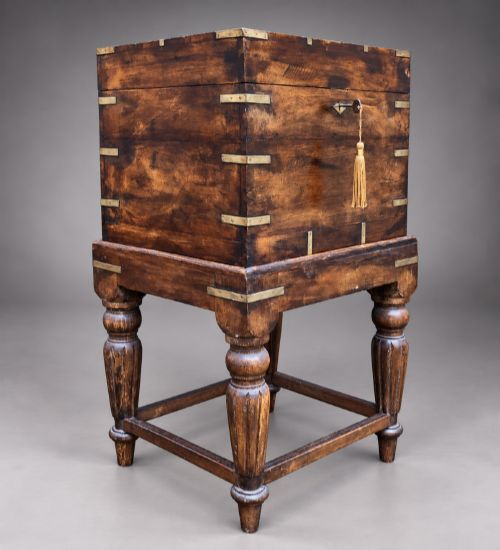
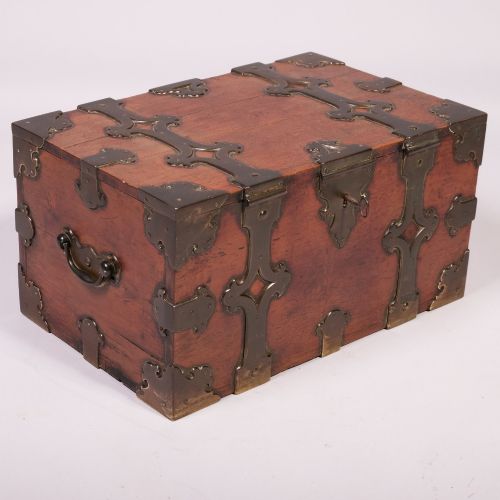
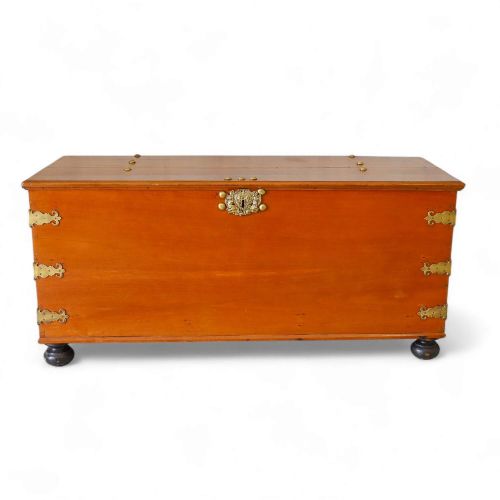
The most common form met on this page is the substantial trunk or blanket box fashioned from dense tropical timbers and fitted with heavy metal straps, corner plates and carrying handles. Alongside standard rectangular chests, the selection includes specialised forms such as wine chest cellarettes, strong boxes on stands and miniature linen presses.
Originating from regions including India, Ceylon, Zanzibar and the Dutch East Indies, these containers were built to withstand the rigours of maritime transit and colonial settlement. Their construction combines utilitarian strength with decorative metal mounts designed to protect vulnerable edges and joints during transit.
Materials and construction
Makers utilised durable tropical hardwoods such as teak, camphor wood, padouk, mahogany, walnut and ebony to resist humidity and insect damage during long sea voyages. Camphor wood was frequently chosen for its aromatic qualities that naturally repelled pests from stored textiles and papers.
Structural integrity relied upon heavy iron and brass hardware, including strapwork, corner brackets, lock plates and studs, which were hammered or screwed directly into the timber frame. Brass mountings provided both structural reinforcement against the stresses of travel and a decorative contrast to the dark polished woods.
Opening an antique camphor wood chest releases a distinct, lingering medicinal scent that protected explorers' garments from insects centuries ago.
Evaluating quality and construction
Quality in these chests is determined by the selection and figuring of the timber, alongside the complexity and integration of the brass hardware. Pieces utilising dense padouk, ebony or well-figured walnut sit at the higher end of the range compared to standard utility hardwoods.
The degree of hand-engraving on the brass straps and the survival of original locks, hinges and carrying handles distinguish finer workshop output from simpler campaign pieces. Furthermore, the presence of an integrated stand or base elevates the form from a simple floor trunk to a display piece.
The Colonial Brass Mounted Coffer Glossary
- Camphor wood
- A fragrant tropical timber valued for its insect-repellent properties. It was widely utilised in maritime chests to protect stored garments.
- Padouk
- A heavy, dense hardwood ranging in colour from red to deep brown. It provides exceptional durability for colonial furniture.
- Cellarette
- A lockable container designed for holding bottles of wine or spirits. They often appear on stands within colonial interiors.
- Campaign trunk
- A portable chest built in sections or fitted with recessed handles for military officers on the move. They prioritize sturdy construction and ease of transport.
Colonial Brass Mounted Coffer: Frequently Asked Questions
What were colonial coffers used for?
These chests served primarily for the safe storage and transport of personal valuables, clothing, and documents during long maritime voyages. Their sturdy construction protected contents from moisture and handling.
Over time, many transitioned into stationary furniture pieces within colonial homes, used for linens, blankets, or general household storage.
How do I identify a Zanzibar chest?
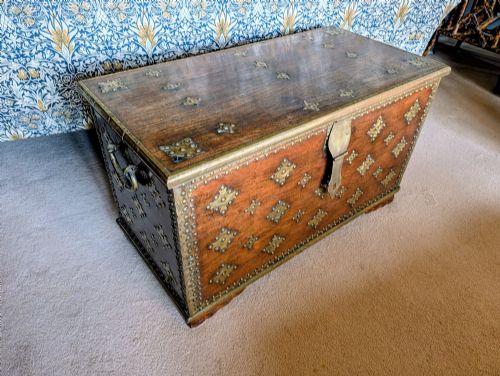
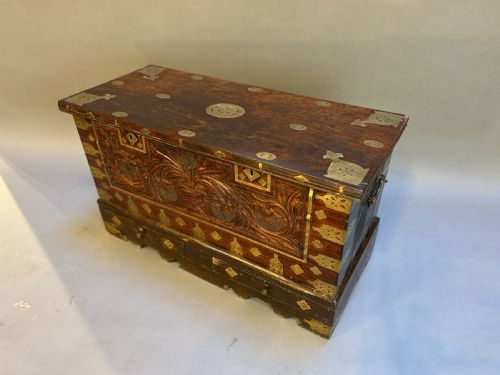
Zanzibar chests are typically constructed from teak or camphor wood and are heavily decorated with brass studs, straps, and intricate geometric plates. They often feature prominent central lock plates and multiple internal compartment drawers.
Many examples date from the nineteenth century and reflect the distinctive trade aesthetic associated with the East African coast.
Are these chests suitable for modern homes?
Their robust build makes them practical for everyday storage of blankets, bedding, or media items in living spaces. The flat tops also allow them to function effectively as coffee tables or window seats.
Placing them away from direct heat sources helps preserve the stability of the dense tropical timbers and prevents splitting.
How can I tell the period of a chest?
Dating relies on examining the timber species, the style of the brass hardware, and the hand-cut construction methods visible on the interior. Earlier seventeenth and eighteenth-century examples often feature walnut, mahogany, or padouk with heavy, restrained mounts.
Nineteenth-century campaign and Zanzibar pieces generally incorporate camphor wood, extensive brass studding, and standardised locking mechanisms.