
Collector Desktop Drawers
Collector desktop drawers are compact cabinets and miniature chests used for sorting small items, pairing practical storage with fine craftsmanship.
Collector Desktop Drawers
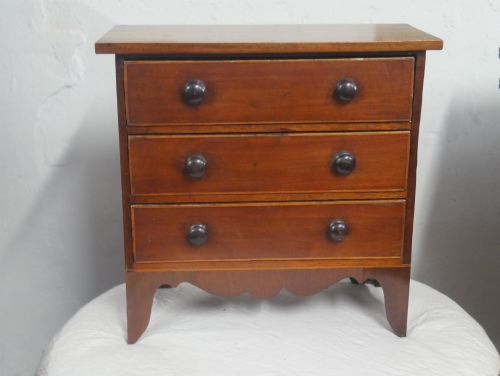
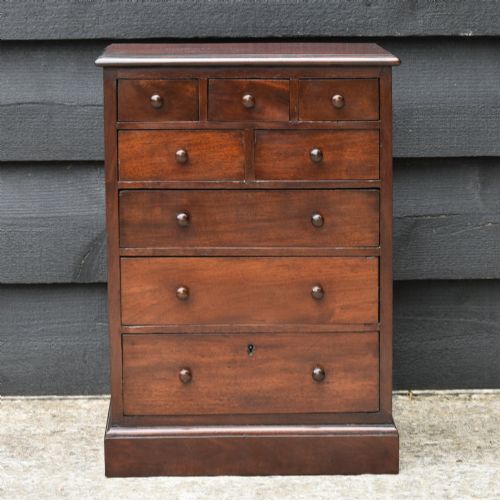
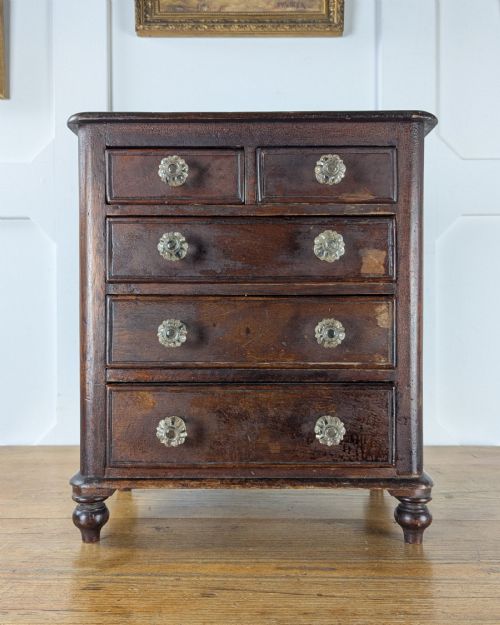
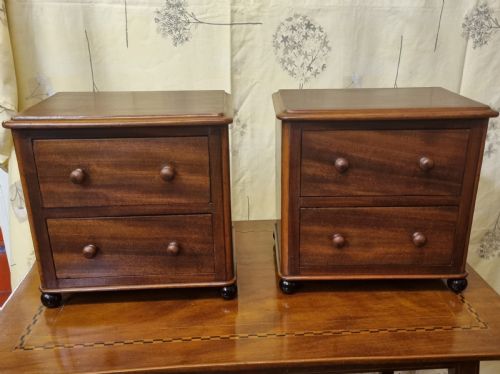
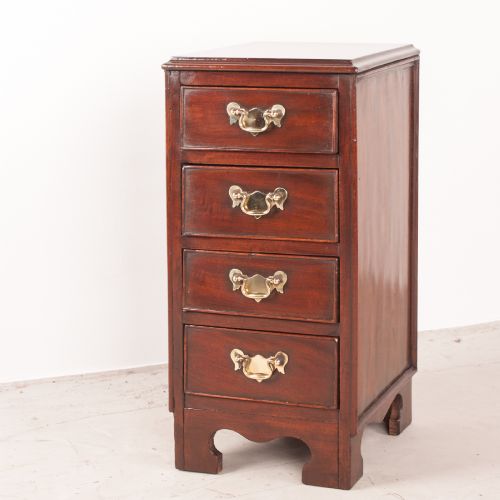
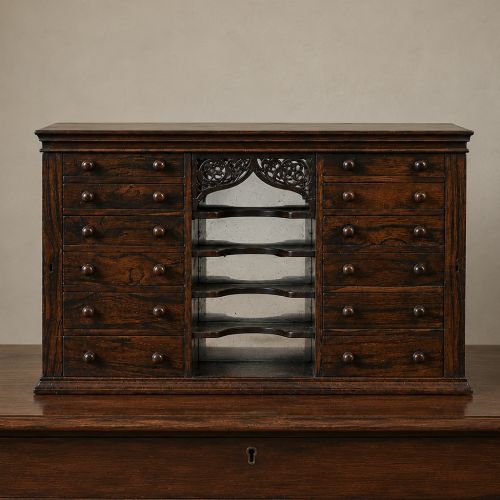
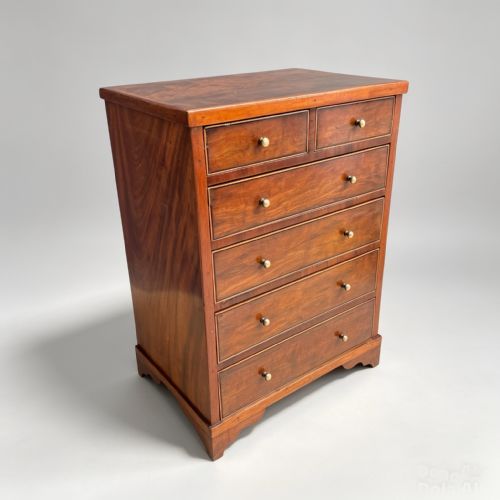
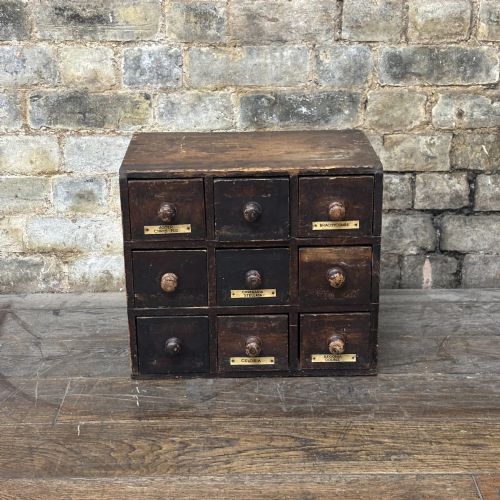
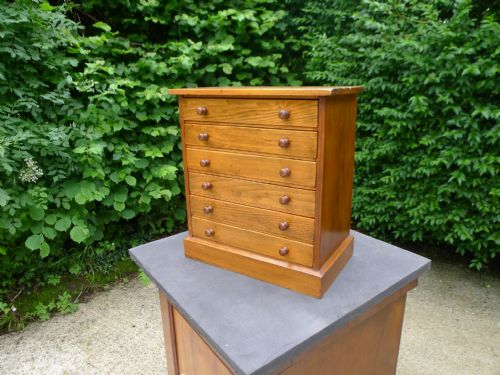
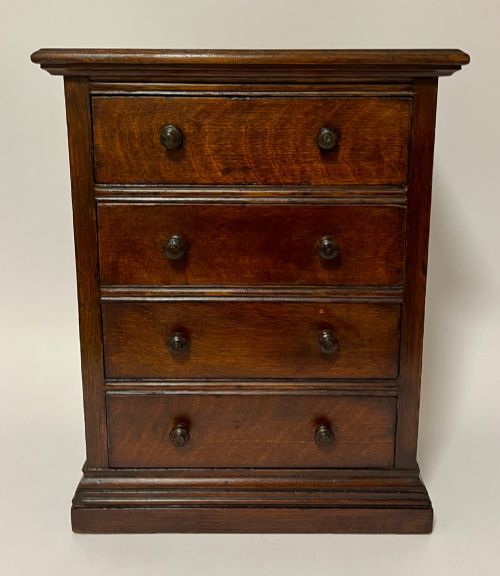
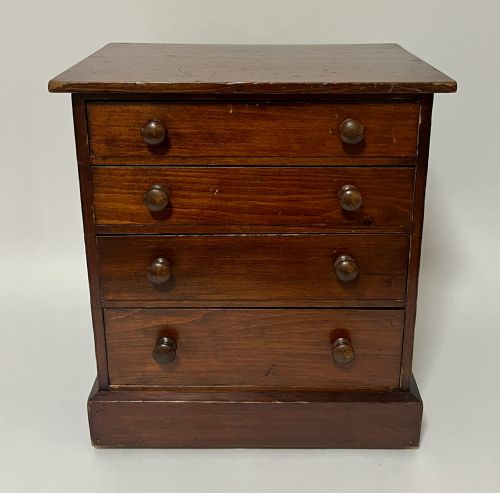
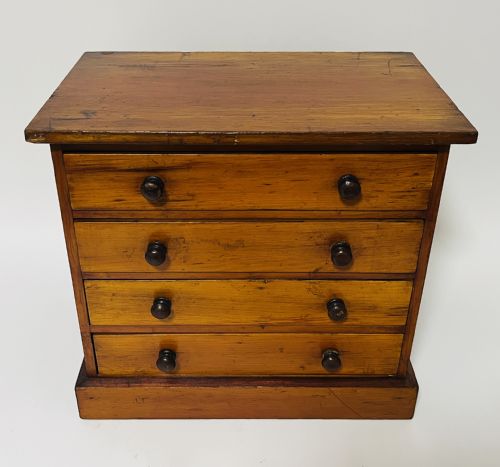
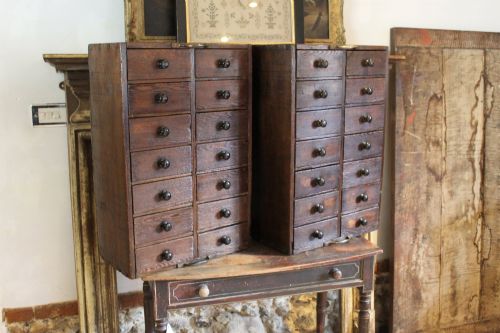
Collector desktop drawers comprise miniature chests, specimen cases, and table cabinets designed to sit on a surface while housing small objects. The pieces appearing here span centuries of design, with particular strength in Victorian and Georgian forms.
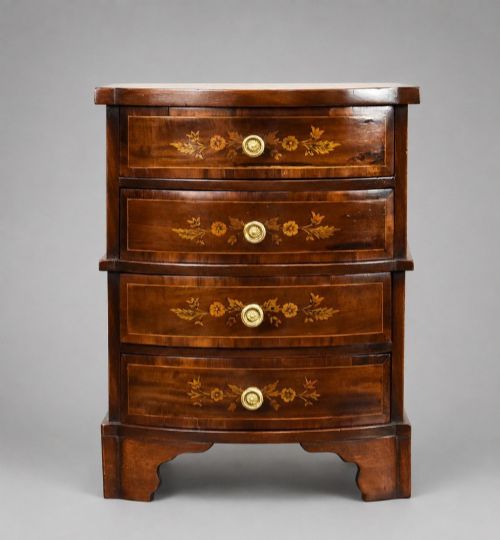
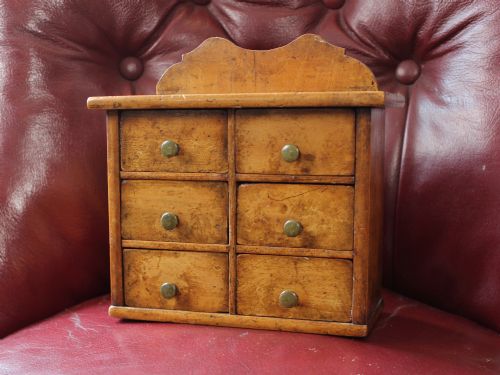
Most examples encountered take the form of mahogany miniature chests of drawers or utilitarian storage units made from oak, pine, and walnut. These range from apprentice pieces and spice drawers to specialist florist seed chests and Wellington chests.
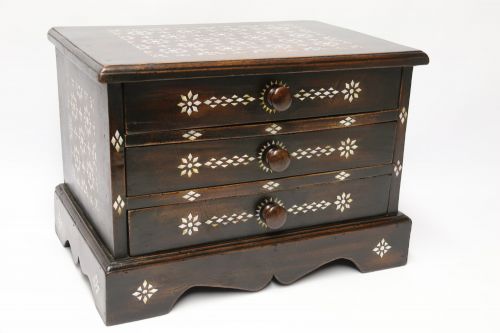
Origins stretch from English workshops to regional centres including Wales, Scotland, and Anglo-Indian makers, incorporating styles such as Edwardian utilitarian, Regency, and Arts and Crafts.
Materials and Methods
Makers utilised hardwoods such as mahogany, walnut, rosewood, and elm alongside softer timbers like pine, deal, and oak. Finer pieces incorporate decorative veneers, marquetry inlay, and satinwood banding.
Hardware typically involves brass drop handles, key escutcheons, and working locks with keys. Structural details include turned feet, ebonised moulding, and bow fronts.
Seed sorting gets surprisingly grand when housed in a dedicated Edwardian florist's chest.
Distinctions in Quality
Quality rests upon the selection of timber and the precision of the cabinetwork, seen in well-figured burr veneers and tight dovetail joints. Superior examples display thoughtful proportions and harmonious grain patterns across the drawers.
Secondary elements such as matching secondary timbers, original brass hardware, and the depth of the natural patina elevate a piece from simple utility to high craftsmanship.
The Collector Desktop Drawers Glossary
- Miniature Chest of Drawers
- A scaled-down version of a full-size chest, often created as a master craftsman's demonstration piece or for tabletop use.
- Specimen Cabinet
- A specialised housing unit fitted with multiple shallow drawers designed for storing natural history samples or small collections.
- Wellington Chest
- A tall locking cabinet featuring a side-locking stile that secures all the drawers simultaneously when closed.
- Apprentice Piece
- An item constructed by a woodworker in training to demonstrate mastery of specific joinery techniques.
- Patina
- The surface sheen and mellowing developed by wood over years of handling, light exposure, and polishing.
Collector Desktop Drawers: Frequently Asked Questions
What were collector desktop drawers originally used for?
These compact units served various storage needs for individuals organising small valuables, documents, or natural history specimens. Many functioned as desktop storage for letters, trinkets, or specialised seeds.
Cabinetmakers also produced them as portable storage cases or as demonstration pieces to exhibit advanced woodworking skills to prospective clients.
How do I date a miniature chest of drawers?
Dating relies on examining the timber species, construction methods, and prevailing style of the period. Georgian and Regency examples often feature straight-grain mahogany or rosewood with delicate inlay, while Victorian versions frequently employ burr walnut or pitch pine.
Hardware styles, dovetailing techniques, and secondary wood choices inside the drawer boxes provide further chronological clues.
What is the difference between an apprentice piece and a miniature?
An apprentice piece represents a specific test of skill made by a woodworker seeking guild admission or completion of training. These often display varied joinery techniques compressed into a smaller scale.
A miniature chest simply denotes a reduced-size furniture form built for domestic tabletop use rather than formal testing purposes.
How should I care for antique wood desktop drawers?
Maintain wood furniture by keeping it away from direct heat sources and fluctuating humidity levels to prevent timber warping or veneer cracking. Dust regularly with a soft, dry cloth rather than applying silicone-based polishes.
Applying a traditional beeswax periodically helps nourish older timber and preserves the natural surface sheen.