



Coffer Press Cabinet
These coffer press cabinet pieces range from seventeenth-century oak court cupboards to nineteenth-century lacquer cabinets, offering solid historical storage for the home.
Coffer Press Cabinet
When you search for a coffer press cabinet, you are looking at substantial storage furniture including linen cupboards, court cupboards, and presses. These items originate from periods spanning the seventeenth century through to the nineteenth century.
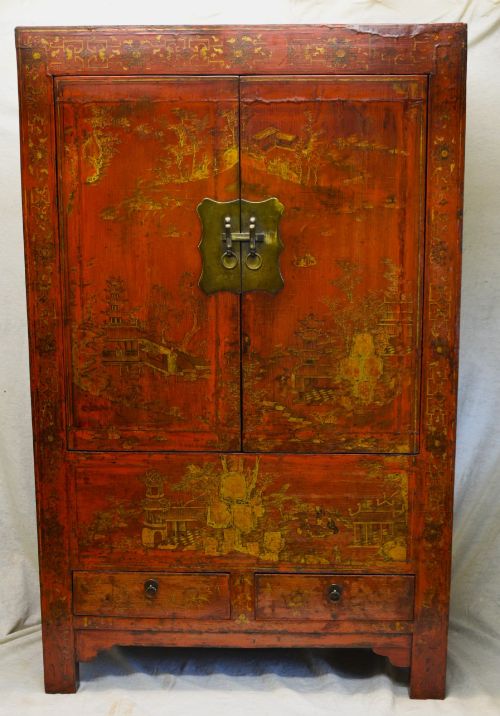
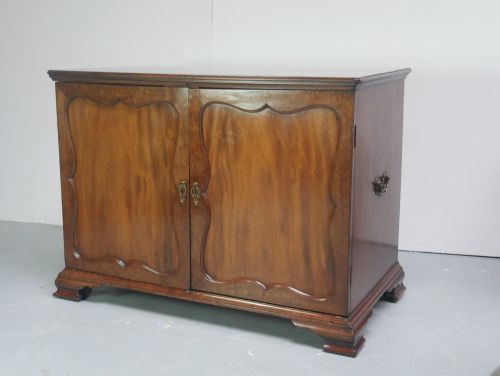
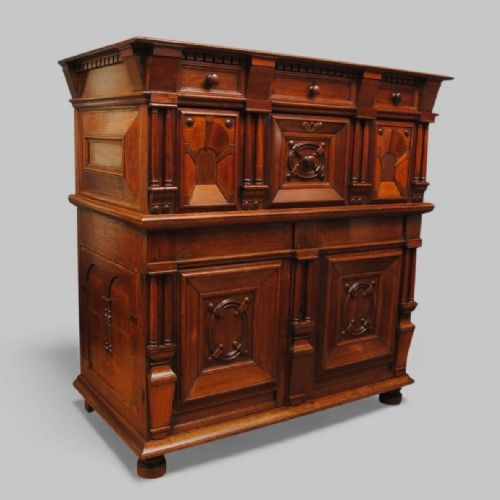
The pieces you are most likely to meet on this page include oak examples from the seventeenth and eighteenth centuries alongside mahogany George III pieces and red lacquered Chinese marriage cabinets. Regional variations such as Welsh carved oak and Anglo-Indian miniature presses also appear across the listings.
Forms range from low linen cupboards and livery cupboards to monumental red lacquer cupboards and Dutch marquetry robes. Each object serves the fundamental purpose of storing household textiles, garments, or valuables.
How they were made
Construction relies heavily on solid timber, with oak, mahogany, walnut, fruitwood, and general wood used alongside iron and brass hardware. Seventeenth-century examples often feature joined or carved oak construction.
Later pieces incorporate refined techniques, visible in the mahogany George III presses and the intricate red lacquer surfaces found on Chinese and Anglo-Indian works. Marquetry inlay also appears on Dutch furniture from around eighteen hundred.
Coffer Press Cabinet Retail Price Guide 2026
Typical asking prices for coffer press cabinet among the pieces listed under this phrase on Sellingantiques today, from the lower quarter to the upper quarter. They describe what is for sale here now, not the wider market.
Red lacquer wedding cabinets carry centuries of colour designed to bring luck, though they now settle happily into quiet modern hallways.
What varies in quality
Quality differences stem from the grade of timber utilised and the depth of skill in the carving, joinery, or lacquer work. Seventeenth-century carved oak court cupboards demonstrate varying levels of sculptural detail and structural integrity.
The refinement of brass and iron fittings, alongside the preservation of original red lacquer surfaces on Asian and Anglo-Indian pieces, distinguishes standard regional items from finer examples.
The Coffer Press Cabinet Glossary
- Court cupboard
- A heavy seventeenth-century storage piece with upper and lower tiers, often featuring carved oak panels. These items formed the status centre of early homes.
- Linen press
- A tall piece of furniture designed for storing folded linens, typically combining an upper cupboard with lower drawers. George III examples often employ mahogany.
- Livery cupboard
- An antique storage cabinet historically used for keeping food or provisions, evolving into general domestic storage. Georgian oak versions appear frequently.
- Marquetry
- The art of applying pieces of veneer to a structure to form decorative patterns. Dutch examples from eighteen hundred showcase this technique.
Coffer Press Cabinet: Frequently Asked Questions
What is a coffer press cabinet?
These pieces comprise large storage furniture such as court cupboards, linen presses, and wardrobes originating from the seventeenth to the nineteenth centuries.
They encompass diverse regional styles including Georgian oak, traditional Chinese lacquer, and Anglo-Indian miniature forms.
How were these cabinets used historically?
Households utilised these substantial cupboards primarily for storing household linens, garments, and valuable provisions in domestic settings.
Larger court cupboards also served to display plate and status items in early dining halls.
How do I date an oak court cupboard?
Dating relies on construction methods like joined framework, timber species such as oak, walnut, or fruitwood, and the style of period carving.
Seventeenth-century pieces typically display heavier joined construction than later eighteenth-century Georgian items.
What materials are common in these listings?
Solid woods like oak, mahogany, walnut, and fruitwood form the structural foundation of most European pieces, supplemented by brass and iron hardware.
Lacquered finishes appear on Asian marriage cabinets and traditional Chinese cupboards.