


Cobalt Porcelain Ginger Jar
A cobalt porcelain ginger jar brings rich blue depth to a room, holding centuries of ceramic trade in its lidded form.
Cobalt Porcelain Ginger Jar
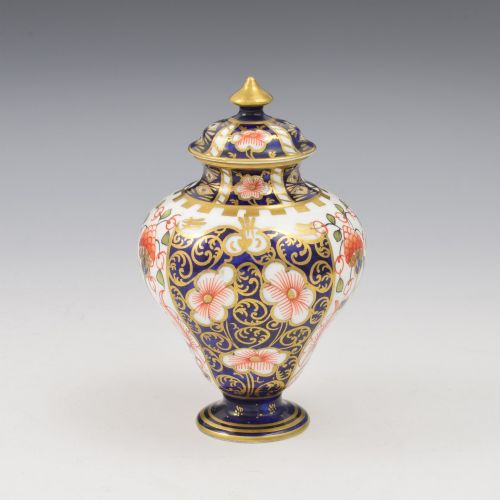
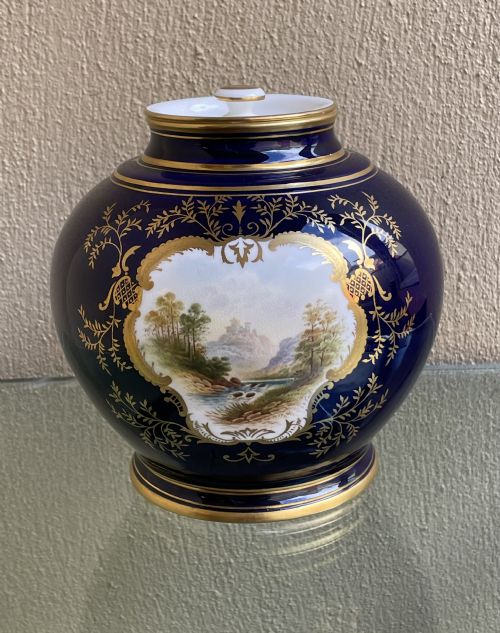
A cobalt porcelain ginger jar is a lidded ceramic vessel originating from Eastern and European kilns, often shaped with a rounded body and a secure cover. Buyers searching for a cobalt porcelain ginger jar find examples spanning the seventeenth century through to the Edwardian period, reflecting diverse global traditions.
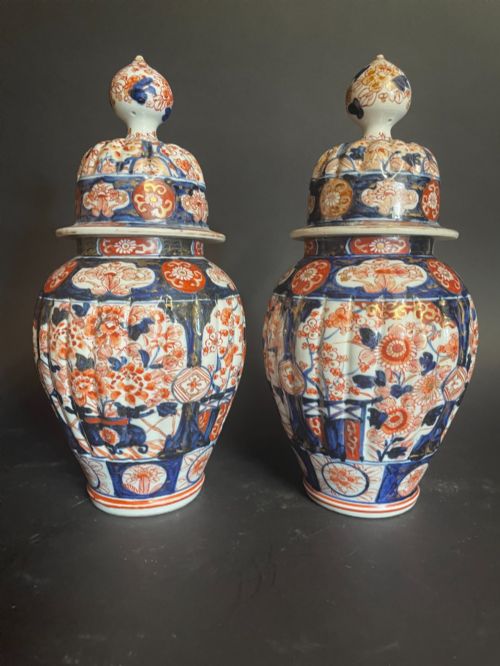
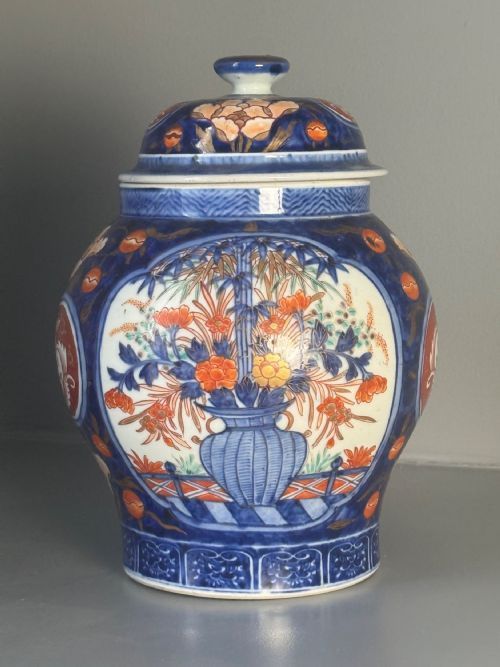
The pieces on this page lean heavily towards Japanese Imari and Arita wares alongside Chinese blue and white productions, supplemented by European interpretations from English and continental factories. These vessels served practical storage roles before evolving into purely decorative objects for the mantelpiece or cabinet.
Forms range from octagonal baluster shapes to simple ovid jars, frequently paired with matching covers. The palette is dominated by deep blues, often set against white grounds or enriched with iron red and gold.
Materials and Construction
Makers shaped these jars from refined ceramic paste, fired at high temperatures to achieve a hard, non-porous body. Cobalt glaze provided the deep blue underglaze decoration applied before the final transparent coat.
Enamel, gold leaf, and gilding were frequently added over the glaze in subsequent low-temperature firings to build up complex Imari palettes. Craftsmen ensured lids were turned to fit snugly upon the collar of each jar, completing the silhouette.
Listings here feature porcelain, ceramic, and ironstone materials decorated with cobalt glaze, enamel, and gold leaf.
Judging Quality
Quality rests upon the crispness of the cobalt painting and the depth of the glaze under the light. Finer vessels show deliberate brushwork and precise control during high-temperature kiln firings.
The survival of original matching covers distinguishes superior specimens from married pieces or replacements. Surface details like secondary enamel work and gold leaf execution separate standard production from master craftsmanship.
Royal Crown Derby·Coalport·Wolfsohn Dresden·Samson of Paris·Carlton Ware·Meissen
The Cobalt Porcelain Ginger Jar Glossary
- Imari
- A style of Japanese porcelain decorated in underglaze blue, iron red, and gold, originating in the port town of Imari. This aesthetic heavily influenced European potteries during the seventeenth and eighteenth centuries.
- Arita
- The Japanese town where porcelain production began following the discovery of suitable clay deposits in the early seventeenth century. Arita kilns produced many of the blue and white and Imari wares exported to the West.
- Baluster
- A vase shape with a rounded lower body that tapers towards the neck, resembling an architectural baluster. This form provides a stable base for lidded storage jars.
- Ovid
- An egg-like oval shape common in the bodies of early ceramic jars. The smooth curves distribute decorative cobalt designs evenly around the circumference.
- Glaze
- A glassy coating fused to the ceramic body through heat, sealing the porous clay. In these pieces, cobalt glaze serves as both a protective layer and the primary vehicle for blue pigment.
Cobalt Porcelain Ginger Jar: Frequently Asked Questions
What were ginger jars originally used for?
These vessels were initially made in China to store and transport spices, salt, and oils across trade routes. Their wide shoulders and snug lids kept contents secure against moisture and air.
Over time, Western markets adopted the jars purely for display, valuing the robust porcelain bodies and striking blue decoration as interior ornaments.
How do I tell Japanese Imari from Chinese blue and white?
Chinese blue and white porcelain relies primarily on cobalt pigment under the glaze, creating a stark contrast against white ceramic grounds. Pieces date from periods like the Kangxi reign.
Japanese Imari incorporates that same blue base but adds contrasting iron red and gold leaf over the glaze. This creates a denser, multi-coloured visual texture unique to Arita kilns.
Are the lids on these jars original?
Many lidded vessels retain their matched original covers, which share the exact clay body, glaze characteristics, and decorative palette of the base jar. Because lids were easily dropped or broken over the centuries, replacements occasionally appear on antique pieces.
Close inspection of the rim wear and interior fit helps determine whether a cover has belonged to the jar since its creation.
How should I display a lidded jar at home?
Place these jars on sturdy mantelpieces, sideboards, or dedicated display cabinets where their height and colour can anchor the room. Avoid areas prone to heavy foot traffic or vibration that might dislodge the loose-fitting lid.
Keeping them away from direct, harsh sunlight preserves any delicate overglaze enamel or gold leaf details applied during manufacture.