



Cobalt Blue Porcelain Pitcher
These cobalt blue porcelain pitcher examples bring deep colour and bold pattern to a table or washstand, drawing the eye with rich underglaze tones.
Cobalt Blue Porcelain Pitcher
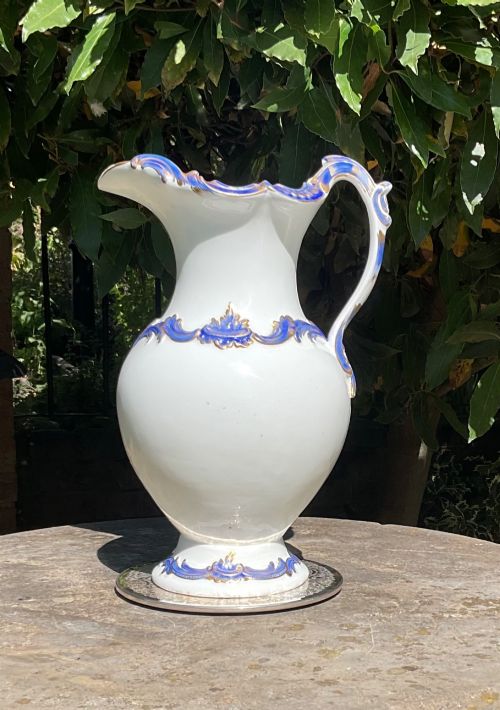
A cobalt blue porcelain pitcher serves functional and decorative roles across domestic spaces, appearing in forms ranging from large water vessels and washstand sets to diminutive cabinet pieces. The selection on this page spans centuries of production, highlighting diverse regional approaches to ceramic manufacture.
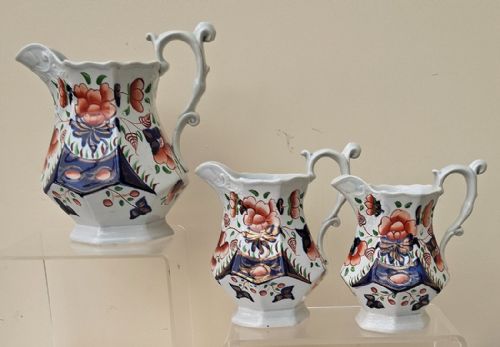
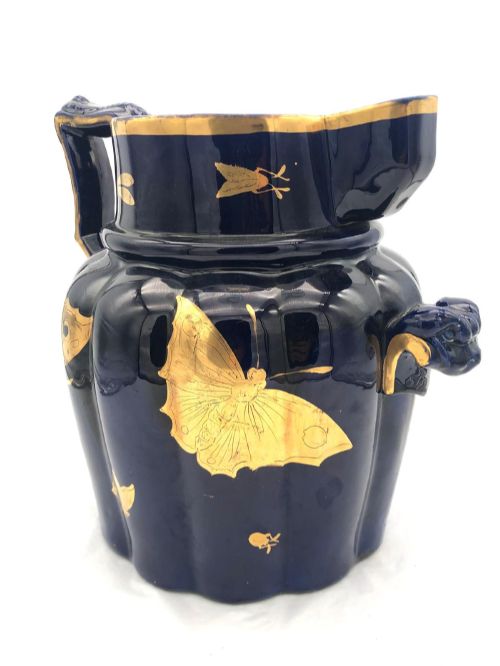
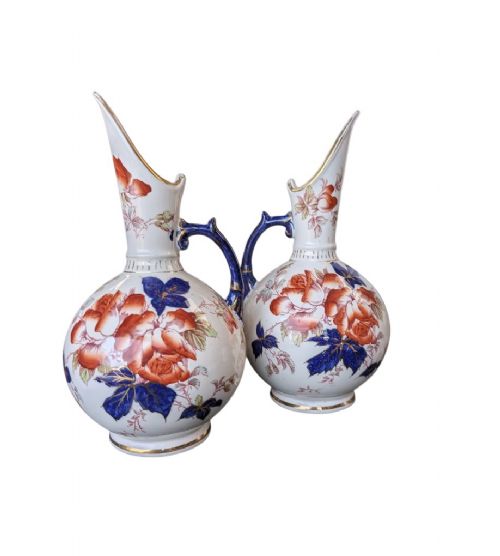
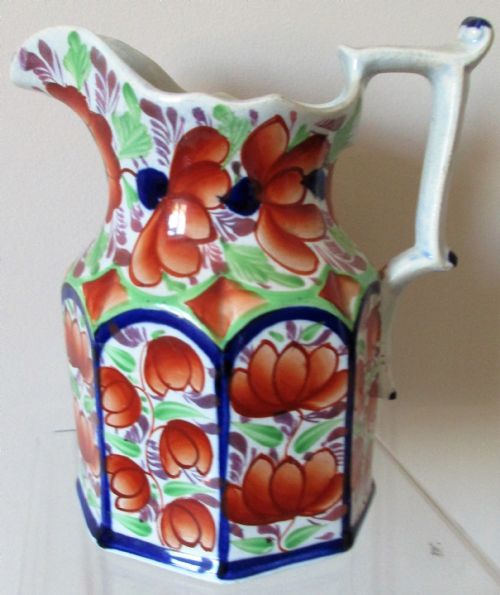
Makers utilised earthenware, ironstone, and porcelain bodies to create these jugs, decorating them with rich cobalt glazes, enamel, and gold leaf. Examples include traditional English ironstone, Japanese Imari designs, and Chinese Ming style ewers.
The periods represented stretch from the eighteenth century through the Victorian era into the early twentieth century. Buyers encounter everything from massive Mazarine footbath jugs to delicate mask head pitchers.
Manufacturing materials and techniques
Potters shaped these vessels using durable ceramic bodies such as ironstone and fine porcelain, often applying a brilliant cobalt glaze before high-temperature firing. Artisans then added intricate patterns in enamel and gold leaf.
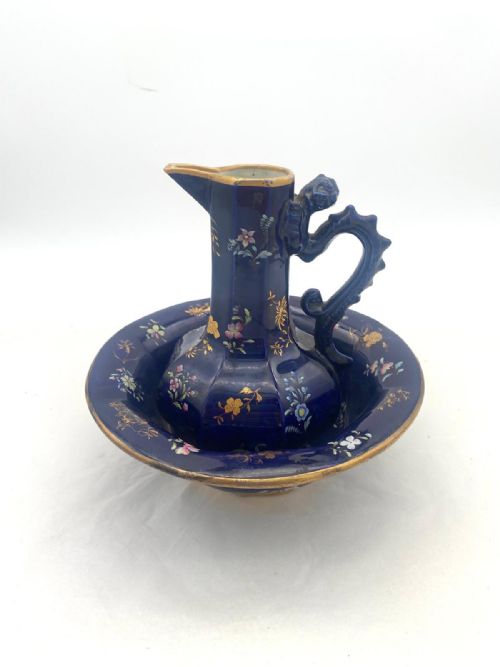
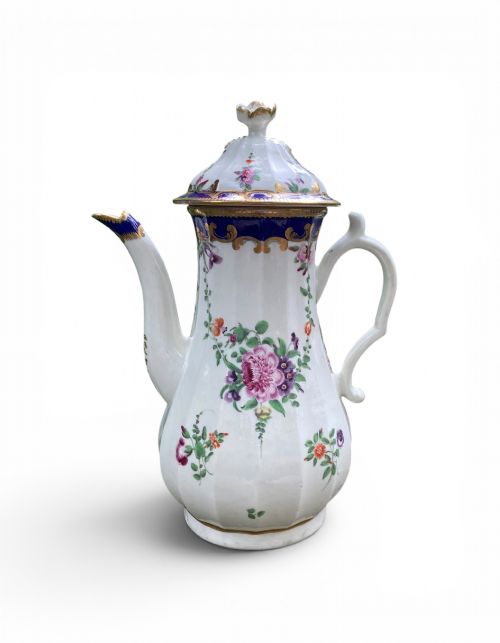
Specialised forms required moulded handles like grotesque or serpent shapes, while ewers and coffee pots featured spout attachments modelled separately. Many vessels display hand-painted decoration set against deep blue grounds.
Cobalt Blue Porcelain Pitcher Retail Price Guide 2026
Typical asking prices for cobalt blue porcelain pitcher among the pieces listed under this phrase on Sellingantiques today, from the lower quarter to the upper quarter. They describe what is for sale here now, not the wider market.
Design influences span traditional English patterns alongside Japanese Imari and Chinese Ming style aesthetics.
Assessing quality in ceramic jugs
Quality rests upon the crispness of the moulded form and the depth of the cobalt blue glaze. Superior pieces exhibit precise hand-painted detail and well-preserved gilding rather than flat, muddy colour.
The refinement of the ceramic body also dictates standing, with fine translucent porcelain sitting at the high end alongside heavy, perfectly cast ironstone. Balance in the handle and spout assembly marks a superior manufacturer.
Keeling and Co·Doulton Burslem
The Cobalt Blue Porcelain Pitcher Glossary
- Cobalt glaze
- A deep blue metallic oxide pigment applied under the glaze before firing. It withstands high temperatures without losing intensity.
- Ironstone
- A heavy, durable type of earthenware patented in the nineteenth century. It mimics porcelain while offering greater strength for daily utility.
- Ewer
- A large jug with a flared spout and a decorative handle, traditionally used for pouring water. Many examples form part of matching washstand sets.
- Mask head jug
- A pitcher featuring a moulded human or grotesque face beneath the spout. This decorative motif appears frequently on eighteenth-century English porcelain.
Cobalt Blue Porcelain Pitcher: Frequently Asked Questions
How do I date an old jug?
Examine the base for maker marks, registration diamonds, or specific pattern names that tie the piece to known factory production dates.
The style of the handle, the weight of the ceramic body, and the saturation of the cobalt blue glaze also offer strong clues to the decade of manufacture.
Are these pitchers waterproof?
Most ceramic and ironstone pitchers retain their waterproof qualities and function safely for holding fresh flowers or serving liquids at the table.
However, pieces decorated with delicate gold leaf or fragile enamel work benefit from gentle hand washing rather than immersion in automated dishwashers.
What is a washstand set?
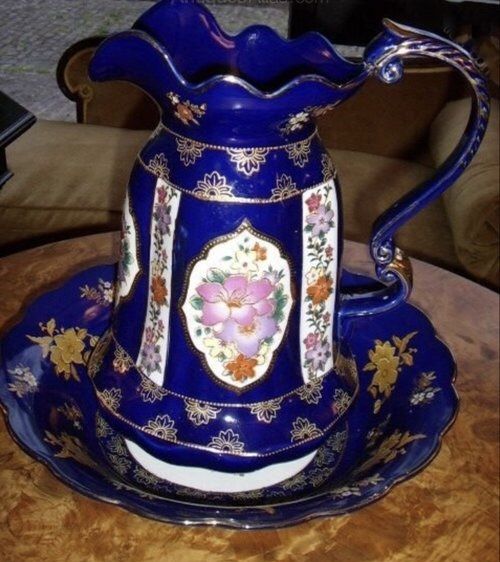
A washstand set typically includes a large water jug paired with a deep basin designed for bedroom hygiene before modern plumbing.
These matching multi-piece groupings showcase unified cobalt blue transfer printing or hand-painted floral decorations across every component.
How should I display my pitcher?
Position your vessel on a stable surface away from high-traffic edges where accidental knocks might chip the handle or spout.
Good lighting from natural sources highlights the rich depth of the cobalt glaze and any intricate gold gilding applied to the surface.