




Cobalt Blue Liners
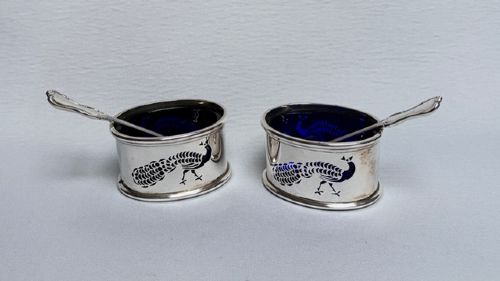
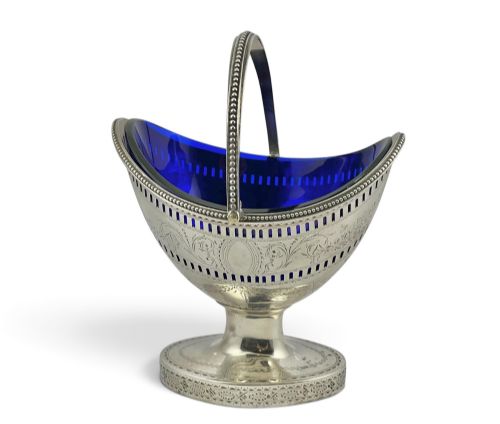
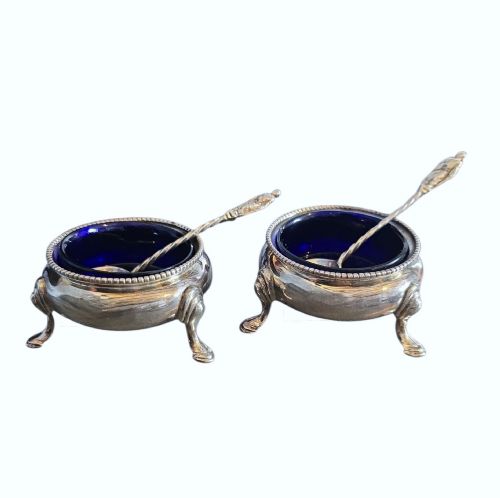
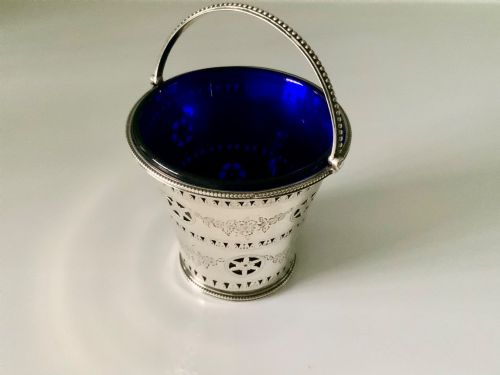
Cobalt blue liners are the vivid glass inserts that sit inside silver and silver plate open salts, mustard pots, and sugar baskets.
Cobalt Blue Liners
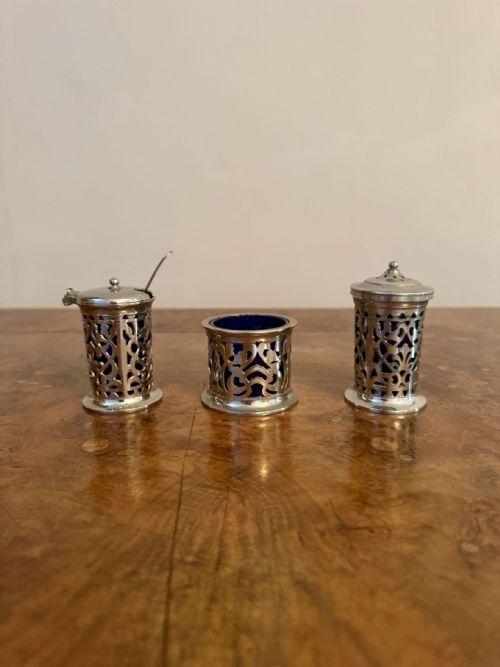
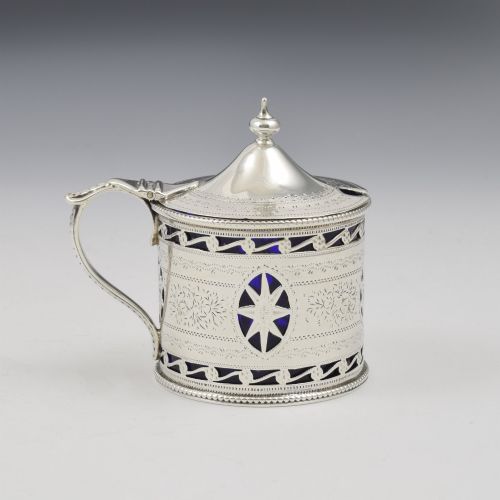
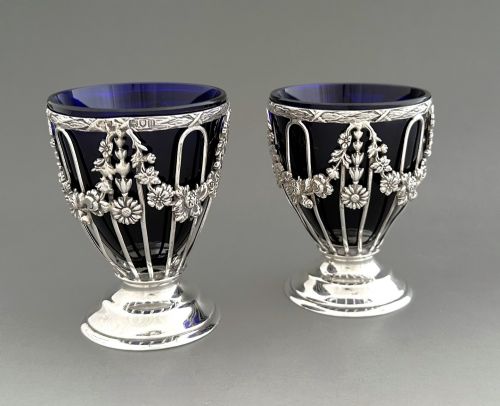
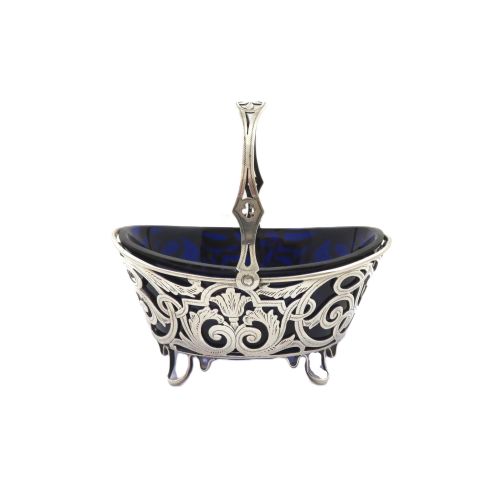
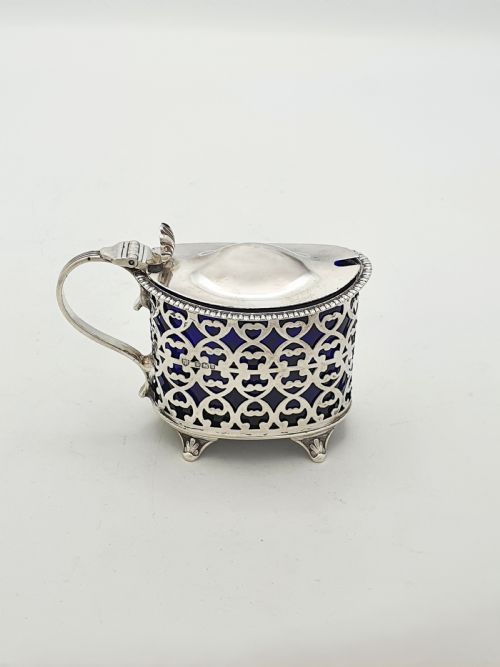
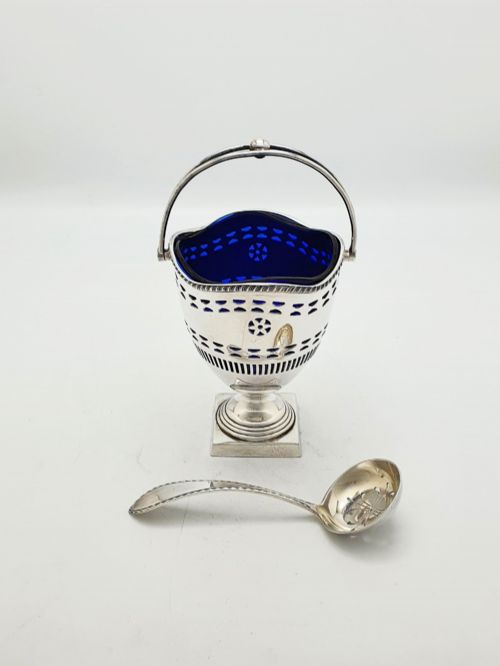
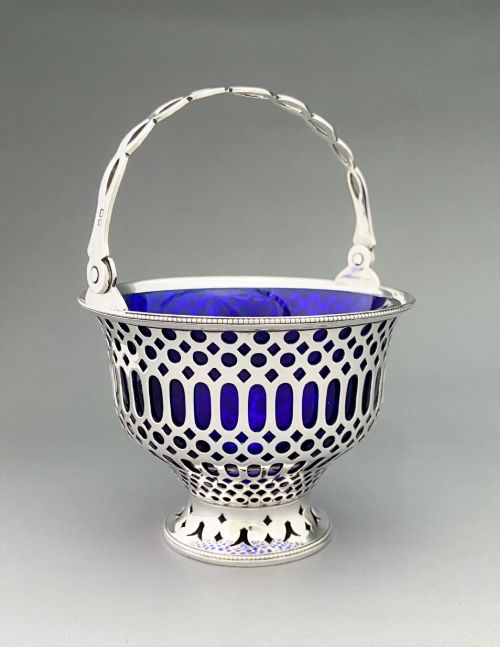
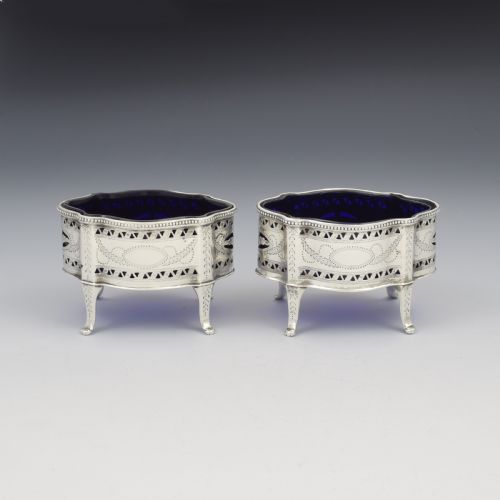
When you search for cobalt blue liners, you encounter small blown or moulded vessels designed to protect precious metal tableware from corrosive contents like salt and mustard. These items appear most frequently paired with open salt cellars, condiment pots, and sugar baskets dating from the Georgian, Victorian, and Edwardian eras.
The pieces on this page span the eighteenth, nineteenth, and early twentieth centuries, encompassing Victorian, Edwardian, and Art Deco designs alongside Georgian Revival and German Historicism pieces. You will meet them housed within sterling silver, silver plate, and 800 silver frameworks, ranging from delicate pierced wirework to solid boat-shaped table salts.
Glass and silver construction
The glass elements are formed from rich cobalt blue glass, shaped either by blowing into moulds or free-blowing to fit the specific contours of the enclosing metalwork. These liners require precise sizing to sit snugly within pierced or solid silver baskets, salt cellars, and mustard pots without rattling or sticking.
The metal mounts and vessels holding these liners are executed in sterling silver, silver plate, and 800 silver, utilising techniques such as piercing, wirework, casting, and hand-forming. Makers shape frames into boat shapes, drums, and serpentine outlines, often complementing the deep blue of the glass with polished reflective surfaces.
Cobalt Blue Liners Retail Price Guide 2026
Typical asking prices for cobalt blue liners among the pieces listed under this phrase on Sellingantiques today, from the lower quarter to the upper quarter. They describe what is for sale here now, not the wider market.
Listings feature items spanning the eighteenth century through the Art Deco era, predominantly executed in sterling silver, silver plate, and 800 silver.
Assessing quality and proportion
Quality rests in the harmony between the glass liner and its metal housing, where superior examples demonstrate a precise fit and appropriate wall thickness in the cobalt glass. The crispness of the piercing or wirework on the surrounding silver framework further distinguishes finer pieces from heavier, less refined production.
The presence of original matching glass liners adds significantly to the integrity of a piece, as replacements often alter the intended balance of colour and form. Weight, gauge of silver, and the finesse of cast details like floral handles or swing mechanisms separate standard tableware from exceptional examples.
The Cobalt Blue Liners Glossary
- Cobalt glass
- Deep blue glass coloured with cobalt oxide. This material is frequently used for tableware inserts to conceal the contents and protect silver from chemical corrosion.
- Salt cellar
- A small open vessel used to hold salt at the dining table before the invention of the spring-loaded shaker. They are typically lined with coloured glass to prevent salt damage.
- Sugar basket
- A footed or swing-handled open container designed to hold sugar lumps or loose sugar on the tea table. Many examples incorporate a coloured glass liner.
- Mustard pot
- A small covered container with a handle and lid, designed to hold prepared mustard. These vessels almost invariably require a protective glass liner.
- Pierced silver
- Metalwork decorated by cutting or piercing patterns through the silver sheet. This technique lightens the visual weight of baskets, salts, and mustard pots.
Cobalt Blue Liners: Frequently Asked Questions
Why do silver salts need glass liners?
Salt is highly corrosive to silver over extended periods, causing pitting and tarnishing if placed in direct contact with the metal. Glass liners provide a secure, impermeable barrier that preserves the silver.
This practical addition allowed makers to create delicate pierced silver frames without risking structural damage from table condiments.
How do I date a silver piece with a blue liner?
Dating relies primarily on hallmarks stamped on the silver mount, which indicate the assay office, year, and maker. Stylistic clues such as Victorian pierced designs or Art Deco geometries also help narrow the period.
Glass manufacturing techniques can offer supporting evidence, though mounts provide the most reliable chronological markers.
How do I care for antique cobalt glass liners?
Wash liners gently in warm water with mild soap, avoiding harsh abrasives and sudden temperature changes that can stress old glass. Dry them thoroughly before returning them to their silver mounts.
Inspect the rims periodically to ensure they seat correctly without putting pressure on the delicate glass edges.