



Cobalt Blue Glass Cellar
A cobalt blue glass cellar brings deep, saturated colour to a dining table, combining rich glass liners with bright silver frames.
Cobalt Blue Glass Cellar
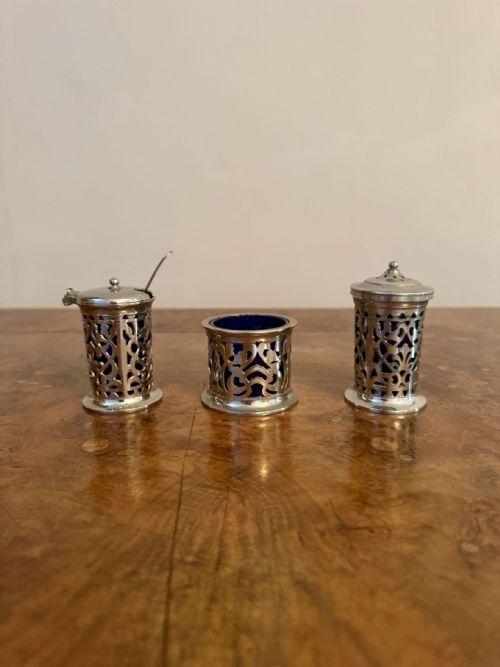
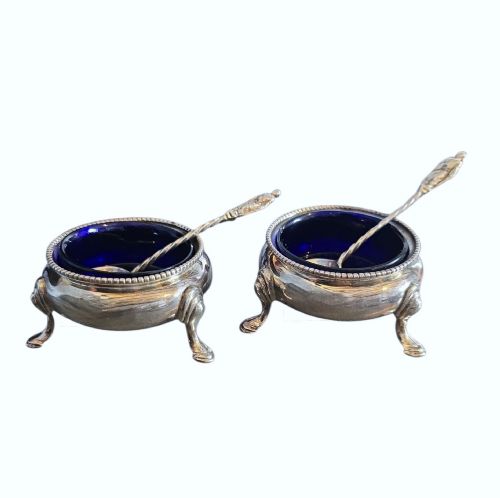
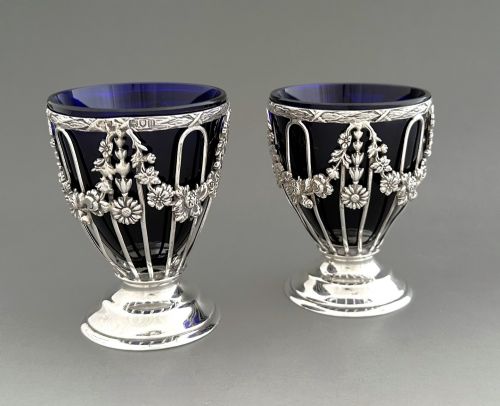
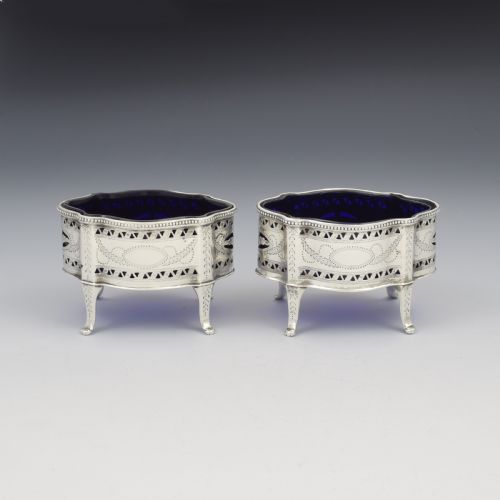
When you search for a cobalt blue glass cellar, you are looking at small open vessels designed to hold salt or condiments at the dining table. These pieces typically consist of a vibrant blue glass liner held within a pierced, wirework, or solid silver or silver-plated frame.
The versions you are most likely to meet on this page span several distinct periods, including the Victorian, Edwardian, and Georgian eras, alongside later Art Deco designs. Many appear in matched pairs or sets complete with their original blue glass liners.
Forms range from boat-shaped table salts to ogee bowls, condiment pots, and cruet sets. The rich colour of the glass provides a striking contrast against the polished sterling silver or silver plate of the outer mounts.
Materials and construction
The liners are cast or blown from lead glass and cobalt glass, producing a deep blue hue that remains stable throughout the material. Silversmiths then fashioned the outer frames from sterling silver or silver plate, frequently employing techniques such as piercing, wirework, and casting.
Open salt cellars often incorporated fitted glass inserts to protect the metal from the corrosive effects of salt. Frames exhibit various stylistic influences, from Georgian plain double ogee bowls to serpentine Victorian designs and geometric Art Deco outlines.
Cobalt Blue Glass Cellar Retail Price Guide 2026
Typical asking prices for cobalt blue glass cellar among the pieces listed under this phrase on Sellingantiques today, from the lower quarter to the upper quarter. They describe what is for sale here now, not the wider market.
Assessing quality and craftsmanship
Quality in these tablewares rests on the crispness of the silversmith's work and the retention of the original glass liner. Finer frames show precise piercing, substantial weight in the silver, and clean proportions that securely cradle the glass insert.
The presence of matching sets, original spoons, and intact glass liners without chips elevates the standing of a piece. Hand-finished details on the silver mounts distinguish standard production items from more ambitious workshops.
The Cobalt Blue Glass Cellar Glossary
- Open salt cellar
- A small tabletop vessel used for holding loose salt before the invention of the shaker. Dinners used a tiny spoon or pinched the salt out by hand.
- Lead glass
- A variety of glass containing lead oxide rather than calcium, known for its clarity and weight. It forms the heavy base of many quality tablewares.
- Double ogee
- A profile featuring an S-shaped curve that arches out and then flares in towards the rim. This contour appears on bowls and glass rims from the Georgian period.
- Pierced work
- A decorative technique where patterns are cut through sheet metal to create openwork designs. Victorian silversmiths utilised this method extensively on salt cellars.
- Cruet set
- A matched collection of bottles, pots, or cellars mounted in a frame for holding condiments at the table. These sets often combine silver frames with coloured glass liners.
Cobalt Blue Glass Cellar: Frequently Asked Questions
What is a cobalt blue glass cellar used for?
These small vessels held salt or mustard on the formal dining table before free-flowing salt shakers became common. Dinners would take a pinch of salt using a tiny spoon or the tip of a knife.
The brightly coloured glass liner served a practical purpose by protecting the metal frame from corrosion while adding a decorative element to the place setting.
How do I identify a Victorian salt cellar?
Victorian pieces frequently display heavier ornamentation, including pierced silver work, serpentine rims, and boat shapes. Hallmarks stamped on the silver frame often provide specific assay office marks and date letters.
Many Victorian examples retain their original deep blue glass liners, which were moulded specifically to fit the contours of the outer silver mount.
Are the glass liners removable?
Yes, the glass inserts are designed to lift out of the metal frames for easy cleaning and maintenance. This construction kept the corrosive salt away from the silver.
Finding a piece with its original removable cobalt glass liner intact adds significantly to the completeness of the item.