





Cobalt Blue Art Pottery
Cobalt blue art pottery brings deep, saturated pigment to nineteenth- and early twentieth-century earthenware, stoneware, and porcelain forms.
Cobalt Blue Art Pottery
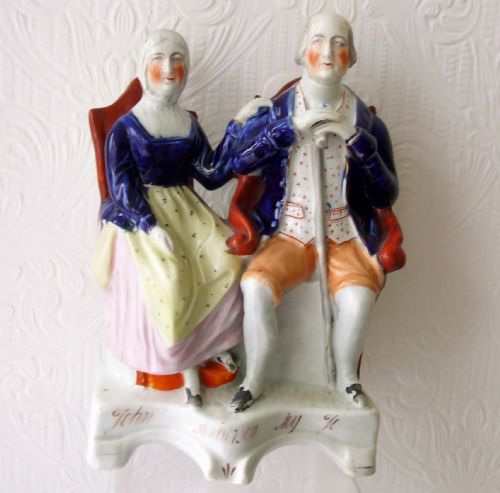
Cobalt blue art pottery spans domestic and decorative pieces produced across the Victorian era through the 1930s, encompassing vases, jardinieres, bowls, ewers, and portrait figures. When searching for cobalt blue art pottery, buyers encounter diverse regional and international aesthetics, from British studio ceramics to Japanese Satsuma and Austrian porcelain.
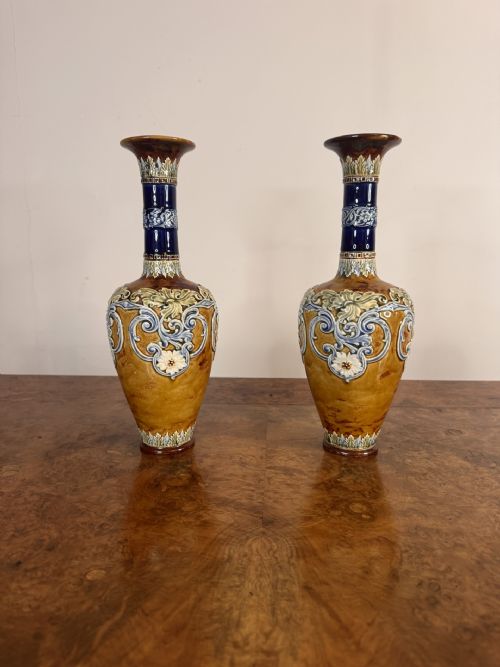
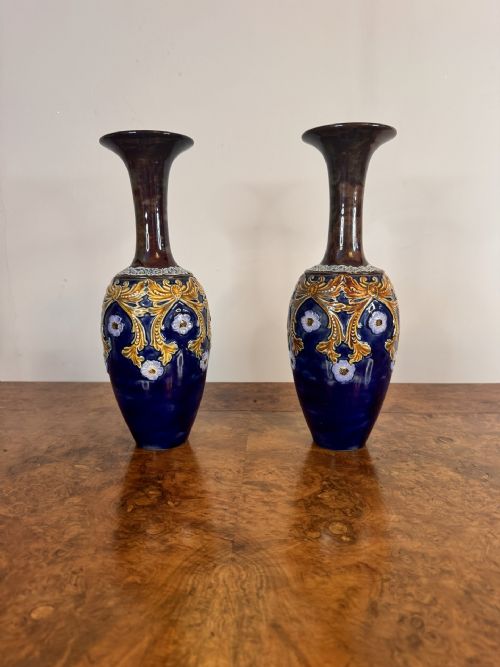
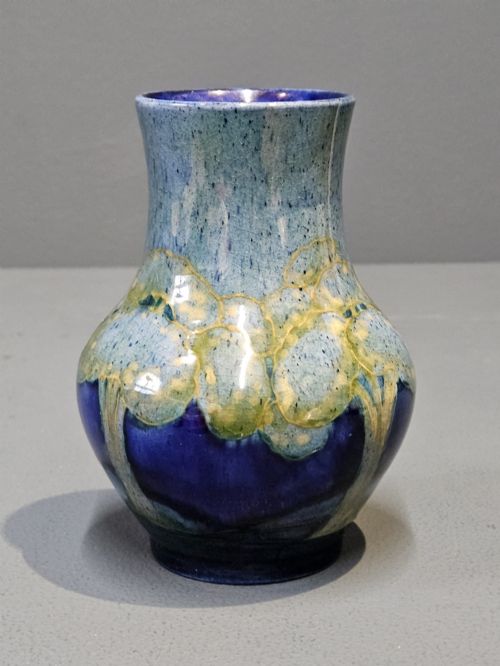
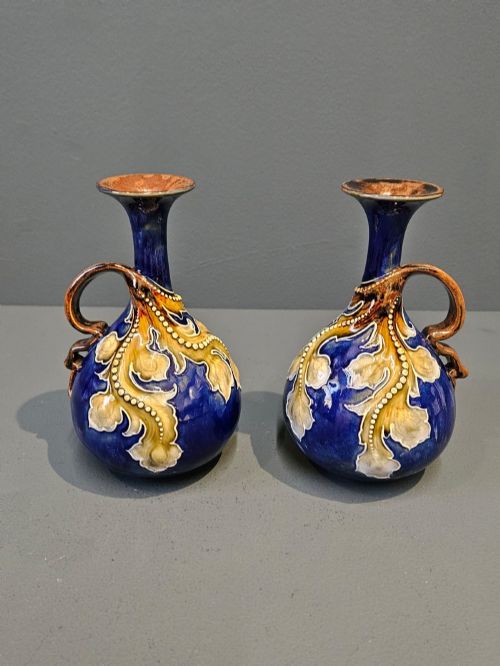
The selections on this page heavily feature British productions, particularly pieces by Doulton Lambeth and Moorcroft alongside Carlton Ware, Maling, and Pilkingtons Royal Lancastrian. These makers dominate the offerings with distinct styles ranging from Arts and Crafts salt-glaze to Art Nouveau floral slip work and Art Deco bowls.
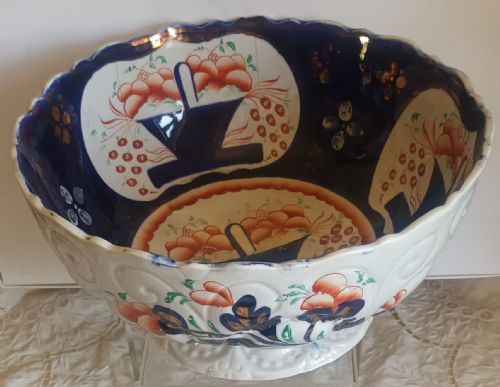
Forms vary from cabinet miniatures and small pansy vases to large jardinières and chargers decorated with fruit, flower, and pomegranate motifs. Collectors find that the deep cobalt ground serves as a unifying element across vastly different period manufacturing traditions.
Materials and production methods
Potters relied upon earthenware, stoneware, and porcelain bodies, applying metallic cobalt oxides beneath or over the glaze to achieve the characteristic rich blue hue. Stoneware items like those from Doulton Lambeth utilised salt-glazing techniques, while earthenware and porcelain vessels employed smooth gloss glazes that intensified the underlying colour.
Decoration often involved slip trailing, incised carving, and enamelling, frequently enhanced with gold leaf or gilt highlights as seen on Satsuma and Ernst Wahliss pieces. Skilled artisans applied patterns by hand, resulting in nuanced variations in texture and colour depth across individual items.
Cobalt Blue Art Pottery Retail Price Guide 2026
Typical asking prices for cobalt blue art pottery among the pieces listed under this phrase on Sellingantiques today, from the lower quarter to the upper quarter. They describe what is for sale here now, not the wider market.
Nineteenth-century potters occasionally hid tiny artist signatures beneath heavy cobalt glazes, turning everyday vases into miniature games of hide-and-seek.
Evaluating craftsmanship and execution
Quality rests upon the crispness of the modelled form, the evenness of the cobalt glaze application, and the precision of hand-painted or incised decorative details. Superior examples display assured brushwork, clean handling of slip, and well-executed gilt or enamel work without blurring or pooling in the glaze.
The reputation of the studio or pottery and the specific artist's signature elevate certain pieces above standard production wares. Signed works by notable decorators demonstrate a higher level of individual artistic oversight compared to unmarked factory output.
Moorcroft·Doulton Lambeth·Royal Doulton·Carlton Ware·Maling·Ernst Wahliss·Kinkozan Kyoto·Pilkingtons Royal Lancastrian
The Cobalt Blue Art Pottery Glossary
- Earthenware
- Porous pottery fired at lower temperatures, requiring a glaze to render it watertight. It forms the body for many Victorian and early twentieth-century decorative pieces.
- Stoneware
- A dense, impermeable ceramic fired at high temperatures until vitrified. Doulton Lambeth utilised this durable material for salt-glazed jugs and vases.
- Salt-glaze
- A glossy, slightly textured finish achieved by throwing common salt into the kiln during high-temperature firing. This chemical reaction creates an orange-peel texture on stoneware bodies.
- Jardiniere
- A large decorative ceramic pot or stand designed to hold a potted plant. These vessels often feature prominent cobalt grounds and elaborate relief decoration.
- Slip
- Liquid clay suspended in water, used for coating ceramic bodies or piped onto surfaces to create raised decorative patterns.
Cobalt Blue Art Pottery: Frequently Asked Questions
Are these pieces marked with maker stamps?
Many items feature impressed factory marks, painted monograms, or paper labels on the underside that identify the pottery and sometimes the specific artist. Examining the base is standard practice for confirming origin and dating.
Some early or miniature items may bear only simple incised initials or faint stamps. Reference books and pottery guides help decode these historical markings.
Can these vases hold water?
While many ceramic and porcelain vases remain functional, older earthenware and stoneware pieces can develop hairline fractures or porous spots over time. It is wise to inspect the interior for leaks before filling decorative vessels with water.
Using a small glass or plastic liner inside antique vases protects the historical body from moisture damage and mineral deposits. This precaution preserves the interior glaze and prevents staining.
How do I distinguish Art Nouveau from Art Deco pieces?
Art Nouveau items, produced roughly from the late nineteenth century to 1910, feature organic, fluid lines inspired by natural forms like flowers and vines. Look for whiplash curves and stylised botanical motifs.
Art Deco items, emerging strongly into the 1920s and 1930s, embrace geometric symmetry, angular patterns, and stylised modern motifs. The transition from flowing floral designs to structured geometric forms marks the shift between these two styles.