




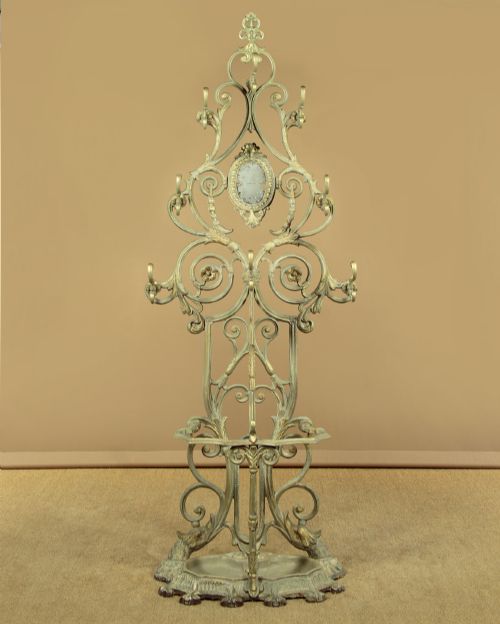
Coat Rack with Mirror
A coat rack with mirror combines practical hallway storage with a reflective glass surface, originating primarily from the Victorian and Edwardian eras.
Coat Rack with Mirror
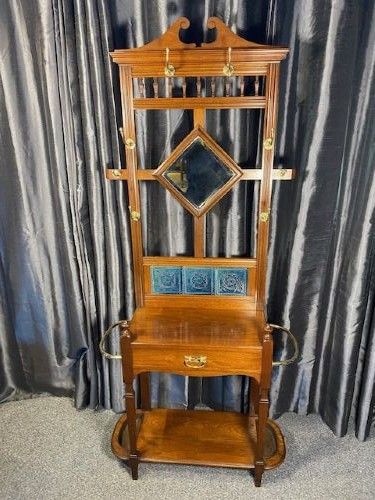
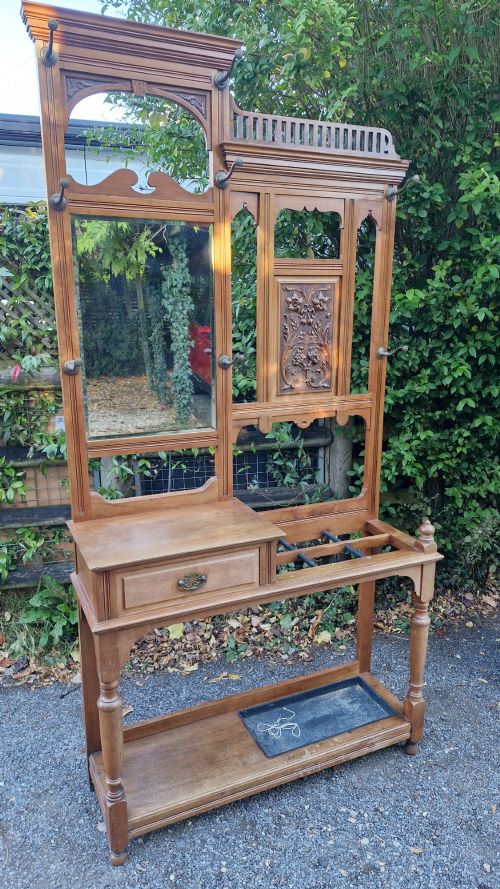
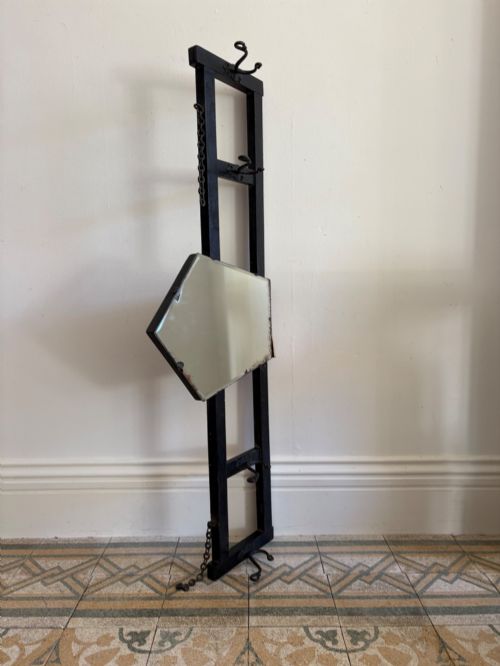
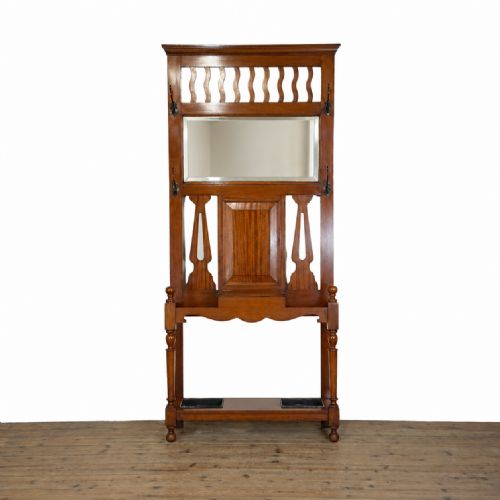
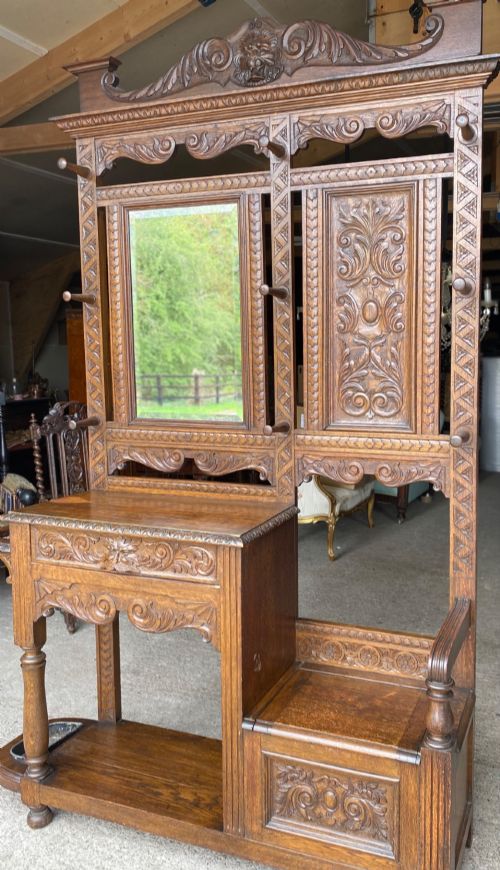
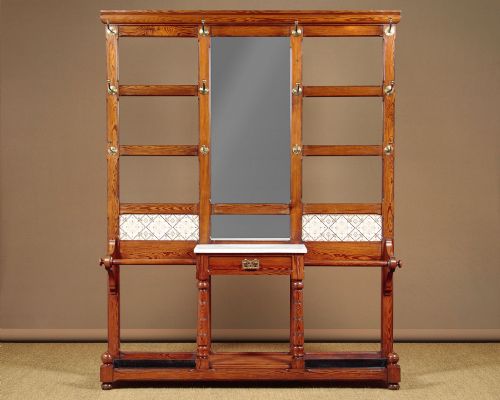
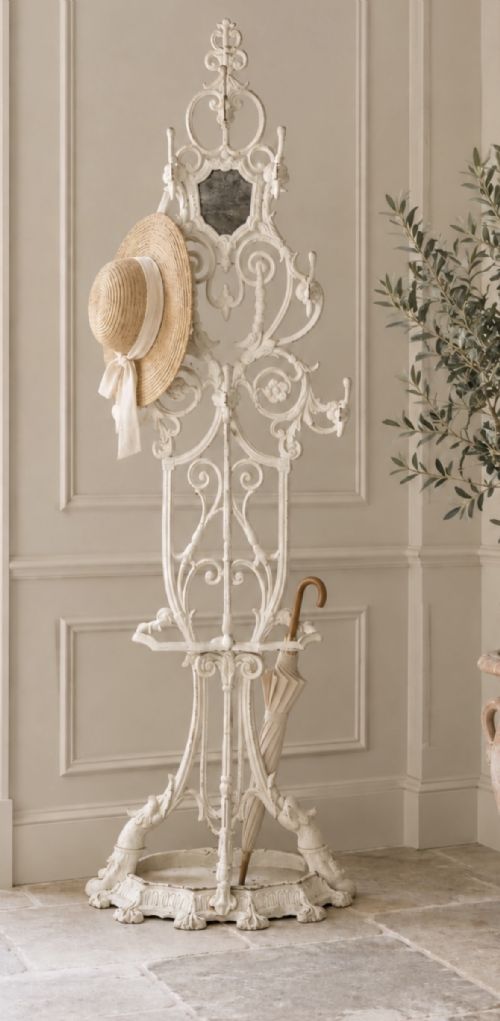
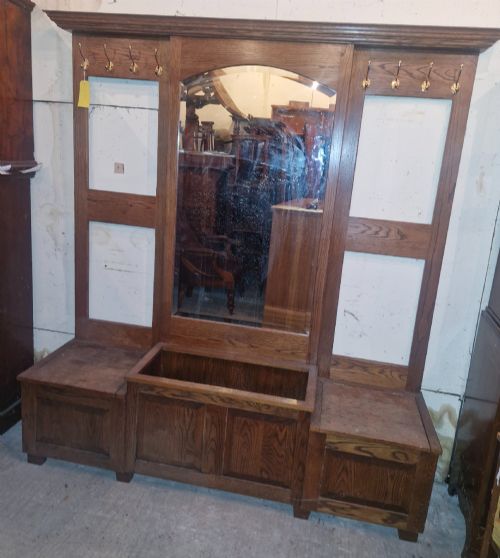
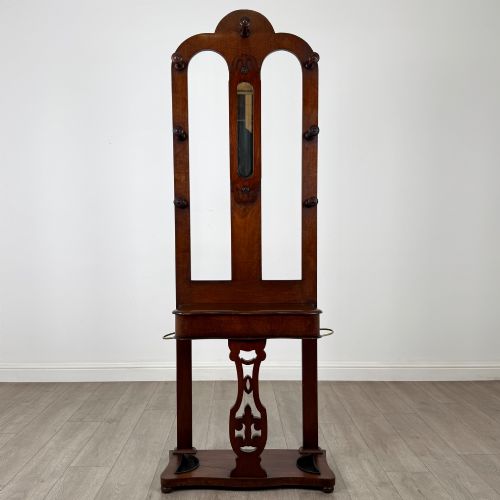
A coat rack with mirror serves as the immediate greeting point in a home entrance, combining hooks for outerwear with an upright glass plate for checking one's appearance. The selections here range from compact wall-mounted timber rails to substantial floor-standing pieces that incorporate umbrella wells and glove boxes.
Victorian and Edwardian examples dominate the selection, spanning styles from austere Gothic Revival to fluid Art Nouveau and ornate Aesthetic Movement designs. Wall-mounted racks suit tighter corridors, whilst larger hall stands demand space to display their carved woodwork and brass fittings properly.
Makers utilised various regional woods and metals to suit domestic hallways of different scales, creating pieces that merge utility with period character. Buyers encounter everything from simple pine frames to elaborate oak and mahogany structures fitted with marble shelves and cast iron drip trays.
How they were made
Cabinetmakers constructed these pieces using solid timbers like oak, mahogany, and pine, often employing dovetailed joints and turned spindles for structural integrity. Wall-mounted and freestanding versions frequently integrate cast iron or brass hooks screwed directly into the timber backboards.
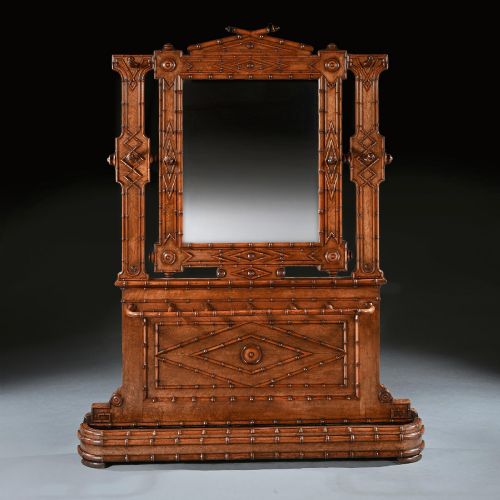
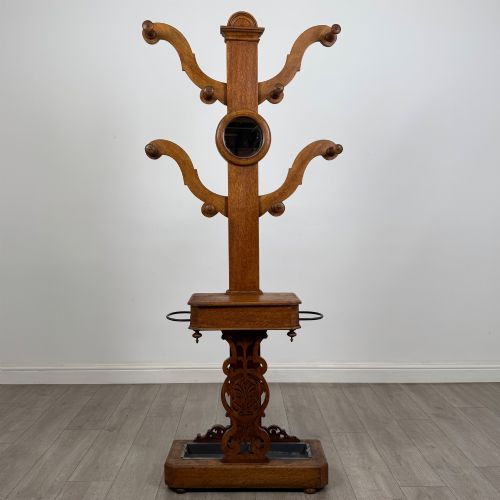
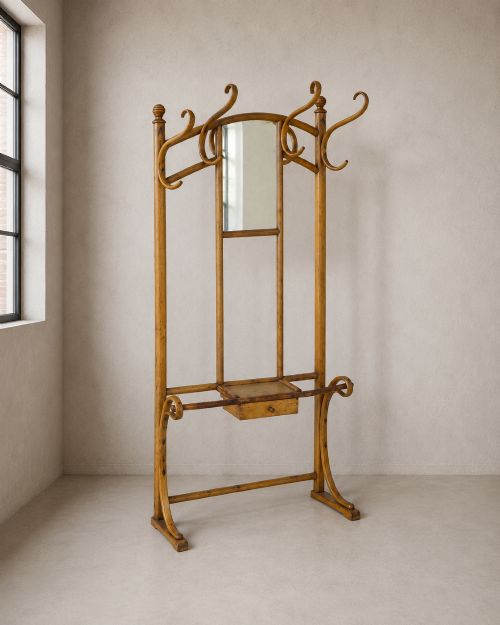
Glass mirrors were silvered and bevelled by hand, then secured into rebated wooden frames or held behind decorative metal clips. Specialised forms incorporate bentwood techniques, bamboo framing, or cast iron founding to achieve lighter or more industrial silhouettes.
Coat Rack with Mirror Retail Price Guide 2026
Typical asking prices for coat rack with mirror among the pieces listed under this phrase on Sellingantiques today, from the lower quarter to the upper quarter. They describe what is for sale here now, not the wider market.
Listings feature oak, mahogany, pine, and bamboo alongside cast iron and brass hardware across Victorian, Edwardian, and Art Deco periods.
What varies in quality
The distinction between standard utility items and finer examples rests on the depth of hand-carved ornamentation, such as Green Man motifs or crisp foliate details. Timber selection dictates much of the visual weight, with figured birdseye maple, golden oak, and rich mahogany sitting above plain pine or utilitarian softwood.
Hardware contributes significantly to the overall merit of a piece, distinguishing mass-produced items from bespoke workshop commissions. Original heavy brass coat hooks, intact marble display shelves, and substantial bevelled glass mirror plates elevate the standing of any hallway fixture.
Coalbrookdale·Thonet
The Coat Rack with Mirror Glossary
- Hall Stand
- A large freestanding hallway furniture item incorporating a mirror, coat hooks, umbrella holders, and often a central glove drawer or marble shelf. These pieces anchor the entrance hall of larger period properties.
- Bevelled Plate
- A mirror glass whose outer edges are cut and polished at an oblique angle to catch the light decoratively. This finish indicates a finer standard of glass production.
- Faux Bamboo
- Turned and painted wood designed to imitate natural bamboo stalks, popular during the Aesthetic Movement and late nineteenth century. It brings an exotic, lightweight aesthetic to hall furniture.
- Bentwood
- Wood softened by steam and bent into curved structural components, famously utilised by manufacturers such as Thonet. This technique creates strong, lightweight frames without traditional joinery.
- Drip Tray
- A metal pan positioned at the base of a hall stand to catch water running off wet umbrellas and walking sticks. These removable trays protect the wooden base from rot and moisture damage.
Coat Rack with Mirror: Frequently Asked Questions
Where should a coat rack with mirror be hung?
Hang the piece securely at eye level in an entrance hall or narrow corridor to maximise both light reflection and accessibility for daily use.
Ensure the wall fixings engage with structural studs or brickwork, as heavy hardwood frames and metal hooks bear substantial weight when loaded with winter coats.
How do I care for the antique mirror glass?
Clean the mirrored surface gently with a soft cloth and mild glass cleaner, taking care not to let moisture seep behind the old silvering along the edges.
Avoid harsh chemical ammonia sprays that can degrade historic mirror backing and damage the surrounding wood polish.
Can these hold heavy winter coats?
Most period wall racks and floor stands feature robust brass or cast iron hooks designed to support substantial garments, hats, and scarves.
Check that freestanding hall stands are balanced properly on level flooring so they do not tip forward under uneven heavy loads.
How do I identify a Victorian hall stand?
Look for dense timbers like dark oak or mahogany, deep hand-carvings, and functional additions such as cast iron umbrella wells and marble surfaces.
Stylistic cues often include Gothic Revival arches, Aesthetic Movement Japonisme details, or heavy architectural mouldings characteristic of nineteenth-century domestic design.