


Coat of Arms Ceramic
Coat of arms ceramic pieces carry centuries of heraldic history painted onto porcelain, earthenware, and faience for display at table or in the cabinet.
Coat of Arms Ceramic
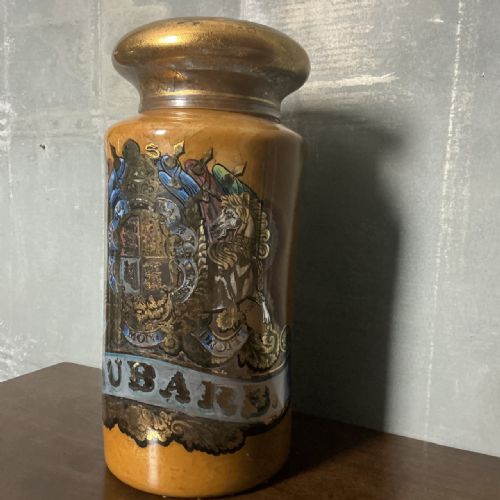
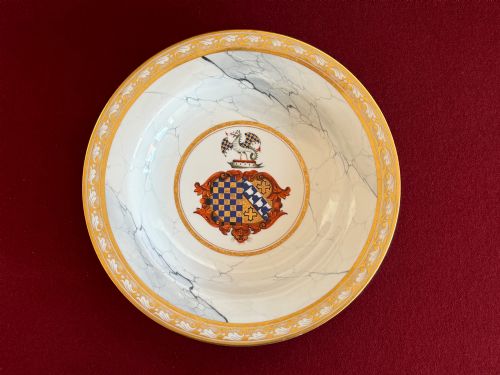
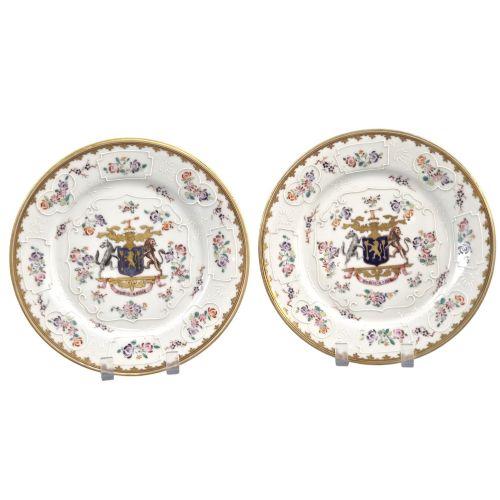
When you search for coat of arms ceramic, you encounter decorative plates, armorial campana vases, pottery figures, and large blue and white meat platters bearing distinct heraldic shields and crests. These items range from Chinese export porcelain made for European markets during the eighteenth century to nineteenth-century English earthenware and French reproductions.
The pieces on this page lean heavily toward eighteenth-century Chinese export porcelain featuring specific family arms, alongside nineteenth-century English and French productions from factories such as Minton and Samson. You will also find Victorian Staffordshire pottery figures and Italian majolica vessels carrying traditional heraldic motifs.
Forms vary from cabinet plates and soup plates to sauce boats, compotes, and large platters with drainers. These objects bridge the gap between functional domestic ware and high-status display items commissioned by landed families, City guilds, and institutions.
Materials and methods
Potters built these items using porcelain, earthenware, and faience bodies, shaping plates on wheels or pressing clays into moulds for vases and plaques. Lead glaze and heavy glazes provided a protective, glossy surface over the white or tinted ceramic bodies.
Decorators applied enamel paint and gold leaf by hand to render intricate coats of arms, crests, and surrounding floral borders. Enamel painting required precise firing in kilns to fix the polychrome pigments permanently to the glazed surfaces.
The listings span the eighteenth and nineteenth centuries, incorporating Chinese export porcelain, French faience, and English earthenware.
Factors of quality
Quality rests upon the crispness of the hand-painted heraldic detail and the precision of the enamel work. Finer armorial plates and dishes display meticulously rendered tinctures, charges, and mantling that accurately reflect official grants of arms.
The standard of the ceramic body and the depth of the glaze also define the piece, with finer porcelains offering translucency and smooth, unblemished grounds. Expert gilding using gold leaf adds a layer of refinement absent in simpler transfer-printed or hastily painted wares.
Chamberlain Worcester·Minton
The Coat of Arms Ceramic Glossary
- Armorial
- Bearing a coat of arms or heraldic device. This term identifies ceramics commissioned by or designed for specific families and institutions.
- Famille rose
- A palette of opaque enamel colours dominated by pink, introduced in Chinese ceramics during the eighteenth century. It appears frequently on armorial export porcelain.
- Campana vase
- A bell-shaped vessel with a flaring rim on a pedestal foot, popular during the nineteenth-century revival periods for classical and Renaissance styles.
- Faience
- Tin-glazed earthenware produced widely in France and continental Europe. It provides an opaque white ground suitable for painted decoration.
- Compote
- A raised bowl used for serving fruit or sweetmeats at dessert. These pieces often feature armorial crests in the centre of the basin.
Coat of Arms Ceramic: Frequently Asked Questions
What is an armorial ceramic?
An armorial ceramic is a piece of pottery or porcelain painted with a specific family, corporate, or institutional coat of arms.
These items were often commissioned in large dinner services or as presentation pieces to mark marriages, alliances, or civic offices.
How do I date an armorial plate?
Dating relies on stylistic clues in the borders, the composition of the ceramic body, and the shape of the vessel itself.
Eighteenth-century Chinese export wares often feature specific floral or geometric borders distinct from nineteenth-century European revival styles.
Were these pieces used for dining?
Many armorial plates, soup plates, and platters formed part of large utilitarian dinner services used for formal dining.
Others, such as cabinet plates and decorative vases, served primarily as ornamental displays in drawing rooms and cabinets of curiosity.
Who ordered armorial porcelain?
Landed gentry, aristocracy, and wealthy merchants commissioned custom services from Chinese export kilns and European potteries.
Guilds and livery companies, such as the London Goldsmiths, also ordered large presentation services featuring their corporate coats of arms.