



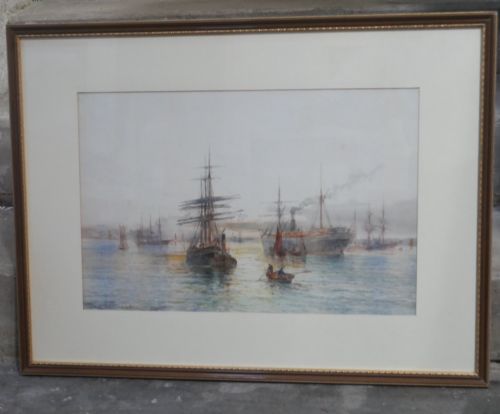
Coastal Watercolour Artwork
Coastal watercolour artwork captures maritime life and seaside vistas through delicate washes of pigment on paper, offering a direct window into historic coastal communities.
Coastal Watercolour Artwork
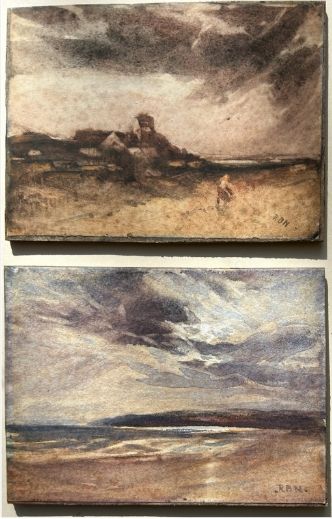
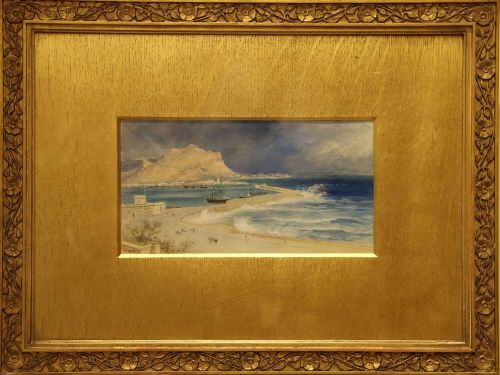
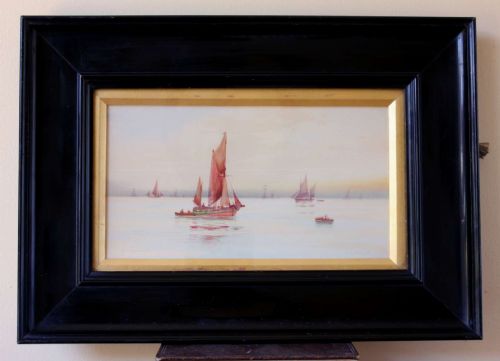
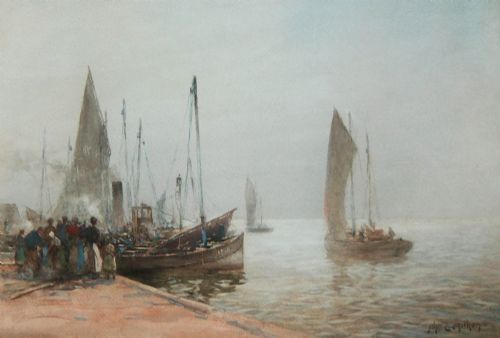
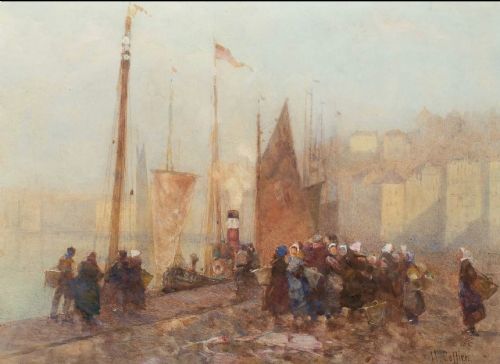
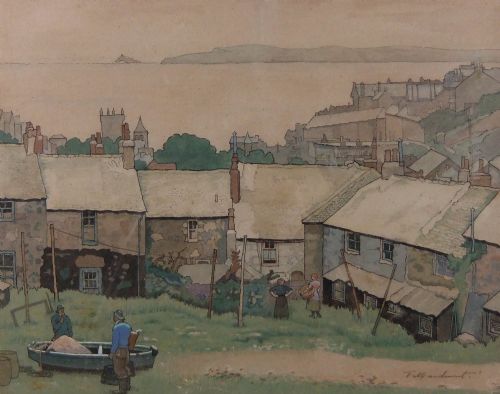
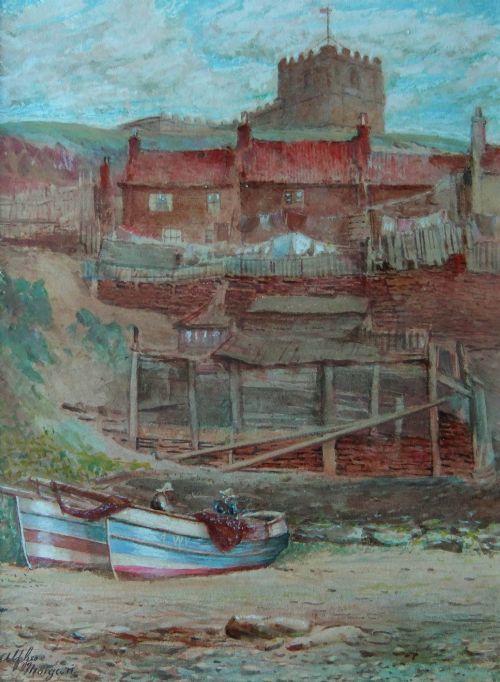
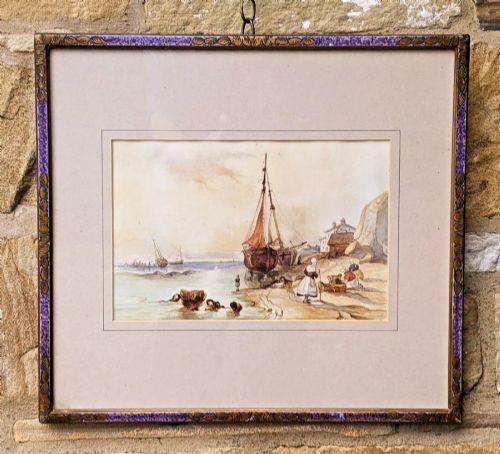
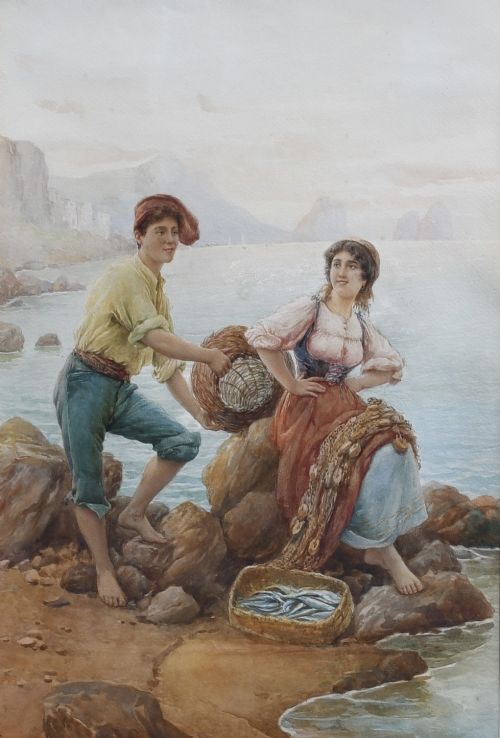
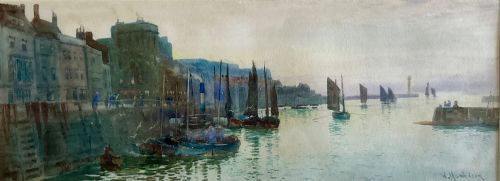
When you examine coastal watercolour artwork on this page, you encounter original British and European paintings spanning the Victorian era through the early twentieth century. The selection focuses heavily on traditional maritime subjects, including bustling fishing harbours, retreating tides, and sailing vessels navigating coastal waters.
Most examples originate from defined regional movements such as the St Ives School or British Impressionist marine art. These pieces typically present historical views of recognizable ports and shorelines in Yorkshire, Cornwall, Scotland, and overseas locations.
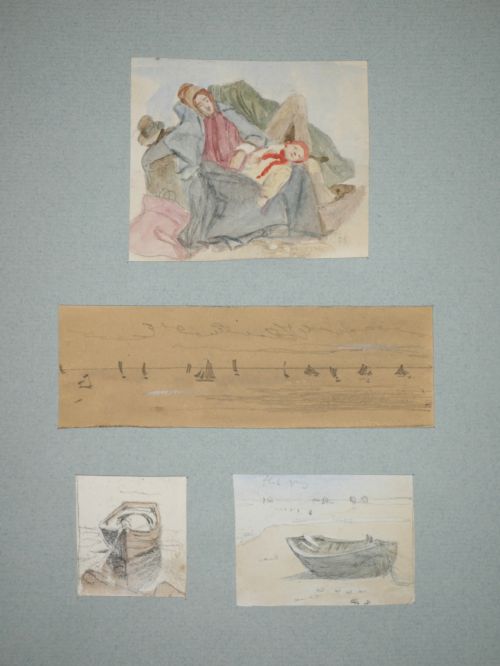
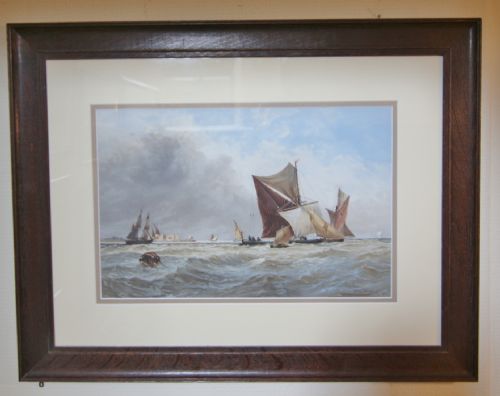
Works on paper from this genre range from intimate marine sketches to large, highly finished exhibition pieces. They frequently arrive framed behind glass in period gilt wood settings that complement the delicate nature of the medium.
Materials and Technique
Artists executed these watercolours using finely ground pigment suspended in water, applied directly to absorbent paper supports. This aqueous technique relied on the natural luminosity of the paper showing through transparent washes to capture shimmering light on the sea.
Makers occasionally combined watercolour paint with gouache to introduce opaque highlights and dense areas of colour. Framers then protected these vulnerable works on paper beneath glass within timber mouldings, often finished with gilt leaf.
Several artists braved stormy northern harbours just to capture the exact moment a fishing boat missed the pier.
Understanding Quality
The distinction between standard topographical records and superior coastal watercolour artwork rests entirely upon compositional confidence and brushwork dexterity. Master hands capture the shifting atmosphere of sea spray and cloud formations with sparse, fluid marks rather than laboured detail.
The survival of vibrant pigment intensity without excessive fading separates well-preserved examples from those exposed to damaging sunlight. Furthermore, the presence of an artist's hand signing an original piece or providing contemporary inscription adds archival depth to the composition.
James Orrock·James Smetham·James E Aitken·John E Aitken·William Banks Fortescue·Hector Caffieri·Thomas Maidment·TB Hardy·Alfred G Morgan·Carlo Ferranti·William Matthison·George Stanfield Walters·Frank Kelsey·Henry Barlow Carter·F A Roylance·John Moxon·George F Pennington·William Frederick Settle·Lionel Horsnell·John Bedloe Goddard·Paul Delvaux·Charles William Adderton·Richard Harry Carter·William Lee Hankey·Thomas Bush Hardy
The Coastal Watercolour Artwork Glossary
- Watercolour pigment
- Finely ground colour particles mixed with a water-soluble binder. This material creates transparent washes that allow the white of the paper to illuminate the scene.
- Works on paper
- A collective category encompassing original paintings, drawings, and sketches executed on paper supports. This designation distinguishes portable works from oil paintings on canvas or panel.
- Gilt wood
- Timber framing finished with a thin layer of gold leaf or metallic gilt paint. Such frames were often custom-built to house Victorian and Edwardian fine art paintings.
- St Ives School
- An influential artist colony in Cornwall focused on marine and landscape subjects. Painters in this tradition emphasised naturalistic light and local fishing communities.
- Gouache
- An opaque water-based paint variant containing added white pigment. Artists utilised this medium alongside transparent watercolour to build solid highlights on water and sails.
Coastal Watercolour Artwork: Frequently Asked Questions
How should I hang coastal watercolour artwork?
Display these paper paintings away from direct sunlight to prevent the watercolour pigments from fading over time. Maintaining stable indoor humidity also protects the paper and the surrounding frame.
Ensure the piece hangs securely on a dry wall, protected behind its original or conservation-grade glass. Proper placement preserves the delicate balance of tone and wash.
Where were these maritime scenes painted?
Artists painted these coastal views directly along active shorelines, fishing ports, and estuaries across Britain and Europe. Popular locations include Cornish harbours, Yorkshire coastal towns, and continental ports.
Plein-air sketching allowed painters to record immediate atmospheric changes in weather and sea conditions. These observational studies formed the basis for finished works produced in the studio.
How do I identify the date of a watercolour?
Look for artist signatures, contemporary inscriptions on the mount or reverse, and stylistic clues within the clothing and vessels depicted. Victorian and Edwardian maritime scenes often carry specific topographical notes.
Framing materials and paper watermarks additionally provide reliable chronological markers. Comparing handling techniques with known dated works by the same hand confirms the period.
Are these paintings original works?
The listings comprise original hand-painted watercolours created directly by the artists rather than modern mass-produced prints. Each piece represents a unique application of pigment onto paper.
Brush texture, pencil underdrawing, and variations in wash density distinguish these authentic creations from mechanical reproductions. Collectors value this direct contact between the artist's hand and the paper surface.