


Coastal Watercolor
Coastal watercolor works capture maritime life and shorelines through delicate pigment applications, offering buyers a window into historic seaside communities.
Coastal Watercolor
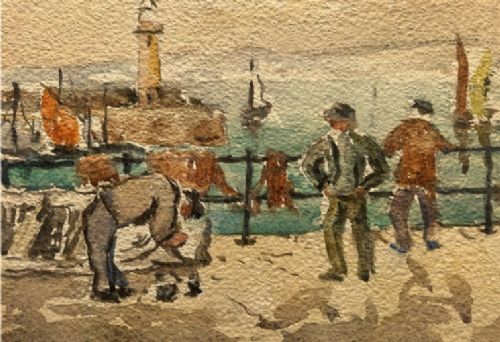
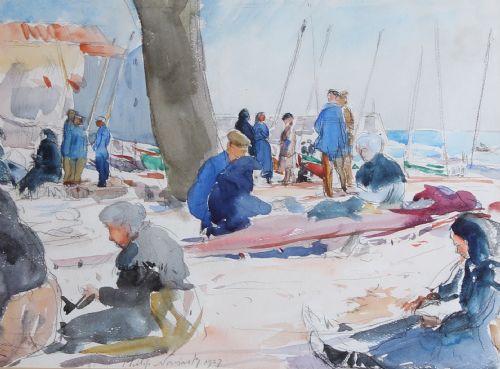
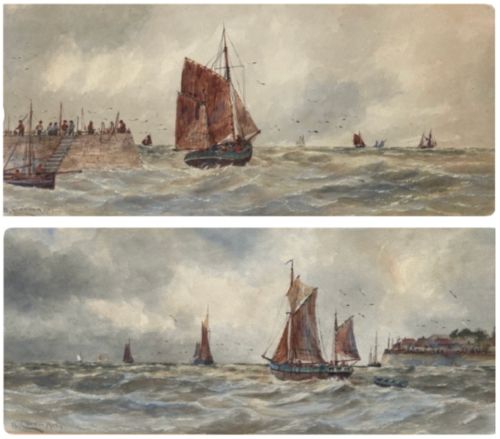
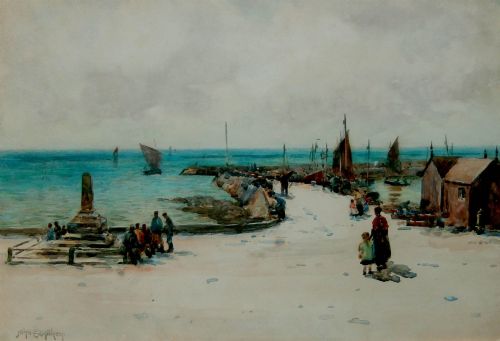
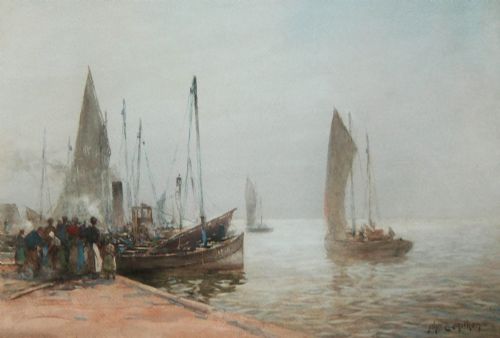
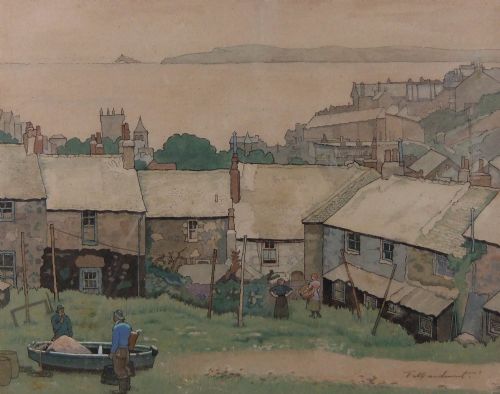
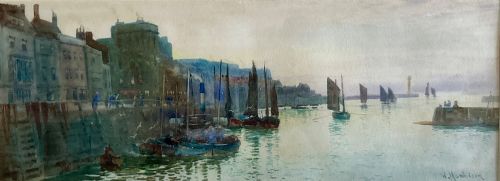
A coastal watercolor represents marine landscapes, fishing harbours, and seaside vistas executed on paper support. These works range from late nineteenth-century depictions of British and European ports to early twentieth-century harbour scenes.
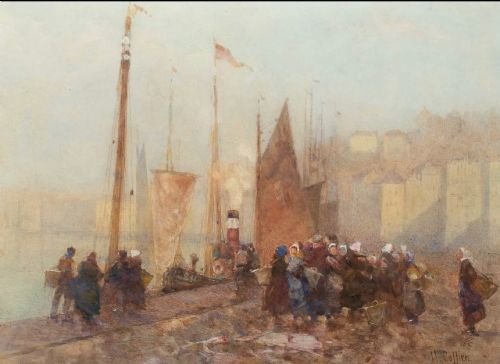
Buyers frequently encounter framed maritime paintings originating from Victorian and Edwardian periods, alongside later works linked to regional traditions like the St Ives School. Common subjects include fishing boats, docking vessels, and tidal estuaries across Britain and continental Europe.
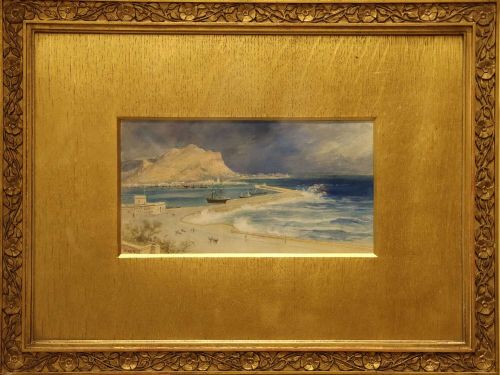
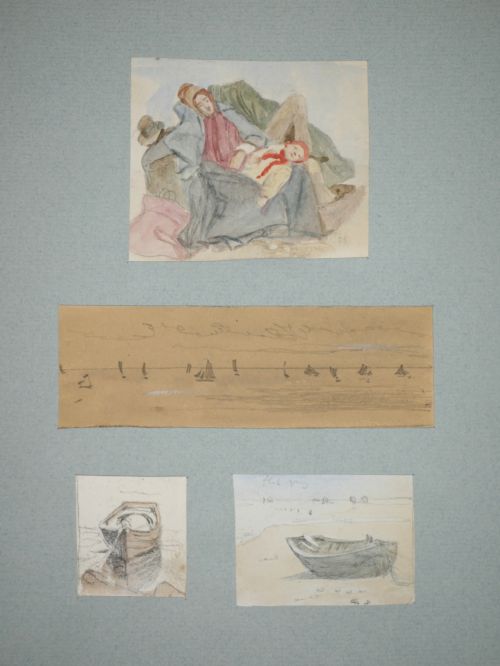
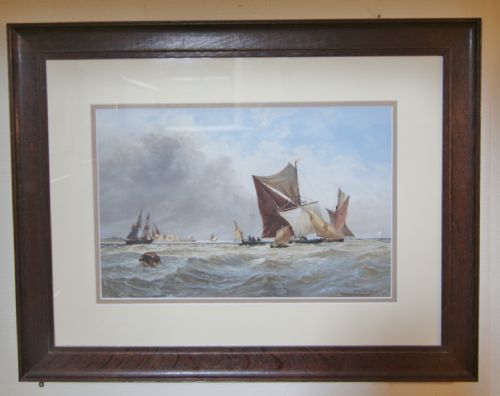
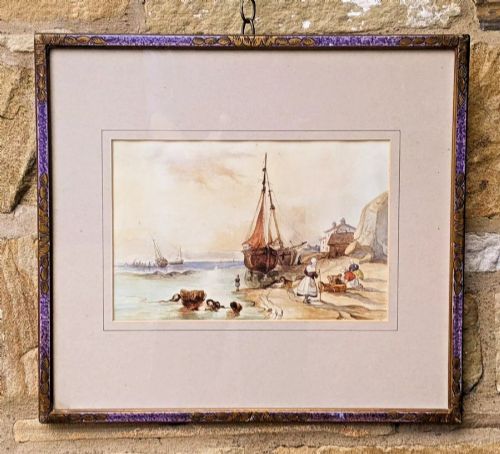
The format spans intimate sketches and larger framed gallery pieces, often preserved behind glass within wooden frames. Most examples record specific coastal locations, from Yorkshire fishing ports to Mediterranean harbours.
Materials and Technique
Artists applied watercolor pigment directly onto paper surfaces, utilising the white of the unpainted paper to create highlights and luminosity. Gum arabic was often mixed into the pigment to enhance transparency and depth.
Many works incorporate preliminary pencil or ink underdrawings to establish architectural structures of harbour buildings and rigging of vessels. Selected pieces utilise gouache highlights alongside transparent washes to render opaque details on sky and water.
Coastal Watercolor Retail Price Guide 2026
Typical asking prices for coastal watercolor among the pieces listed under this phrase on Sellingantiques today, from the lower quarter to the upper quarter. They describe what is for sale here now, not the wider market.
Materials documented in current works include watercolor pigment, paper supports, gold leaf, and glass-fronted wooden frames.
Quality Variations
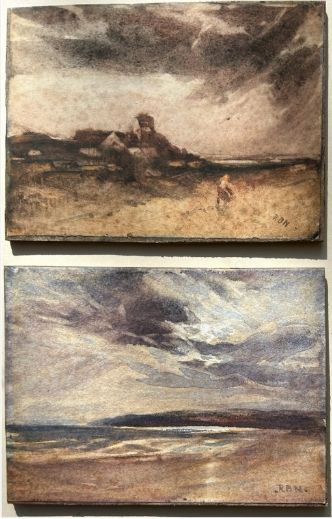
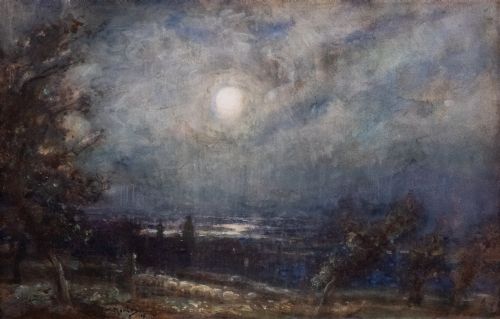
The skill in brushwork and atmospheric control distinguishes superior examples from standard topographical records. Master painters achieved nuanced effects in shifting light, cloud formations, and reflective sea surfaces.
Provenance and the artist's established standing within maritime painting traditions elevate the desirability of individual works. Condition of the paper support and preservation of original pigment vibrancy also govern overall quality.
Philip Naviasky·Robert Buchan Nisbet·James Orrock·William Cannon·James Smetham·Thomas William Morley·Hector Caffieri·Thomas Maidment·Thomas Bush Hardy·Alfred G. Morgan·Carlo Ferranti·William Matthison·John Moxon·George F Pennington·Lionel Horsnell·John Bedloe Goddard·Paul Delvaux·Charles William Adderton·Richard Harry Carter·William Lee Hankey·Sir Thomas Newenham Dean·Ernest Dade·Edward Seago·Arthur Tucker·Robert Leslie Howey
The Coastal Watercolor Glossary
- Watercolour pigment
- Finely ground colour particles suspended in a water-soluble binder, applied in washes to paper.
- Gouache
- An opaque water-based paint sometimes combined with transparent watercolor to add solid highlights.
- Works on paper
- A classification encompassing drawings, watercolors, and prints executed on paper supports.
- Gilt wood
- Wood frames coated with a thin layer of gold leaf or gold paint, standard for framing fine art.
Coastal Watercolor: Frequently Asked Questions
What subjects appear in coastal watercolors?
These paintings typically depict fishing boats, harbour docks, coastal cliffs, and maritime shipping activities. Scenes frequently capture specific British, Irish, and European seaside locations.
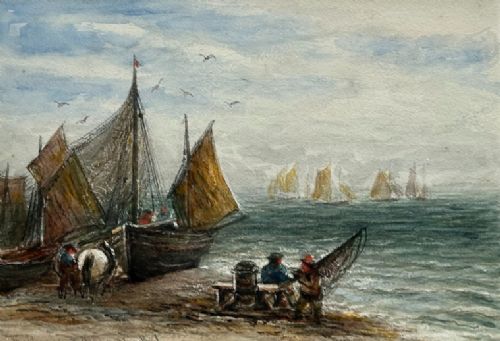
Artists documented daily maritime life, including returning vessels, net mending, and harbour towns under changing weather conditions.
How should these works be framed?
Watercolors require framing behind glass to protect the paper surface from dust, atmospheric pollutants, and moisture damage. Acid-free mounts prevent chemical discoloration over time.
Traditional framing often involves timber mouldings, sometimes finished with gold leaf accents that complement nineteenth-century aesthetics.
How do I identify the period?
Stylistic clues, artist signatures, and framing materials help determine the era of execution. Victorian and Edwardian works often feature detailed maritime rigging and specific tonal palettes.
Cataloguing records and inscribed titles on the reverse of the paper frequently supply precise location and date information.
Where were these artists active?
Painters worked across notable fishing ports and coastal colonies in Britain, including St Ives, Whitby, Scarborough, and various Scottish harbours. Continental European ports also attracted significant artistic attention.
Many practitioners travelled extensively to paint maritime scenes along the English Channel, the North Sea, and Mediterranean coasts.