


Coastal Watercolor Painting
A coastal watercolor painting captures maritime life and seaside vistas through delicate washes of pigment on paper.
Coastal Watercolor Painting
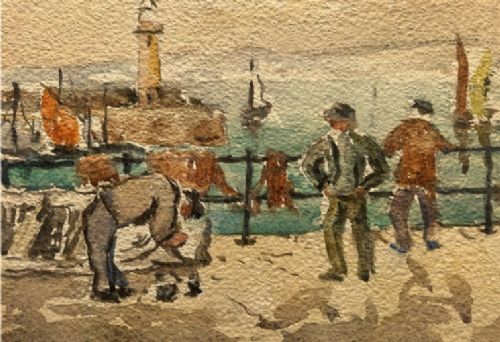
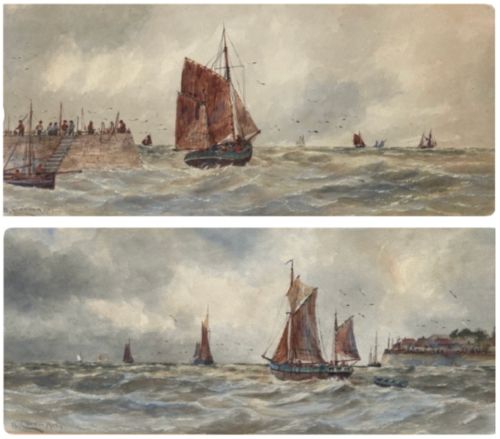
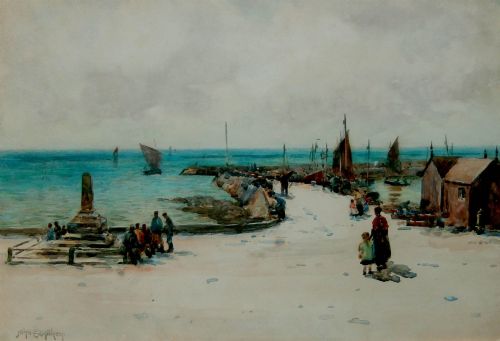
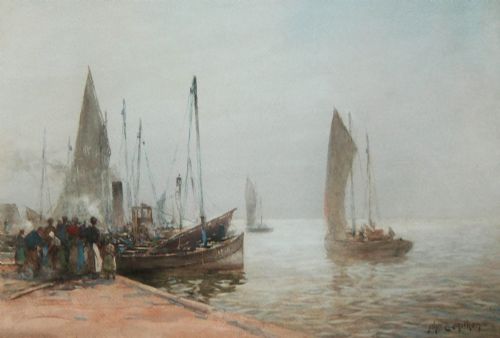
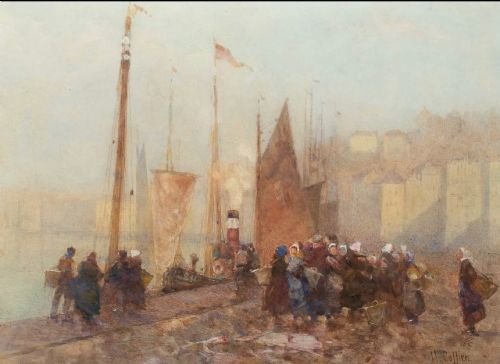
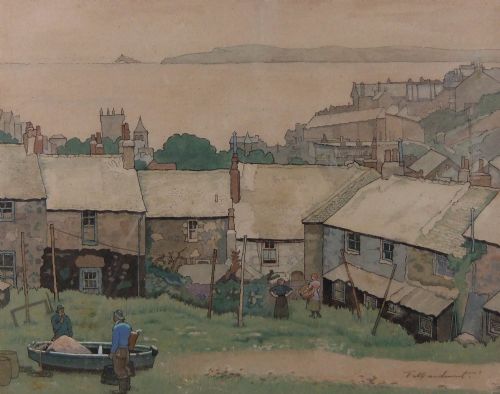
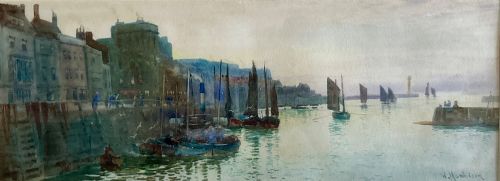
A coastal watercolor painting depicts harbours, fishing boats, and shorelines rendered by artists working during the nineteenth and early twentieth centuries. These works frequently record specific locations along British, European, and American coasts, including fishing ports like Whitby, St Ives, and Scarborough. The most common examples encountered on this page date from the Victorian and Edwardian periods through to the 1930s.
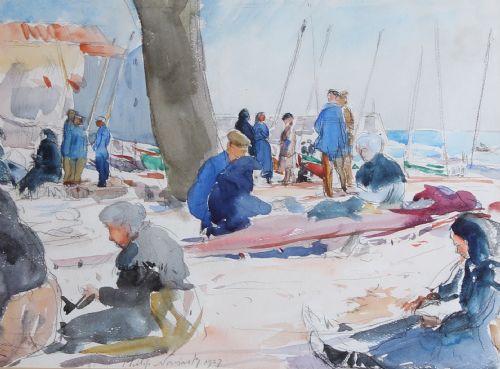
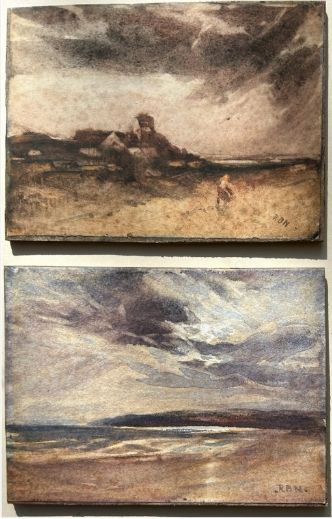
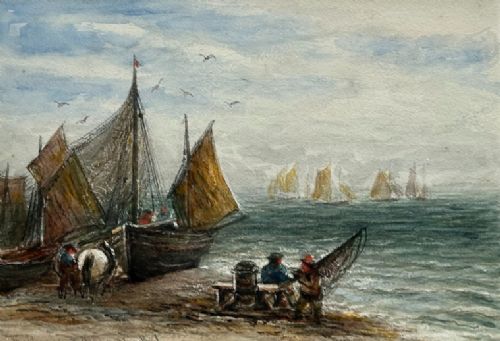
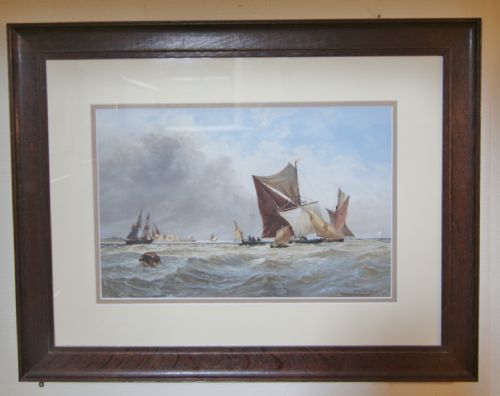
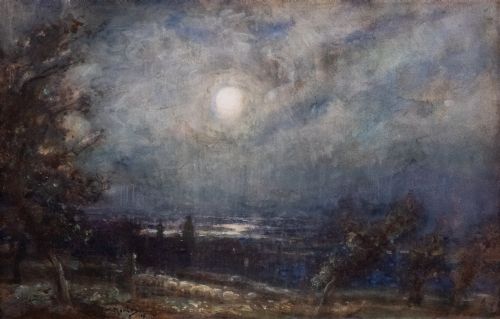
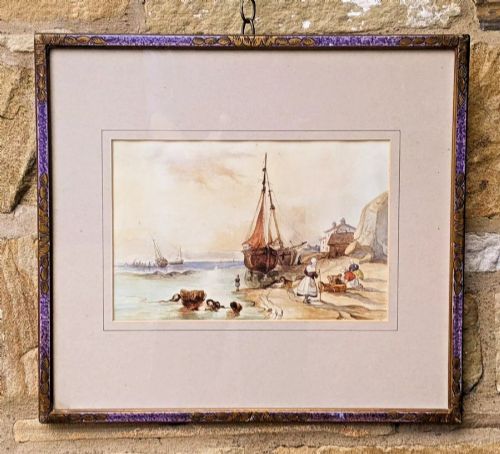
The compositions range from detailed topographical views of docks and castles to atmospheric depictions of vessels at sea under moonlight or evening light. Many pieces focus on the daily labour of coastal communities, showing fisherfolk mending nets or launching boats from the shore. They appear framed behind glass, often retaining their original gilt wood mounts.
Materials and technique
Artists painted these works using watercolor pigment applied to paper supports, occasionally incorporating bodycolour or gouache for opacity in the highlights. The fluid nature of the medium allowed painters to capture the translucent quality of water, shifting skies, and coastal atmosphere quickly on location or back in the studio.
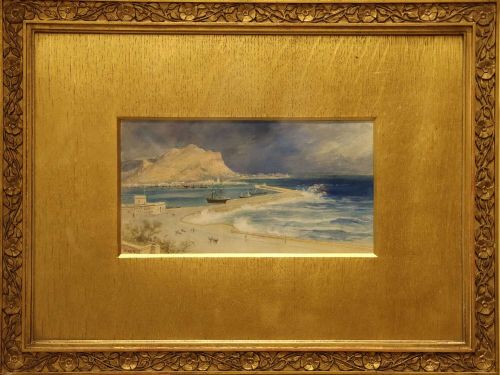
Finished works were traditionally protected beneath glass and housed within wooden frames, frequently enhanced with gold leaf or gilt details. This combination of paper, pigment, and glass preserved the subtle washes and delicate details of each marine scene over the decades.
Coastal Watercolor Painting Retail Price Guide 2026
Typical asking prices for coastal watercolor painting among the pieces listed under this phrase on Sellingantiques today, from the lower quarter to the upper quarter. They describe what is for sale here now, not the wider market.
Several artists braved stormy northern seas just to capture the precise tilt of a fishing boat returning to Whitby.
Distinctions in quality
Quality rests upon the artist's command of light, atmospheric perspective, and the fluid properties of the pigment. Stronger examples demonstrate confident brushwork that defines the movement of water and the intricate rigging of vessels without heavy reworking.
Condition also separates examples, particularly the preservation of the paper support and the vibrancy of the pigments. Works kept away from direct sunlight retain their original colour tones, whereas prolonged exposure causes fading in the delicate blue and grey washes typical of marine art.
Philip Naviasky·Robert Buchan Nisbet·James Orrock·William Cannon·James Smetham·James E Aitken·John E Aitken·William Banks Fortescue·Thomas William Morley·Hector Caffieri·Thomas Maidment·TB Hardy·Alfred G Morgan·Carlo Ferranti·William Matthison·Henry Barlow Carter·John Moxon·George F Pennington·Alfred George Morgan·Lionel Horsnell·John Bedloe Goddard·Paul Delvaux·Charles William Adderton·Richard Harry Carter·William Lee Hankey
The Coastal Watercolor Painting Glossary
- Watercolour pigment
- Finely ground colour particles mixed with a water-soluble binder, applied in translucent washes to paper. This medium forms the foundation of every piece listed here.
- Gilt wood
- Wood framing treated with a thin layer of gold leaf or metallic paint. These frames surround many nineteenth-century maritime works.
- Works on paper
- A collective category encompassing drawings, sketches, and paintings executed on a paper support. Marine watercolors fall directly into this grouping.
- Victorian maritime art
- Depictions of ships, coastal views, and naval scenes produced during the reign of Queen Victoria. These works often emphasise topographical accuracy and narrative detail.
Coastal Watercolor Painting: Frequently Asked Questions
How should I hang a coastal watercolor painting?
Protect the paper and pigments by placing the artwork away from direct sunlight and damp environments. UV-filtering glass helps prevent the delicate washes from fading over time.
Ensure the piece hangs securely on a stable wall using appropriate fixings suited to the weight of the wooden frame.
How do I identify the period of a coastal watercolor painting?
Examine the framing style, paper type, and artist signatures, which often correlate with nineteenth-century or early twentieth-century production methods. Victorian works frequently feature heavy gilt frames and detailed topographical recording.
Subject matter also offers clues, as clothing styles on figures and the types of vessels depicted shifted noticeably between the 1880s and the 1930s.
Were these paintings created outdoors?
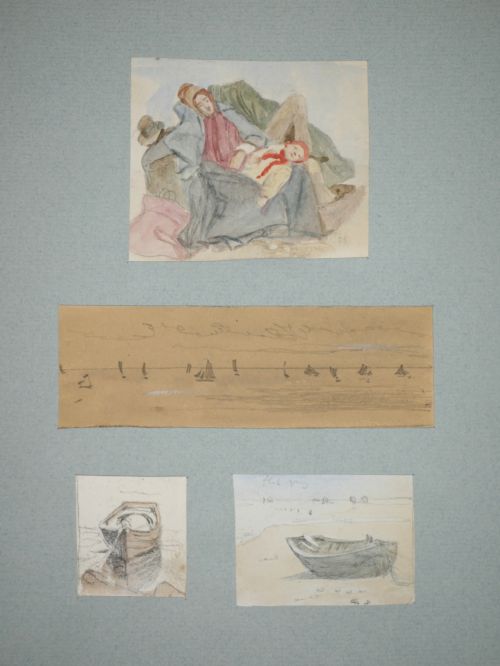
Many artists sketched preliminary views directly on location at harbours like St Ives or Whitby to capture accurate lighting and coastal weather. They often completed the finished watercolor paintings later within the studio.
The medium's portability made it ideal for artists travelling along British and European coastline locations.
What subjects appear most often?
Harbour scenes, fishing boats at anchor, and coastal cliffs dominate the compositions. Artists frequently recorded daily maritime activities such as landing the catch or mending nets.
Views also extend to specific regional landmarks, stretching from Sicilian harbours to the Jurassic coast of Dorset.