


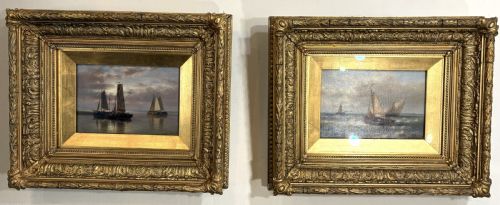


Coastal Shipping Seascape Art
Coastal shipping seascape art captures the working vessels and historic harbours of past centuries in oil and watercolour.
Coastal Shipping Seascape Art
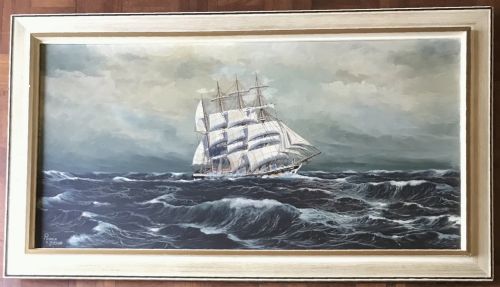
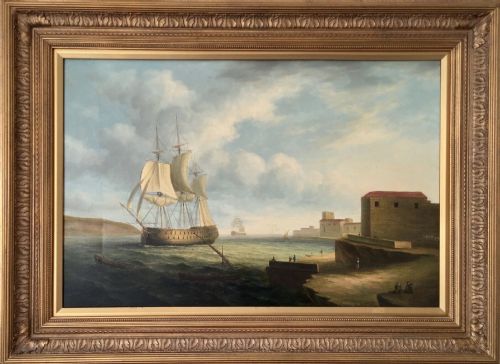
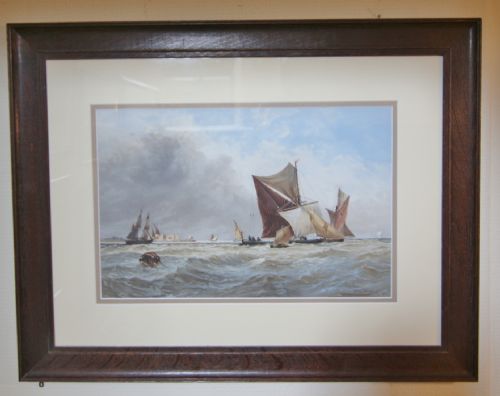
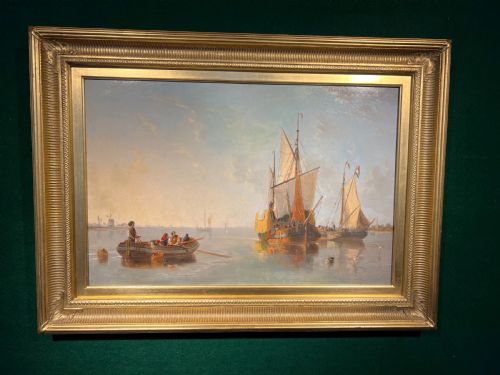
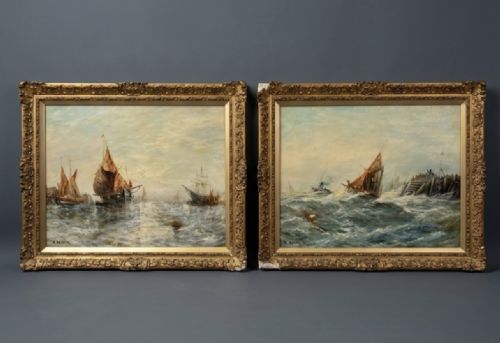
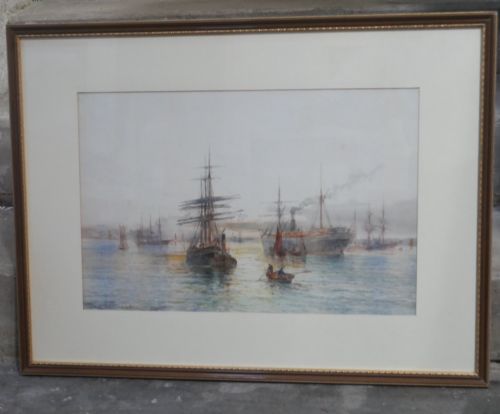
Coastal shipping seascape art encompasses paintings and works on paper depicting vessels, harbours, and maritime views from the nineteenth and early twentieth centuries. These works record the era of sail and steam, showing merchant ships, fishing boats, and coastal figures along British and European shores. Buyers searching for coastal shipping seascape art will frequently encounter nineteenth-century watercolours and oil paintings housed in gilt wood frames.
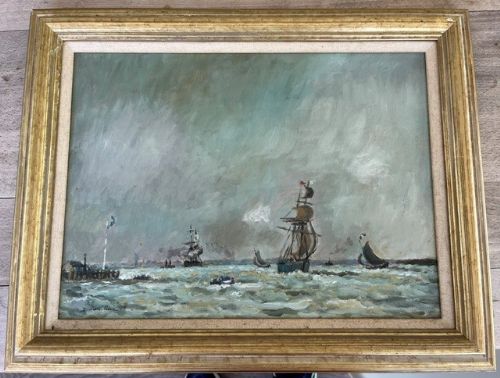
The subjects range from tranquil estuary anchorages to dramatic stormy seas and bustling port entrances. Many pieces document specific locations such as Dublin Bay, Lyme Bay, or the Medway, offering a precise topographical record alongside artistic merit. The prevailing formats on this page span framed watercolours on paper and oil paintings executed on canvas, panel, or board.
Materials and Technique
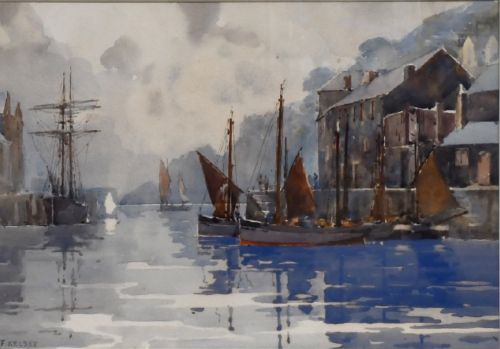
Artists of these maritime scenes worked primarily in oil paint on canvas, panel, or board, or utilised watercolour on paper. Oil pigments allowed for rich, textured depictions of turbulent water and changing weather, while watercolour achieved the luminous skies and transparent washes typical of coastal light. Aquatints also appear among the printed works of the period.
Surviving pieces are generally mounted within period gilt wood frames that complement the maritime subject matter. The physical support often reveals the age of the work, with card, heavy paper, and stretched canvas prevailing across the nineteenth and early twentieth centuries.
Several Victorian captains of the brush recorded mishaps such as shipwrecks off treacherous coastal strands with meticulous nautical accuracy.
Evaluating Quality
Quality in these coastal views rests upon the artist's command of maritime architecture and atmospheric conditions. Stronger works demonstrate accurate rendering of rigging, hull forms, and the behaviour of water under wind, paired with a convincing sense of light and space. Weaker examples often rely on formulaic waves and generic vessel shapes without topographical or observational grounding.
The handling of the medium further distinguishes the range. Skilled brushwork or controlled watercolour washes convey movement and distance with economy, whereas lesser pieces can appear static and heavy-handed in the application of pigment.
Bonaventura Peeters·Bernard Benedict Hemy·John Wilson Carmichael·Abraham Hulk I·William Frederick Settle·Charles William Adderton·Thomas Bush Hardy·Ernest Dade·George Stanfield Walters·Arthur Wilde Parsons·Frank Wood·John Davison Liddell
The Coastal Shipping Seascape Art Glossary
- Gilt wood
- Wood frames treated with a thin layer of gold leaf or metallic gilt finish. These frames are frequently original to nineteenth-century paintings.
- Panel
- A flat support made of wood used by artists in place of canvas. Panel paintings from the nineteenth century often exhibit fine detail.
- Aquatint
- A printmaking technique that produces tonal areas resembling watercolour washes. It was often employed to create series of coastal views.
- Estuary
- The tidal mouth of a large river where the tide meets the stream. Many Victorian maritime watercolours focus on these busy transitional waters.
Coastal Shipping Seascape Art: Frequently Asked Questions
What periods do these paintings date from?
The works listed here primarily span the nineteenth century and the early decades of the twentieth century. Examples range from early nineteenth-century depictions down to mid-twentieth-century interpretations.
Victorian and Edwardian periods are particularly well represented through both oils and watercolours.
How were these maritime artworks originally displayed?
These paintings and watercolours were typically framed in decorative gilt wood mouldings intended for domestic interiors. Such frames were chosen to enhance the tonal qualities of the marine subject.
Many retain their period frames, which help date the artwork securely.
What types of vessels appear in these scenes?
The shipping depicted includes sailing ships, clippers, barques, fishing boats, and pilot vessels. These reflect the commercial and working traffic around British and European ports.
Scenes often capture ships at anchor, navigating estuaries, or weathering rough seas.
Are these works signed by the artists?
Several pieces bear the signature or monogram of the artist, while others are attributed based on style and subject matter. Signed watercolours and oils often link directly to recorded marine painters of the period.
Unsigned works are frequently attributed to specific nineteenth-century British or European schools.