

Coastal Maritime Picture
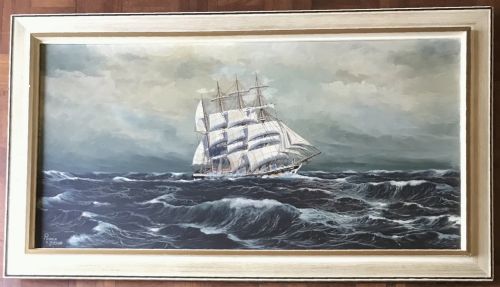
A coastal maritime picture brings the movement of tides and shipping lanes indoors through nineteenth and twentieth-century brushwork.
Coastal Maritime Picture
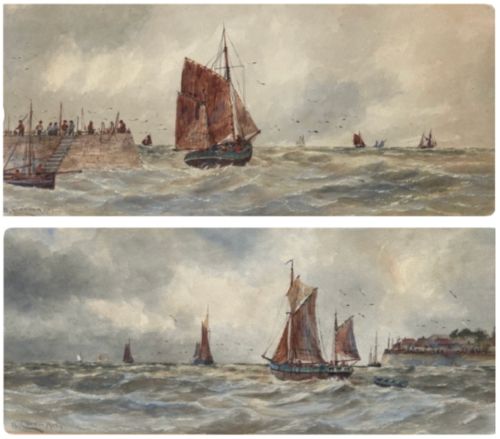
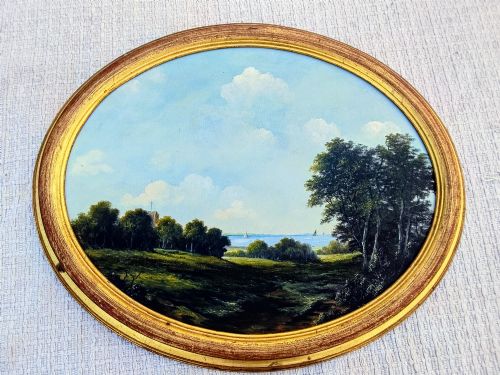
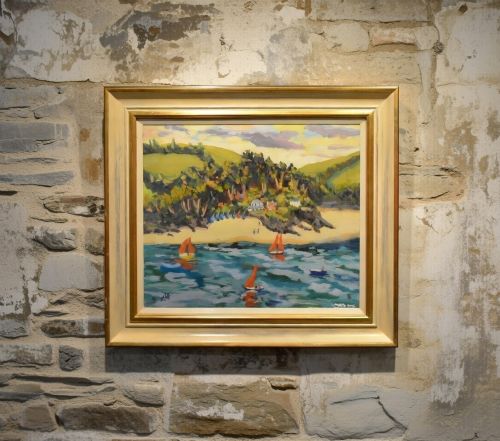
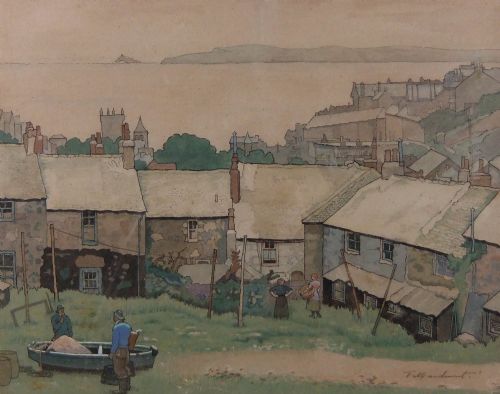
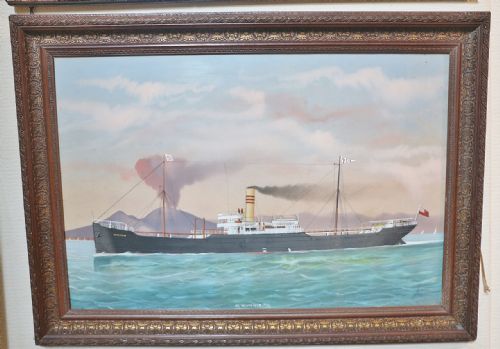
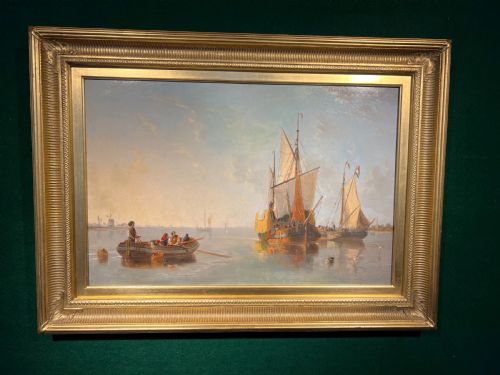
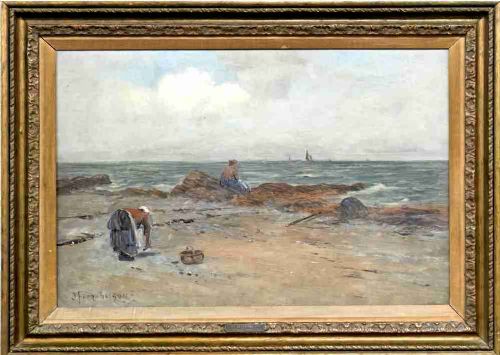
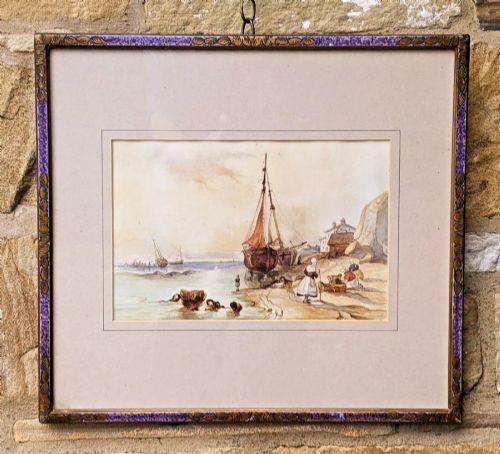
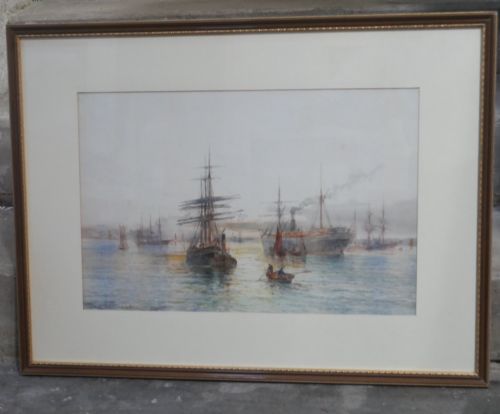
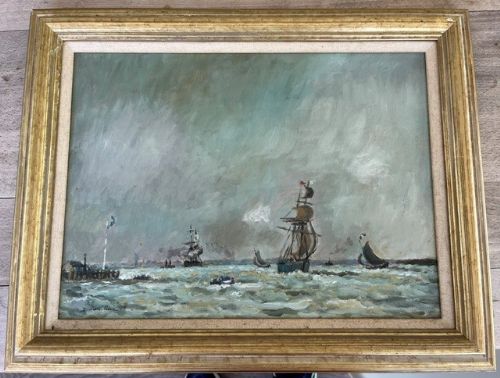
A coastal maritime picture captures harbours, fishing vessels, and open seas across oil and watercolour mediums. Buyers examining this category encounter works spanning the nineteenth century through the mid-twentieth century.
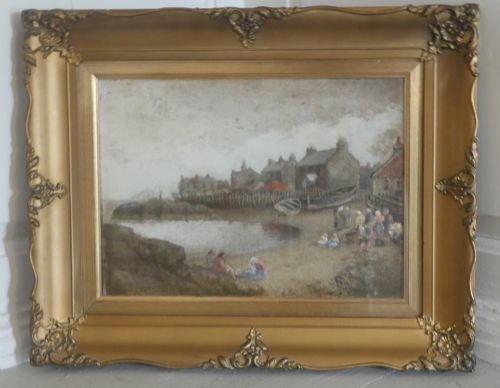
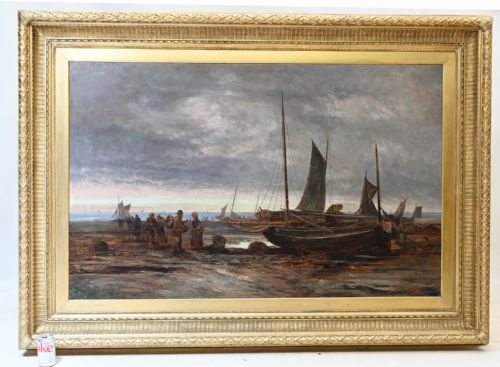
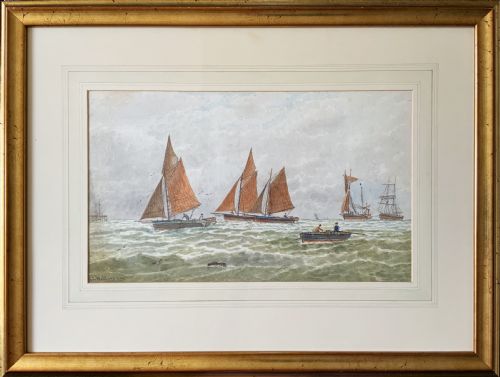
The most common examples on this page are framed watercolours and oil paintings depicting British and French coastal scenes. These range from intimate studies of Yorkshire fishing docks to wide views of the Firth of Forth.
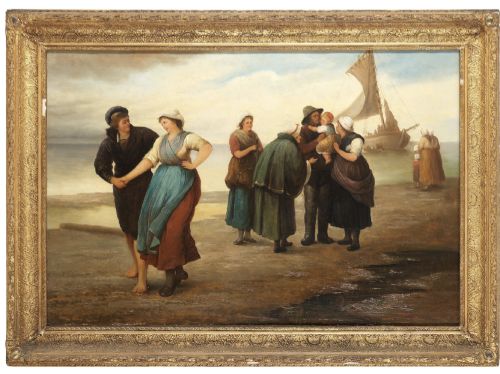
Subjects frequently centre on everyday maritime labour, such as vessels spreading nets or boats leaving port at Dublin Bay. Makers and artists document specific locales from Whitby to Cornwall with documentary precision.
Materials and methods
Artists painted these scenes using watercolour pigment on paper or oil paint on canvas and board. Support panels were often framed in gilt wood to complement the maritime subject matter.
Watercolour works rely on transparent washes to render atmospheric light over sea and sky. Oil paintings utilise heavier brushwork to capture the texture of rough water and historic sailing ships.
Several artists clearly braved salt spray, capturing stormy tides just as the fish were hauled.
Judging quality
Quality rests in the fidelity of light and the confident handling of maritime architecture, such as rigging and hulls. Superior works convey atmosphere and spatial depth rather than merely recording topography.
The integration of human figures with the surrounding seascape separates standard decorative works from accomplished fine art paintings. Signed pieces by established regional artists generally command closer attention from collectors.
Kenneth Cozens·William Cannon·Edward Mills·Thomas Maidment·John Wilson Carmichael·Joseph Farquharson·George Stanfield Walters·William Frederick Settle·Alfred George Morgan·Charles Napier Hemy·Gyrth Russell·William Lee Hankey·Gustave De Bréanski·William Tuck·Fred Waugh·James Watson·T.S. Wallis·James Webb·Frederick William Hattersley·James Thomas Watts·John Mitchell·Leslie Rackham·Kate E Booth·Ernest F. Hill
The Coastal Maritime Picture Glossary
- Seascape
- A painting depicting the sea, waves, and coastal views. This term forms the primary category for marine art.
- Watercolour
- A paint consisting of pigment suspended in a water-based solution. Applied to paper, it creates luminous maritime skies.
- Gilt wood
- Wood coated with gold leaf or a gold-coloured finish. Frames of this material frequently encase nineteenth-century oils.
- Impressionism
- A style of painting emphasising spontaneous brushstrokes and shifting light. British examples appear in later coastal works.
Coastal Maritime Picture: Frequently Asked Questions
How do I date a maritime painting?
Dating relies on costume details of figures, vessel design, and framing materials. Signatures and exhibition labels on the reverse also help establish chronology.
Comparison with documented works by the same artist provides the most reliable date range. Stylistic shifts from Victorian detail to twentieth-century impressionism offer further clues.
What is the difference between oils and watercolours here?
Oils use pigment suspended in drying oil on canvas or board, offering rich textures and deep tones. Watercolours utilise pigment on paper for lighter, more transparent atmospheric effects.
Oils were typically framed heavy and varnished for protection, while watercolours required glass framing to prevent paper degradation.
Where were most of these scenes painted?
Subjects concentrate heavily around British coastal spots such as Whitby, St Ives, and the River Humber. French coastal views and Scottish harbours also appear frequently in the selection.
Artists often travelled to active fishing ports to sketch local vessels and maritime trade in real time.
How should I display antique maritime art?
Hang these works away from direct sunlight to protect watercolours and canvas pigments from fading. Maintaining stable room humidity preserves the integrity of both paper supports and gilt frames.
Pairing frames with traditional picture lights enhances the dark tones typical of nineteenth-century marine oils.