


Coach and Horses Artwork
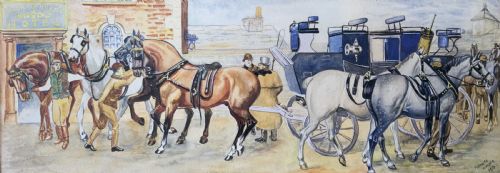
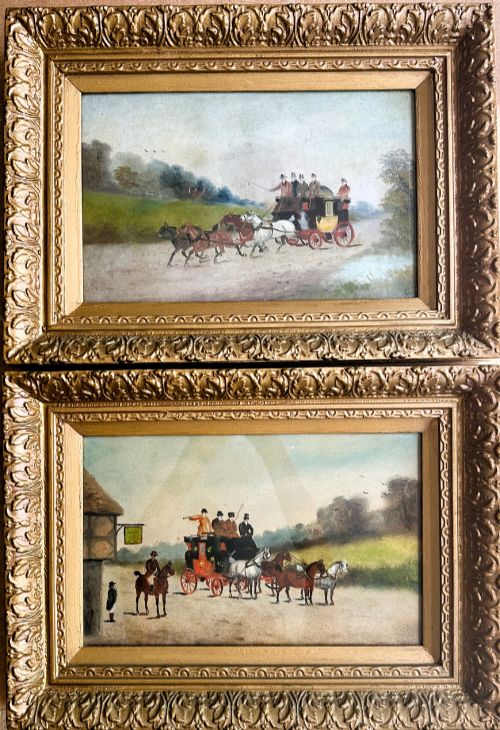
Coach and horses artwork captures the motion and tradition of historical travel through oil paintings, watercolours, and prints.
Coach and Horses Artwork
Coach and horses artwork brings together equestrian scenes, stagecoaches, and winter travel captured across the nineteenth and early twentieth centuries. These pieces record the visual history of mail coaches, coaching inns, and sporting pursuits.
The most common examples on this page are oil paintings and watercolours depicting roadside scenes, snowy journeys, and coaching teams. Victorian and Edwardian periods supply the majority of these traditional British sporting subjects.
Buyers choose these works to display detailed representations of historical transport and equestrian life within period frames. The subjects range from bustling inn stops to solitary mail carriages caught in snowstorms.
Materials and methods
Artists painted these coaching subjects using oil paint on canvas and watercolour on paper, often framing the completed works in wood and giltwood. Some specialist pieces utilise reverse glass painting and silhouettes to depict equestrian subjects.
Printmakers reproduced popular coaching and hunting compositions as colour lithographs on paper. Traditional framing involved oak and gilded wooden mouldings to protect the paintings and watercolours.
Listings feature oil paintings, watercolours, glass panels, and lithographs spanning the nineteenth and early twentieth centuries.
Distinctions in quality
Quality in coach and horses artwork depends upon the artist's ability to render the anatomy of horses and the motion of the carriage wheels. Finer works display precise handling of light, particularly in snow scenes and architectural details of coaching inns.
Signatures by recognised painters and documented attribution separate standard commercial pieces from superior historical works. The condition of the original canvas, paper, and period frame also influences the standing of each piece.
Philip Rideout·Philip Henry Rideout·Samuel Henry Alken·John Charles Maggs·John Richard Worsdale·Frank Dadd·John Atkinson·James Pollard
The Coach and Horses Artwork Glossary
- Reverse glass painting
- A technique where the image is applied directly to the reverse side of a glass panel to be viewed from the front. This method creates a glossy finish unique to decorative glass art.
- Giltwood
- Wood carved and coated with gold leaf or a gold-colored metallic finish for framing. This material provides a bright, reflective border for traditional paintings.
- Lithograph
- A print made from a design drawn on a flat stone or metal plate with a greasy medium. The process allows for multi-colored reproduction of detailed artwork.
- Watercolour painting
- A medium where water-soluble pigments are applied to paper to create translucent colour washes. It is frequently used for detailed illustrative sporting scenes.
- Equestrian
- Pertaining to horses and horseback riding or driving. This term describes the central subject matter of many historical sporting paintings.
Coach and Horses Artwork: Frequently Asked Questions
What periods do these paintings date from?
The works span from the nineteenth century through to the early twentieth century, encompassing Victorian and Edwardian periods.
Most pieces date between eighteen-sixty and nineteen-thirty, reflecting the peak era of traditional British sporting art.
How were these coaching scenes displayed?
Owners traditionally displayed these framed paintings and watercolours in country houses, libraries, and sporting clubs.
They were chosen to celebrate British transport history, hunting culture, and equestrian traditions.
Are the paintings signed by the artists?
Many of the works on this page feature artist signatures or direct attributions to known painters of the period.
Signed pieces often provide clearer provenance and links to established equestrian artists.
What materials support these artworks?
Artists used oil paint on canvas, watercolour on paper, and specialised glass panels for reverse silhouettes.
The framing materials typically consist of wood, oak, and giltwood mouldings.
How do I care for antique watercolours?
Watercolours on paper require protection from direct sunlight to prevent fading of the pigments.
Keeping them behind glass in stable indoor humidity preserves the paper and the painted surface.